Key Takeaways
Takeaway 1: Spotted lanternflies spread rapidly between properties, meaning a delayed response on your part directly affects your neighbors and the broader community around you.
Takeaway 2: Not all pest control companies are equally equipped to handle spotted lanternflies — the right exterminator uses species-specific protocols, not generic insect treatments.
Takeaway 3: The most effective time to call a lanternfly exterminator is before peak feeding season hits, not after your trees are already showing visible stress.
You’ve seen them on your fence posts, clustering on the side of your house, or coating the trunk of a tree you’ve spent years growing. Maybe you’ve tried knocking them off, spraying them with something from the hardware store, or scraping the egg masses you could reach. And yet they keep coming back, in the same numbers or greater, seemingly unfazed by everything you’ve thrown at them. Spotted lanternflies are not a pest you can outlast or outmaneuver with consumer products and persistence. They require targeted professional treatment, and the longer you wait to find the right lanternfly exterminator near me, the more established their presence on your property becomes.
This article walks you through what to look for when choosing a professional, why timing matters more than most homeowners realize, and what effective treatment actually involves so you know whether the company you’re calling has the right approach.
Why Spotted Lanternflies Are Spreading So Fast in Northern Virginia
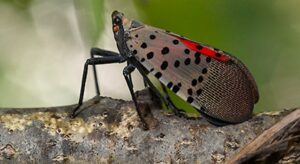
Spotted lanternflies were first confirmed in Virginia in 2018, and their spread since then has been rapid and consistent. They are exceptional hitchhikers — egg masses laid on vehicles, outdoor furniture, shipping materials, and firewood have carried them into new counties and new neighborhoods far faster than natural migration alone would allow. Northern Virginia’s combination of hardwood forests, residential tree canopy, and high traffic volume of people and goods moving through the region has made it one of the more heavily affected areas in the state.
Once a population establishes itself in a neighborhood, it spreads property to property through normal adult movement. A treated yard adjacent to an untreated one will face constant reinfestation pressure as adults move in from next door. This is part of why neighborhood-level awareness and professional treatment are so important — individual action helps, but it works best as part of a broader response.
What Makes a Spotted Lanternfly Exterminator Actually Effective?
Not every pest control company that lists spotted lanternflies on their service menu has developed the specific protocols needed to handle them effectively. When you’re evaluating who to call, there are a few things worth understanding about what effective treatment looks like.
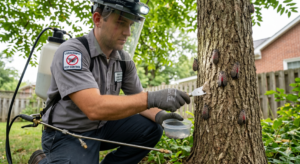
First, a good exterminator assesses the property before treating it. This means walking the grounds, identifying active feeding sites, locating egg masses on trees and structures, and evaluating which plants are most at risk. A company that skips this step and goes straight to spraying is likely applying a generic contact insecticide that kills what’s present today but does nothing to reduce the overall infestation.
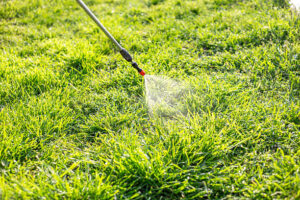
Second, the treatment plan should account for the time of year and the life stage of the pest. Nymphs in spring require different products and application methods than adults in late summer and fall. Egg masses require physical destruction in addition to chemical treatment. A plan that doesn’t account for life stage is not a complete plan.
Third, follow-up matters. Spotted lanternflies reinfest treated properties from surrounding areas, and a single treatment visit rarely resolves a significant infestation for the entire season. Any spotted lanternfly exterminator worth calling will build follow-up into the service plan rather than treating it as an optional add-on.
When to Call: The Treatment Window That Makes the Biggest Difference
Homeowners often wait until their trees look visibly stressed before reaching out for help. By that point, a full season of feeding damage has already accumulated, and the egg masses that will produce next season’s population are likely already in place. The better approach is to call before the visible damage appears.
In Northern Virginia, spotted lanternfly nymphs begin hatching in late April and May. This early nymph stage is an important treatment opportunity because the insects are small, concentrated, and haven’t yet spread as widely across the property as they will later in the season. Treating during this window disrupts the population before it builds to the peak numbers seen in late summer and fall. If you’ve had lanternflies on your property in previous seasons, scheduling a service call in early spring — before you see activity — puts you ahead of the infestation rather than behind it.
Questions to Ask Before You Hire a Spotted Lanternfly Exterminator
When you’re calling pest control companies, the questions you ask will tell you a lot about whether you’re speaking with someone who genuinely specializes in this pest or someone offering a generic service. Ask whether they conduct a pre-treatment property inspection. Ask what products they use and whether their approach differs between nymphs, adults, and egg masses. Ask whether follow-up visits are included or scheduled separately. Ask if they have experience treating properties in your specific county or municipality, since spotted lanternfly pressure varies significantly by location.
A company that can answer these questions specifically and clearly — without defaulting to vague reassurances — is one that has actually developed a protocol for this pest rather than adapting a general insecticide service.
What Happens After Professional Treatment
After a professional treatment, you should expect to see a significant reduction in spotted lanternfly activity within a few days, depending on the products used and the current life stage of the population. Residual treatments continue working for a period of time after application, helping to knock down new arrivals moving in from adjacent properties.
Your technician should walk you through what to expect after treatment, what signs to watch for that might indicate reinfestation, and what your role is in the interim — whether that means checking for egg masses on smooth surfaces, reporting high-activity areas, or simply scheduling the next follow-up visit. A professional who disappears after the first application and doesn’t follow up until you call again with a complaint is not providing the level of service a spotted lanternfly infestation actually requires.
Bull Run Turf Care & Pest Control: Local Expertise for a Regional Problem
Bull Run Turf Care & Pest Control has developed specific protocols for spotted lanternfly control in Northern Virginia that account for the seasonal patterns, host plant populations, and infestation levels unique to this region. Rather than applying a standard insect treatment, the team assesses each property individually and builds a plan that addresses both the current population and the conditions that support it.
For homeowners in Chantilly, Ashburn, Herndon, Leesburg, Sterling, Gainesville, Fairfax, Manassas, and the surrounding communities, Bull Run offers the local responsiveness and pest-specific expertise that this invasive species demands. Spotted lanternflies are not going to resolve themselves. But with the right professional approach, they can be managed effectively — and your property can be protected through every season.
Frequently Asked Questions
How do I find egg masses on my property?
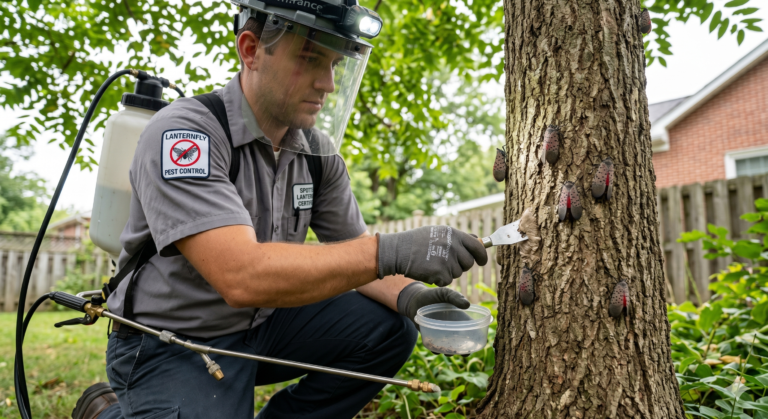
Egg masses are typically found on the smooth bark of trees — particularly tree of heaven, which is a preferred host — as well as on fence posts, stone walls, deck boards, outdoor furniture, and any other flat surface. They look like a smear of dried gray mud, roughly an inch long, with a waxy coating when fresh. In late fall and winter, after the coating weathers away, they appear as rows of brown seed-like capsules. Scrape them into a container of hand sanitizer or rubbing alcohol to destroy them.
Will spotted lanternflies come back next year even after treatment?
Treatment significantly reduces the current year’s population and eliminates egg masses that are accessible, but it does not prevent adult lanternflies from neighboring properties from entering your yard in future seasons. Annual treatment is the most effective approach for homeowners in affected areas, particularly those with mature hardwood trees that are attractive feeding sites.
Is spotted lanternfly treatment safe for my garden and pets?
Professional treatments are applied in targeted ways designed to minimize exposure to non-target plants, beneficial insects, and animals. Your technician will give you specific re-entry guidance after treatment. If you have particular concerns about specific plants, garden areas, or animals, communicate those during the pre-treatment inspection so the plan can be adjusted accordingly.
Bull Run Turf Care & Pest Control
4229 Lafayette Center Dr STE 1825, Chantilly, VA 20151, United States
Phone: (571) 430-5697
Website: bullrunturf.com
Instagram: @bullruntrf
Facebook: web.facebook.com/bullrunturf