Key Takeaways
Takeaway 1: Spotted lanternfly populations across Northern Virginia have expanded steadily since their initial arrival and show no signs of natural decline — every untreated property in the region contributes to the broader population pressure affecting the entire community.
Takeaway 2: The economic impact of spotted lanternflies in Northern Virginia extends beyond individual property damage to affect agriculture, viticulture, and the nursery and landscaping industries that are significant parts of the regional economy.
Takeaway 3: Professional treatment is more cost-effective than most homeowners expect — the cost of protecting trees and outdoor spaces now is a fraction of what replacement, removal, or restoration costs after serious decline.
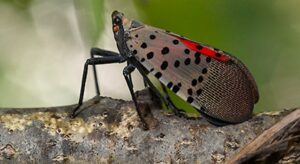
When spotted lanternflies first appeared in Northern Virginia several years ago, the common expectation was that the infestation would be temporary — that natural predators would develop, that the population would crash after a few seasons, that the climate would prove inhospitable in ways that limited their spread. None of that has happened. Spotted lanternfly populations across the region have expanded steadily, and the pest is now established in every county and independent city in Northern Virginia.
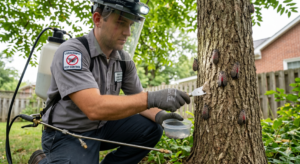
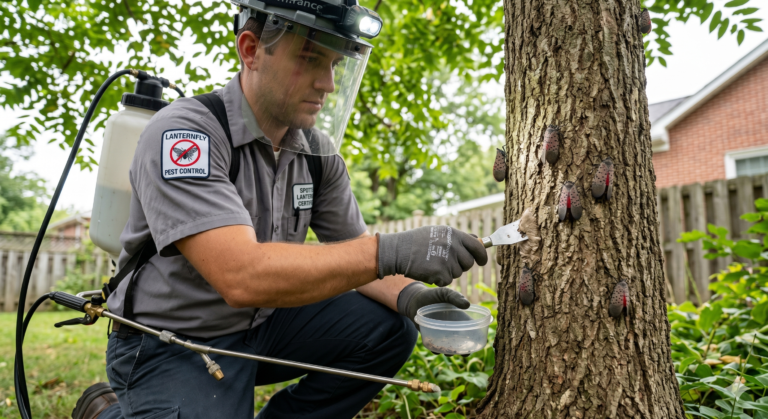
The scale of the infestation is what makes it a genuine regional crisis rather than a localized nuisance. With an established, reproductively active population distributed across the entire landscape, individual treatment efforts on residential properties are fighting a battle that requires both property-level management and regional awareness. A qualified spotted lanternfly exterminator Northern Virginia residents turn to is part of the solution — but understanding the scope of the problem is what motivates the consistent, year-over-year commitment that actually makes a difference.
The Regional Population Dynamics That Affect Every Property
Understanding spotted lanternfly population dynamics at the regional scale helps explain why property-level management requires a sustained approach rather than a one-time treatment. The spotted lanternfly population across Northern Virginia is not a fixed number — it is a dynamic system that produces new adults every spring from the egg masses laid the previous fall across millions of trees, structures, and surfaces throughout the region.
Adult spotted lanternflies are mobile. They fly, they walk, and they distribute across the landscape during the active season in ways that constantly mix and redistribute the regional population. A treated property in a neighborhood with many untreated ones faces consistent reinfestation pressure throughout the summer and fall feeding season. This is not a reason to avoid treatment — a treated property still carries far lower pest populations and far less damage than an untreated one — but it is the reason why a single treatment is rarely sufficient and why annual management produces dramatically better results than episodic reactive treatment.
The Economic Dimension: What’s at Stake Beyond Individual Properties
The spotted lanternfly crisis in Northern Virginia is not just a residential amenity issue. The pest poses serious economic threats to sectors that are significant parts of the regional economy. Viticulture — the growing of grapes for wine production — is particularly vulnerable, and the Loudoun County wine country that has developed over the past two decades faces ongoing yield losses and vine damage from spotted lanternfly feeding. Virginia’s wine industry, which includes dozens of wineries in the Northern Virginia region, has identified the spotted lanternfly as one of its most significant current threats.
The nursery and landscaping industry is similarly affected. Spotted lanternflies attack plants at nurseries and garden centers, requiring costly treatment programs to protect inventory. Landscape contractors working in affected areas must account for reinfestation risk when installing new plants on client properties. Arborists managing tree populations in commercial and residential settings have seen significant increases in tree decline and removal work attributable to lanternfly damage. These economic dimensions don’t change what an individual homeowner needs to do about their property, but they do explain why this pest has attracted serious regulatory and research attention that is producing improved treatment tools and protocols over time.
How Northern Virginia Homeowners Can Contribute to Regional Management
While no individual homeowner can solve a regional infestation, the actions taken on each property collectively determine the overall trajectory of the spotted lanternfly population in Northern Virginia. Homeowners who treat their properties professionally and consistently reduce the egg mass population that each property contributes to the regional pool, which over time reduces the total population pressure affecting treated and adjacent properties alike.
Several specific actions have documented impact. Reporting new lanternfly sightings to the Virginia Department of Agriculture and Consumer Services helps the state track population expansion and focus management resources. Destroying egg masses on vehicles, equipment, and outdoor furniture before moving them out of infested areas prevents the spread of the pest to new locations. Participating in regional awareness and treatment programs when they’re made available helps build the kind of community-level response that makes individual property treatment more effective.
Why Spotted Lanternfly Pressure Varies So Much Between Properties
One observation that confuses many Northern Virginia homeowners is that spotted lanternfly pressure seems to vary significantly between neighboring properties — one yard may have hundreds of insects while the adjacent yard has almost none. This variation is explained primarily by the composition of the host plant population on each property.
Properties with tree of heaven, black walnut, or large maple trees face substantially higher pressure than those without preferred host species. Proximity to wooded areas, stream corridors, or other natural habitats that support large populations also creates significantly higher pressure than more isolated residential settings. Prevailing wind patterns, the presence of vertical structures that insects aggregate on, and the management history of the property and surrounding area all contribute to the variation between seemingly similar properties. A professional assessment that accounts for these factors produces a more accurate picture of your specific risk level than any general regional description can provide.
What a Comprehensive Northern Virginia Spotted Lanternfly Treatment Program Looks Like
Bull Run Turf Care & Pest Control serves homeowners across Northern Virginia with spotted lanternfly extermination programs designed for the scale and persistence of the regional infestation. The team’s service area covers the communities most significantly affected — Chantilly, Ashburn, Herndon, Leesburg, Sterling, Gainesville, Fairfax, Manassas, and surrounding municipalities — and the protocols applied are developed for the specific conditions of this region rather than adapted from programs designed for different climates or infestation densities.
For Northern Virginia homeowners who want to protect their trees, preserve their outdoor living spaces, and contribute to the broader community response to this invasive pest, consistent annual management with a knowledgeable local provider is the most effective path available.
Frequently Asked Questions
Is spotted lanternfly a quarantine pest in Northern Virginia?
Yes. Virginia’s Department of Agriculture and Consumer Services has established quarantine regulations for counties with confirmed spotted lanternfly populations, which includes all of Northern Virginia. The quarantine restricts the movement of certain articles — including outdoor household articles, nursery stock, and vehicles that have been in infested areas — and requires that businesses and individuals operating within quarantine zones take steps to prevent inadvertent spread of the pest.
Are there any natural predators of spotted lanternflies in Northern Virginia?
Some native bird species, including chickens, ducks, and certain wild birds, will eat spotted lanternflies when given the opportunity. Some spider species and praying mantids will also consume them. However, none of these predators exist in populations large enough or with sufficient feeding rates to control spotted lanternfly populations at a meaningful scale. Research is ongoing into biological control options, but none are currently available for use in the field.
Will spotted lanternfly populations eventually decline on their own in Northern Virginia?
There is no evidence to date that spotted lanternfly populations in established Mid-Atlantic populations have declined naturally. In areas where they’ve been established longest — southeastern Pennsylvania, where the initial U.S. infestation occurred — populations remain high. The pest’s reproductive efficiency, survival rate, and adaptability to the regional climate suggest that natural population decline without active management intervention is not a realistic expectation for Northern Virginia in the foreseeable future.
Bull Run Turf Care & Pest Control
4229 Lafayette Center Dr STE 1825, Chantilly, VA 20151, United States
Phone: (571) 430-5697
Website: bullrunturf.com
Instagram: @bullruntrf
Facebook: web.facebook.com/bullrunturf