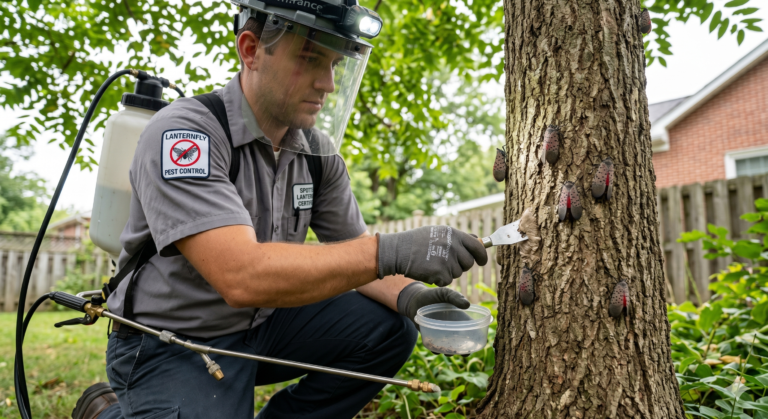
Key Takeaways
Takeaway 1: Leesburg’s wine country proximity and agricultural landscape make spotted lanternfly pressure here more intense than in many Northern Virginia communities — the pest thrives in exactly the mixed rural-residential environment that defines western Loudoun County.
Takeaway 2: Homeowners with grapevines, fruit trees, or ornamental woody plants face the highest damage risk and should prioritize early-season professional treatment before the nymph population develops into adults.
Takeaway 3: Demand for spotted lanternfly exterminators in Leesburg has increased significantly with each passing season — scheduling treatment early in the year ensures service availability during the critical spring nymph window.
Leesburg sits at the heart of Loudoun County’s wine and agricultural landscape, and that geography matters for spotted lanternfly pressure in ways that go beyond what most residents might expect. The pest’s preferred host plants — grapes, fruit trees, tree of heaven, and a range of hardwoods — are abundant in and around Leesburg in quantities that support large, persistent populations season after season. The community’s combination of residential neighborhoods, hobby farms, and proximity to commercial vineyards creates a spotted lanternfly environment that is more intense than many Northern Virginia communities further from agricultural land.
For Leesburg homeowners, this means that spotted lanternfly pressure is not a seasonal nuisance — it’s a sustained threat to the landscape investments that make this community distinctive. The demand for a professional spotted lanternfly exterminator Leesburg residents trust has grown substantially in recent years, and homeowners who wait to schedule until they see visible adult populations in late summer are consistently behind the most effective treatment window.
Leesburg’s Landscape: Why It Creates Elevated Spotted Lanternfly Pressure
The mixed agricultural and residential landscape that makes Leesburg one of the most distinctive communities in Northern Virginia is also what sustains especially high spotted lanternfly populations in and around the town. Commercial vineyards and wineries throughout western Loudoun County provide extensive populations of grapevines — one of the spotted lanternfly’s most heavily targeted host plants — that sustain large breeding populations just a short distance from residential neighborhoods.
The Catoctin Mountain foothills and Blue Ridge transition that define the western edge of Loudoun County provide forested habitat and tree of heaven populations that serve as background spotted lanternfly reservoirs. Adults from these forested areas distribute into residential neighborhoods throughout the feeding season, creating reinfestation pressure from natural areas that individual property treatment cannot eliminate but can significantly manage.
Grapevines and Ornamentals: The Highest-Risk Plants in Leesburg
For Leesburg homeowners with grapevines — whether as ornamental plantings, on arbors and trellises, or as part of a hobby vineyard — spotted lanternflies represent one of the most direct and severe plant health threats on the property. Grapevines are among the pest’s most preferred feeding hosts, and heavy infestation during the late summer and fall feeding season can cause vine dieback, reduced fruit production, and honeydew accumulation that promotes mold on developing and ripening fruit.
A single season of heavy spotted lanternfly feeding on grapevines can reduce the following year’s productivity significantly. Repeated seasons of feeding without professional management can cause cumulative vine decline that is very difficult and expensive to reverse. For ornamental grapevines on an arbor or pergola — features that represent significant landscape investment and are central to many Leesburg homeowners’ outdoor living spaces — protecting those vines from lanternfly damage is a preservation priority that warrants professional treatment as part of the annual landscape management plan.
Why the Spring Nymph Window Is Critical in Leesburg
In Leesburg, the spotted lanternfly nymph hatch typically begins in late April or early May depending on the specific weather pattern of the year. The early nymph stage — the first two instars when the insects are very small and black with white spots — presents the highest-leverage treatment opportunity of the entire season. During this period, the nymph population is concentrated near the sites where egg masses were laid, has not yet dispersed widely across the property, and is at its most vulnerable to treatment.
A professional spring nymph treatment at the right timing can reduce the number of adults that emerge later in the season by a substantial margin. Fewer adults means less feeding damage in the critical late-summer and fall period, fewer egg masses laid in fall, and a meaningfully smaller starting population entering the following spring. For Leesburg homeowners managing high-pressure properties — those with grapevines, multiple preferred host trees, or proximity to forested and agricultural land — the spring nymph visit is not optional. It’s the treatment that makes everything else more effective.
Scheduling Considerations: Why Early Is Better in Leesburg
Demand for spotted lanternfly exterminator services in Leesburg has increased each season as more homeowners have experienced infestation and recognized the need for professional help. The practical consequence of this increasing demand is that scheduling treatment during peak season — particularly in August and September when adult populations are most visible and homeowners feel most urgency — becomes significantly harder and involves longer wait times.
Homeowners who schedule spring nymph treatment in March or early April secure service during the most impactful window of the season and avoid the capacity constraints that affect scheduling during peak adult season. Property assessments conducted in late winter or early spring also allow the technician to document egg masses that are still visible before the spring hatch, providing information that improves the accuracy of nymph treatment timing.
What Professional Spotted Lanternfly Control Achieves for Leesburg Properties
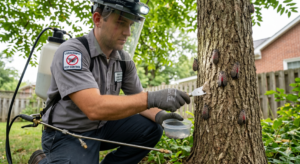
Bull Run Turf Care & Pest Control provides spotted lanternfly exterminator services to Leesburg homeowners with treatment programs designed for the specific conditions of western Loudoun County’s residential and mixed agricultural landscape. The team’s knowledge of the local population dynamics, preferred host plant composition, and seasonal timing appropriate to this part of Virginia informs a treatment approach that produces measurable, season-long results.
For Leesburg homeowners who have invested in landscape features — grapevines, fruit trees, mature hardwoods, ornamental woody plantings — that spotted lanternflies directly threaten, professional management is the difference between protecting those investments and watching them decline through seasons of inadequate response.
Frequently Asked Questions
Can spotted lanternflies damage a Leesburg property’s ornamental arbor or pergola grapevines?
Yes, significantly. Ornamental grapevines on arbors and pergolas are among the most heavily targeted plants during spotted lanternfly season. The combination of feeding damage, honeydew accumulation, and sooty mold can make affected structures unpleasant to use at the peak of the outdoor season and can cause vine dieback that requires significant pruning or replanting to address. Professional treatment that protects grapevines through the feeding season preserves both the plants and the outdoor living space they anchor.
Is there anything I can do to make my Leesburg property less attractive to spotted lanternflies?
Removing tree of heaven from the property and bordering areas where you have access is the single most impactful step a Leesburg homeowner can take to reduce the property’s attractiveness to spotted lanternflies. Beyond that, reducing other preferred host plants — or ensuring they receive professional treatment — limits the feeding resources available. However, spotted lanternflies will still appear on properties that eliminate preferred hosts if neighboring areas support large populations, so removal of host plants works best as a complement to professional treatment, not a replacement for it.
How do I identify early nymph stage spotted lanternflies in spring?
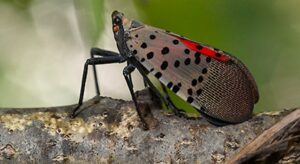
Early instar nymphs are small — approximately a quarter inch long — and predominantly black with white spots. They move quickly and are often found in groups on the new growth of preferred host plants and on the bark of host trees. As they develop through the second and third instar stages, red patches appear on their bodies alongside the white spots. The distinctive red-and-black adult coloration develops as they reach the fourth nymph stage. Any small, spotted insects found clustered on plants in late April or May in Leesburg should be considered potential spotted lanternfly nymphs until confirmed otherwise.
Bull Run Turf Care & Pest Control
4229 Lafayette Center Dr STE 1825, Chantilly, VA 20151, United States
Phone: (571) 430-5697
Website: bullrunturf.com
Instagram: @bullruntrf
Facebook: web.facebook.com/bullrunturf