Key Takeaways
Takeaway 1: Herndon’s location along the Dulles corridor and its mature residential tree canopy have made it one of the more consistently affected communities in Fairfax County for spotted lanternfly pressure.
Takeaway 2: Spotted lanternfly populations in Herndon are sustained year over year by egg masses that survive winter on trees and structures throughout the neighborhood — eliminating adults without addressing eggs leaves next season’s infestation fully in place.
Takeaway 3: Homeowners who treat proactively before peak feeding season protect their trees from the cumulative damage that makes spotted lanternfly infestations progressively harder to reverse.
Herndon homeowners have had a few seasons now to observe spotted lanternfly behavior, and what most of them have noticed is consistent: the insects show up in late summer, coat the trees and fencing, create a mess of honeydew and sooty mold on outdoor surfaces, and then seem to disappear with the first cold weather. It can feel like the problem resolved itself. It didn’t. The adults died with the frost, but the egg masses they laid in October are still there — on your fence posts, in the bark of your oak trees, on the underside of your deck boards — waiting for spring temperatures to trigger the hatch that starts the next generation.
This is the cycle that makes spotted lanternflies so persistent in Herndon and throughout the Dulles corridor communities. Each year’s adult population is a product of the egg masses laid the year before, and without active intervention to break that cycle, the infestation level on any given property doesn’t improve on its own. A qualified spotted lanternfly exterminator Herndon residents rely on addresses both the active insects and the reproductive cycle that sustains the population season after season.
Why Herndon Is Particularly Affected
Herndon’s position along the Dulles Technology Corridor means high traffic volume of vehicles, equipment, and materials moving through the area — all of which can carry spotted lanternfly egg masses into new locations. The community’s established residential neighborhoods feature mature hardwood trees that provide exactly the habitat and feeding resources lanternflies need, and the green corridors and stream buffers that run through and around Herndon support populations that consistently move into residential yards from natural areas.
The community’s density also creates a dynamic where untreated properties serve as population sources for neighboring treated ones. A homeowner who treats their property thoroughly but lives next to several untreated yards will face ongoing reinfestation pressure throughout the season, which is part of why professional treatment plans for Herndon properties include residual applications designed to handle that pressure rather than assuming a single knockdown event will last.
Reading the Signs: What Spotted Lanternfly Activity Looks Like in Herndon Yards
Early in the season — from late April through June — spotted lanternfly nymphs are active but small and often overlooked. They appear as small black insects with white spots in the earliest instars, transitioning through red and black coloration as they develop. They feed on a wider range of plants during the nymph stage than adults, including many garden species and herbaceous plants. Homeowners who notice unusual insect activity on plants that don’t typically have pest problems in spring should consider whether lanternfly nymphs are involved.
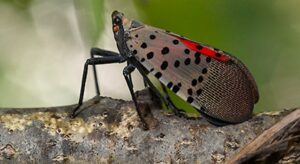
By midsummer, nymphs have matured into the distinctive red-winged adults that most Herndon homeowners recognize. Adults aggregate in large groups, particularly on smooth-barked tree trunks and on tree of heaven. The honeydew they produce accumulates quickly under active feeding sites, and sooty mold follows within a week or two of significant accumulation. By late August and September, adult populations reach their seasonal peak and feeding pressure on host trees is at its most intense.
The Egg Mass Problem: Why Fall Cleanup Matters for Next Spring
One of the most important and consistently neglected aspects of spotted lanternfly management is fall egg mass inspection and removal. Female lanternflies begin laying egg masses in late September and continue through October and into November on warmer days before the frost arrives. They select any smooth, flat surface available — tree bark, fence posts, stone walls, concrete surfaces, outdoor furniture, the underside of deck boards, and even vehicles that are regularly parked in the same location.
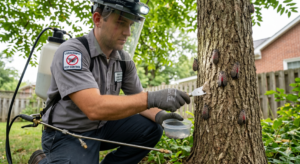
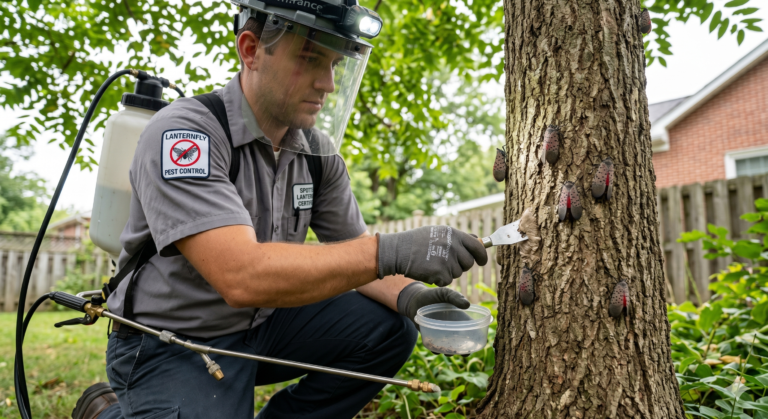
Each egg mass contains 30 to 50 eggs. A property with a significant adult population in fall can end up with dozens of egg masses across multiple surfaces by the time the adults die with the first frost. Those egg masses are small, well-camouflaged, and can be extremely difficult to find comprehensively without systematic inspection. A professional fall visit from a spotted lanternfly exterminator that includes egg mass location, documentation, and destruction is one of the highest-value treatments a Herndon homeowner can invest in, because it directly reduces the number of insects that will be active on the property the following spring.
Protecting Herndon’s Residential Trees From Long-Term Decline
The trees in Herndon’s established neighborhoods represent decades of growth that cannot be quickly or inexpensively replaced. Mature oaks, maples, and other hardwoods provide shade value, stormwater management, habitat, and aesthetic character that contributes meaningfully to property values and quality of life. Spotted lanternfly feeding damage to these trees, accumulated over multiple seasons without treatment, creates structural decline that is difficult and sometimes impossible to reverse.
The pattern of decline is gradual enough that it’s often attributed to other causes — drought stress, soil compaction, construction damage to roots — when the primary driver is repeated lanternfly infestation. Trees that are showing unexplained decline, reduced canopy density, early autumn color or leaf drop, or increased deadwood should be evaluated for lanternfly involvement as part of a broader health assessment. Protecting these trees now is substantially less expensive than removing and replacing them later.
What Bull Run Turf Care & Pest Control Offers Herndon Homeowners
Bull Run Turf Care & Pest Control provides Herndon homeowners with spotted lanternfly control services built around the specific conditions of Fairfax County’s residential communities. The team assesses each property individually rather than applying a fixed service package, because infestation severity, tree composition, and surrounding pressure sources vary enough between properties to make a one-size-fits-all approach inadequate.
Treatment plans are scheduled to hit the most impactful points in the lanternfly calendar — spring nymph treatment to disrupt the season before populations build, summer and fall adult treatment during peak feeding, and egg mass management in late fall to protect the following spring. Herndon homeowners who commit to this annual rhythm consistently see better outcomes than those treating reactively, and their trees show the difference over time.
Frequently Asked Questions
Can spotted lanternflies affect my home’s structure?
Spotted lanternflies do not damage wood structures the way termites or carpenter ants do. Their impact on homes is primarily surface-level: honeydew and sooty mold staining on siding, decks, fencing, and outdoor furniture. The structural concern is with trees on the property — particularly those close enough to the home that significant decline or failure could pose a risk.
Should I treat every tree on my Herndon property?
Treatment is prioritized based on which trees are preferred host species and which are showing the highest infestation pressure. Highly preferred hosts — tree of heaven, maple, oak, walnut — are typically prioritized for treatment. Trees that lanternflies are feeding on but not in large numbers may receive perimeter treatment rather than direct trunk treatment. Your technician will make these determinations during the property assessment.
Is it worth treating if my neighbors haven’t treated their properties?
Yes. While neighboring untreated properties do create ongoing reinfestation pressure, treatment on your own property still significantly reduces the active population feeding on your trees, eliminates the egg masses that would otherwise produce next season’s infestation from your yard, and protects your most vulnerable plants from the worst of the season’s feeding damage. Residual treatments also slow the rate at which reinfestation from neighboring properties becomes significant.
Bull Run Turf Care & Pest Control
4229 Lafayette Center Dr STE 1825, Chantilly, VA 20151, United States
Phone: (571) 430-5697
Website: bullrunturf.com
Instagram: @bullruntrf
Facebook: web.facebook.com/bullrunturf