Key Takeaways
Takeaway 1: Spotted lanternflies are an invasive species that feed on more than 70 plant varieties, and Ashburn’s mature tree canopy makes it a high-risk environment for severe infestation.
Takeaway 2: Honeydew, the sticky residue spotted lanternflies produce while feeding, promotes sooty mold growth that further damages plants and coats outdoor surfaces.
Takeaway 3: Professional extermination targets both the active insects and their egg masses, which are the only way to break the reproductive cycle and prevent next season’s population from exploding.
There’s a moment most Ashburn homeowners recognize — you walk out to your backyard and something feels off. The trees look drained. There’s a sticky film on the patio furniture, the deck railing, maybe the kids’ play equipment. And then you see them: clusters of insects coating the trunk of your oak or maple, feeding in groups so dense they look like bark from a distance. If you’ve had that moment, you’ve already got a spotted lanternfly problem — and it’s further along than you might think.
Spotted lanternflies don’t arrive quietly. By the time most homeowners notice them, the infestation is established, the feeding damage is underway, and the egg masses that will produce next season’s population may already be laid on flat surfaces around your property. Ashburn’s mature residential tree canopy, mixed hardwood borders, and proximity to forested areas make it one of the more vulnerable communities in Loudoun County for spotted lanternfly spread. This article explains what you’re dealing with, what the damage really looks like, and why calling a spotted lanternfly exterminator Ashburn residents trust is the most effective path forward.
What Makes Spotted Lanternflies So Dangerous to Ashburn Properties?
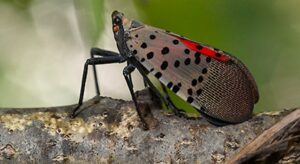
Spotted lanternflies are not native to Virginia. They arrived from Asia and have spread rapidly across the Mid-Atlantic, and their impact on local plant life is significant because the native ecosystem has no natural predators capable of controlling their numbers. They feed by piercing plant tissue and extracting sap, and they do this in large groups — meaning the feeding pressure on a single tree or shrub can be intense enough to weaken or kill it within a season.
The list of plants they target is extensive. Hardwoods like oak, maple, walnut, and willow are preferred hosts. So are fruit trees, ornamental shrubs, hops, and grapevines. In residential settings like those common in Ashburn, a single mature tree can support hundreds of feeding adults at once. The tree doesn’t die immediately — it weakens progressively, losing its ability to photosynthesize efficiently, dropping leaves early, and becoming more vulnerable to disease and secondary pest damage with each passing season.
The Honeydew Problem Nobody Talks About
Beyond the direct feeding damage, spotted lanternflies create a secondary problem that affects everything around them. As they feed, they excrete a sugary liquid called honeydew that coats whatever surfaces are below the feeding site — patios, outdoor furniture, vehicles, garden beds, and the plants themselves. Honeydew is sticky, difficult to clean, and it doesn’t stay harmless for long.
Within days of accumulation, honeydew becomes a growing medium for sooty mold — a black fungal coating that covers leaves, branches, and surfaces. Sooty mold blocks sunlight from reaching leaf tissue, further reducing the plant’s ability to produce energy. It also signals to other insects that feeding resources are available, attracting additional pest pressure. In Ashburn’s densely planted residential neighborhoods, honeydew and sooty mold can spread from one property to adjacent ones quickly, making this a community-level problem as much as an individual one.
Spotted Lanternfly Life Cycle: Why Timing Matters
Understanding how spotted lanternflies reproduce is essential to understanding why treatment timing makes such a difference in outcomes. Adult lanternflies emerge in summer and feed aggressively from July through the first hard frost, typically in late October or November. During fall, females lay egg masses on any flat, smooth surface they can find — tree bark, stone walls, fence posts, outdoor furniture, vehicles, and even cardboard. Each egg mass contains 30 to 50 eggs arranged in neat rows and covered with a gray, mud-like coating that blends easily with bark and stone.
Those egg masses survive winter entirely intact. When temperatures warm in spring, the nymphs hatch and immediately begin feeding. A property with an untreated fall infestation can see its population multiply dramatically the following season without any additional immigration from outside. This reproductive pattern is why a spotted lanternfly exterminator near me approach that includes egg mass identification and removal is so much more effective than one that only targets the adult insects you can see.
Why Spotted Lanternflies Are Difficult to Control Without Professional Help
Most homeowners who try to handle spotted lanternflies on their own find that the results are temporary. Contact sprays can kill the insects present at the time of application, but spotted lanternflies are highly mobile. They move between properties, between trees, and back into treated areas from neighboring yards within days of treatment. Without a residual product applied correctly and timed to the pest’s life stage, you’re killing what’s there today while a new wave moves in tomorrow.
Egg mass removal is another area where DIY approaches fall short. Egg masses are small, well-camouflaged, and can be laid in places most homeowners never think to look — under deck boards, on the undersides of lawn furniture, on vehicle wheel wells, and in the bark crevices of multiple trees across a property. Missing even a portion of the egg masses on your property means the next generation is already in place regardless of how thoroughly you treated the adults.
What Professional Spotted Lanternfly Extermination Looks Like in Ashburn
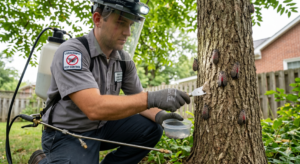
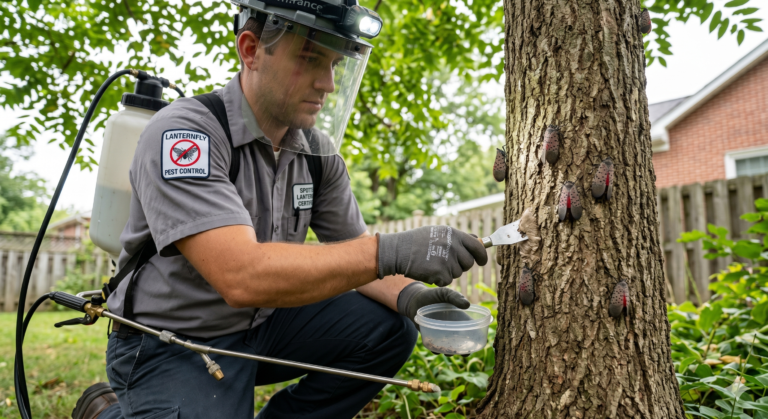
A professional spotted lanternfly exterminator approaches an Ashburn property systematically. The process begins with a full assessment — walking the property to identify active feeding sites, locate egg masses, and determine which plants are most at risk. This assessment shapes the treatment plan, because properties with mature hardwoods require a different approach than those with primarily ornamental plantings or fruit trees.
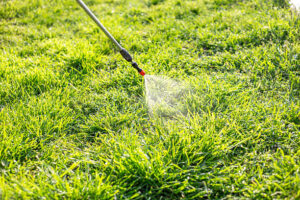
Treatment typically involves a combination of targeted insecticide application to active feeding areas and residual barrier treatments to slow reinfestation from neighboring properties. Egg masses that are accessible are physically destroyed as part of the process. Depending on the severity of the infestation and the time of year, follow-up visits may be scheduled to address any reinfestation and check on the health of affected plants.
Professional treatment doesn’t create a permanent force field around your property — spotted lanternflies will continue to exist in the surrounding environment. What it does is dramatically reduce the active population on your property, protect your most vulnerable plants through the peak feeding season, and eliminate the egg masses that would otherwise produce next season’s infestation.
How to Protect Your Ashburn Property Going Forward
Long-term spotted lanternfly management in Ashburn requires a seasonal approach. Spring monitoring for newly hatched nymphs, summer and fall treatment during the peak adult feeding period, and thorough egg mass inspection and removal in late fall and early winter are the three pillars of an ongoing management plan. Properties that receive consistent annual treatment see significantly lower infestation levels over time compared to those that treat reactively only after visible damage appears.
Homeowners can support professional treatment by scraping egg masses whenever they’re spotted on accessible surfaces, reporting sightings to Virginia’s Department of Agriculture, and avoiding moving firewood, outdoor furniture, or vehicles that may carry egg masses from infested areas to new locations. These steps don’t replace professional treatment, but they reduce the pressure on your property between service visits.
Why Ashburn Homeowners Call Bull Run Turf Care & Pest Control
Bull Run Turf Care & Pest Control serves Ashburn and the surrounding Loudoun County communities with spotted lanternfly extermination services built around the specific conditions of Northern Virginia’s residential landscapes. The team understands the local plant species most at risk, the timing of the lanternfly life cycle in this region’s climate, and the treatment approaches that produce lasting results rather than temporary knockdown.
Ashburn homeowners don’t have to watch their trees deteriorate season after season while hoping the problem resolves itself. It won’t. But with the right professional on the job, it can be managed effectively — protecting your trees, your outdoor spaces, and your property’s long-term value.
Frequently Asked Questions
Are spotted lanternflies dangerous to people or pets?
Spotted lanternflies are not known to bite, sting, or transmit disease to people or animals. They are an agricultural and environmental pest, not a human health threat. The concern is entirely with the damage they cause to trees, plants, and outdoor surfaces through feeding and honeydew excretion.
Can I scrape egg masses myself to control spotted lanternflies?
Yes, scraping egg masses into a bag of hand sanitizer or rubbing alcohol is a recommended action that homeowners can take on accessible surfaces. However, egg masses are frequently laid in hard-to-reach places, and missing even a fraction of them means the next season’s population remains largely intact. Physical removal is a helpful supplement to professional treatment, not a replacement for it.
How quickly can spotted lanternflies damage my trees?
A single season of heavy infestation can visibly weaken a tree, causing early leaf drop, reduced canopy density, and diminished vigor that carries into the following year. Trees that are repeatedly infested without treatment become progressively more vulnerable to disease, drought stress, and secondary pest activity. Young trees and ornamentals with smaller root systems are at greater risk of severe or fatal damage than established mature hardwoods.
Bull Run Turf Care & Pest Control
4229 Lafayette Center Dr STE 1825, Chantilly, VA 20151, United States
Phone: (571) 430-5697
Website: bullrunturf.com
Instagram: @bullruntrf
Facebook: web.facebook.com/bullrunturf