Key Takeaways
Takeaway 1: Lawn health and pest pressure are directly connected — stressed, thin turf is more vulnerable to pest damage and weed invasion, while healthy, dense grass resists both more effectively.
Takeaway 2: Using separate providers for lawn care and pest control creates coordination gaps where treatments conflict, coverage overlaps, or conditions go unaddressed because neither provider considers them their responsibility.
Takeaway 3: A single-source lawn and pest control provider has complete visibility into your property’s needs and can sequence treatments correctly to maximize effectiveness and avoid counterproductive interactions.
Most homeowners end up with separate providers for lawn care and pest control simply because that’s the way the market typically presents itself. One company mows and fertilizes. Another handles the bugs and pests. They operate independently, schedule separately, and rarely communicate with each other about the conditions they’re seeing at your property. This arrangement is common, but it creates problems that a combined approach avoids — and for homeowners in Northern Virginia who are managing both lawn health and pest pressure simultaneously, the gaps in a split-provider model have real consequences.
The connection between a healthy lawn and effective pest control isn’t incidental. It’s foundational. The same conditions that make turf vulnerable to stress also make it more attractive to insects, more susceptible to pest damage, and less able to recover from that damage once it occurs. A provider who handles lawn and pest control near me sees the whole picture and manages it as an integrated system rather than two separate problems that happen to share the same piece of ground.
The Hidden Costs of Using Separate Providers
When your lawn care company and your pest control company don’t communicate, you end up with avoidable conflicts. Pre-emergent herbicide application overlaps with a timing window when your pest control provider wants to apply a granular treatment. Your lawn company aerates and overseed the same week your pest control provider applies a post-emergent that prevents seed germination. One provider tells you to water heavily after their treatment; the other has just applied something that needs to stay dry to remain effective.
These conflicts happen regularly when providers work independently, and neither company is necessarily doing anything wrong — they’re each following best practices for their specific service. The problem is that best practices for lawn care and pest control don’t always align when applied simultaneously without coordination. A homeowner who doesn’t know enough about both fields to recognize these conflicts has no way to catch them before money is wasted and results are undermined.
How Pest Pressure and Lawn Health Interact
The relationship between lawn health and pest susceptibility runs in both directions. A healthy, dense lawn with deep roots and appropriate nutrition resists pest damage more effectively than a thin, stressed one. White grubs, chinch bugs, and other turf pests cause visible damage at lower population thresholds in stressed lawns because there is less root and turf redundancy to absorb the feeding pressure without collapsing. A lawn that is regularly fertilized, aerated, and properly watered develops the kind of robust root system that can tolerate some pest pressure without the widespread die-off that occurs in a compromised lawn.
The reverse is also true. Pest damage — particularly from below-ground feeders like grubs — creates the exact kind of thinning and bare spots that weed invasion requires. Grubs sever roots; the grass above dies; weeds colonize the bare ground before grass can recover. Without integrated management of both the pest problem and the turf health, the lawn enters a cycle of pest damage leading to weed invasion leading to thin turf that is more vulnerable to the next round of pest pressure.
The Advantage of Integrated Scheduling
One of the most practical benefits of using a single provider for both lawn care and pest control is the ability to sequence treatments correctly without conflicts. When one team manages both services, the scheduling of pre-emergent herbicide, overseeding, fertilization, insecticide application, and other treatments is coordinated from the outset to avoid incompatibilities and ensure that each treatment has the conditions it needs to perform.
This coordination also enables more accurate timing. A combined provider who visits your property regularly for both services observes the actual conditions — soil moisture, turf density, weed pressure, insect activity — on an ongoing basis rather than seeing a snapshot during a single annual pest control visit. When grub activity begins showing early signs, the lawn care technician already knows about it and the pest control response can be initiated promptly rather than waiting for a separate inspection to be scheduled.
What to Look for in a Combined Lawn and Pest Control Provider
Not every company that offers both lawn care and pest control integrates them meaningfully. Some simply sell both services with independent scheduling and no real coordination between them. When evaluating a combined provider, ask how they coordinate timing between lawn care and pest control treatments, whether the same technician or team handles both services or whether they operate as separate divisions, and how they communicate observations from one service area to the other.
A genuinely integrated provider has a property profile that includes the full service history across both disciplines, technicians who understand the interaction between lawn health and pest management, and a scheduling system that accounts for treatment compatibility. This is what lawn and pest control management looks like when it’s actually integrated rather than just bundled.
Why Bull Run Turf Care & Pest Control Is Built for This
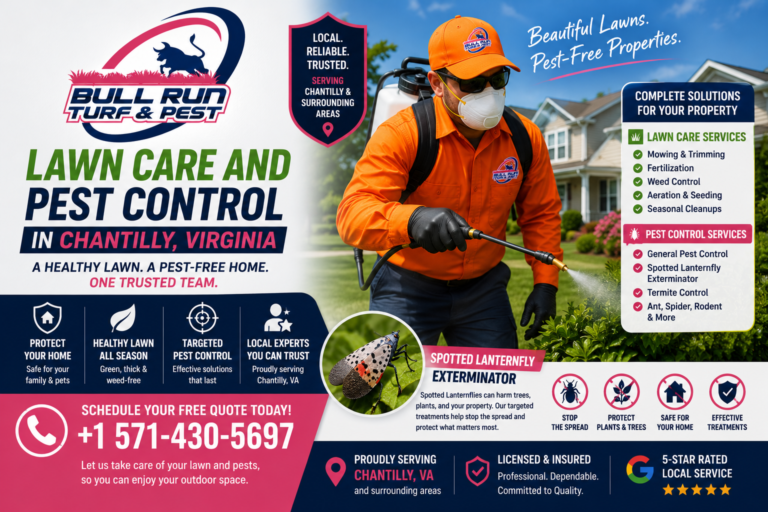
Bull Run Turf Care & Pest Control is named for what it does: turf care and pest control, together, under one roof. This isn’t a pest company that added lawn care as an afterthought or a lawn care company that brought in a pest control partner. The team is built around the understanding that these two service areas are most effective when managed together, and the programs they offer reflect that philosophy.
For homeowners in Northern Virginia who are tired of managing multiple providers, multiple schedules, and multiple invoices for services that should be working together, Bull Run offers the convenience and effectiveness of a genuinely integrated approach.
Frequently Asked Questions
Can I add pest control to an existing lawn care program?
Yes. If you’re already receiving lawn care service from Bull Run, adding pest control service — whether for specific issues like grubs, spotted lanternflies, or mosquitoes, or as a broader integrated pest management program — is straightforward. The existing service schedule and property profile are used as a foundation, and pest control treatments are sequenced to work alongside rather than conflict with the lawn care program.
Does combining lawn care and pest control save money compared to separate providers?
In many cases, yes — both in direct service costs and in avoided waste from treatments that conflict or underperform due to poor sequencing. The more significant savings come from the effectiveness gains of integrated management, where pest problems are caught earlier, turf damage is minimized, and the cumulative results of coordinated treatments produce a healthier lawn with less need for reactive problem-solving.
What pests does Bull Run handle as part of an integrated lawn and pest program?
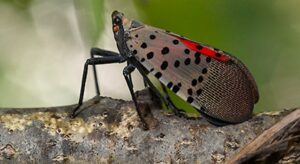
Bull Run’s pest services include grub control, spotted lanternfly extermination, mosquito control, flea and tick treatment, and a range of other residential and commercial pest management services. The specific services included in an integrated program are customized based on the pests most relevant to your property, location, and the season’s expected pest pressure.
Bull Run Turf Care & Pest Control
4229 Lafayette Center Dr STE 1825, Chantilly, VA 20151, United States
Phone: (571) 430-5697
Website: bullrunturf.com
Instagram: @bullruntrf
Facebook: web.facebook.com/bullrunturf