Key Takeaways:
- A complete weed control and fertilization plan combines pre-emergent prevention, post-emergent treatment, and seasonal feeding into one coordinated schedule.
- Arlington properties benefit most from treatment plans that account for shade, soil compaction, and lawn age rather than a generic, one-size-fits-all approach.
- Skipping either fertilization or weed control on its own typically produces weaker, less consistent results than treating them together.
If you’re researching weed control and fertilization services in Arlington, you’ve likely noticed that providers rarely treat these as separate line items. That’s intentional. A lawn that’s properly fed grows thick enough to naturally resist weeds, while a lawn free of weed competition allows fertilizer to do its job more effectively. Understanding how these two services work together, rather than as standalone treatments, is the key to getting consistent, long-term results.
This guide walks through everything included in a complete weed control and fertilization plan, how timing affects results, and what Arlington homeowners should expect from a professional service.
Why a Combined Approach Produces Better Results
Treating weed control and fertilization as a single coordinated system, rather than two unrelated services, addresses both sides of lawn health at once. Weeds compete directly with grass for nutrients, water, and sunlight, so even a well-timed fertilization schedule can underperform if weeds are left unchecked and pulling resources away from your grass.
At the same time, weed control alone doesn’t guarantee a healthy lawn. Eliminating weeds without addressing underlying soil nutrition often leaves behind thin, weak turf that’s vulnerable to the very weed pressure you just treated. The two services are designed to reinforce each other.
How Weeds Take Advantage of Thin, Underfed Lawns
Weeds are opportunistic. They thrive in bare patches, thin turf, and compacted soil where grass struggles to establish a dense root system. A consistent fertilization schedule strengthens grass density over time, closing the gaps weeds need to take hold in the first place, which is why fertilization is considered a preventative weed strategy in its own right.
What’s Included in a Complete Plan
A full-service weed control and fertilization plan typically includes the following components, scheduled throughout the year.
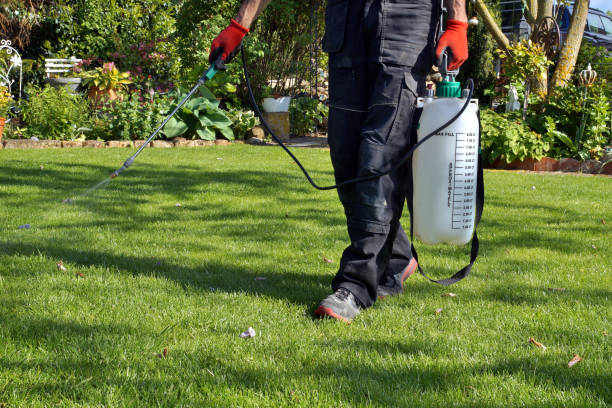
Pre-emergent weed treatment is applied in early spring and again in fall, creating a barrier in the soil that prevents weed seeds like crabgrass from germinating before they ever become visible.
Post-emergent weed treatment targets any weeds that do break through despite preventative measures, using products formulated to eliminate weeds without damaging surrounding grass.
Seasonal fertilization is scheduled around your lawn’s natural growth cycle, typically four to six applications per year, providing the nutrients grass needs to grow thick and resist weed encroachment on its own.
Why Pre-Emergent Timing Is the Most Critical Step
Of all the components in a combined plan, pre-emergent timing tends to have the biggest impact on overall results. Applied too early or too late relative to soil temperature, pre-emergent treatment loses most of its effectiveness, allowing weeds to establish before the next treatment window arrives. For homeowners researching pre-emergent weed control near me, confirming that a provider tracks regional soil temperature data, rather than relying on a fixed calendar date, is one of the most important questions to ask.
What Makes Arlington Properties Different
Arlington’s housing stock spans a wide range, from older, tree-lined neighborhoods with established shade to newer developments with recently graded, often compacted soil. These differences affect how a weed control and fertilization plan should be structured for any given property.
Shaded lawns in older neighborhoods often grow thinner naturally, which increases their vulnerability to weed pressure even with regular fertilization. Newer properties, meanwhile, frequently deal with compacted subsoil left over from construction, which can limit how effectively fertilizer nutrients reach the root system without additional aeration support.
Why a Generic Treatment Schedule Often Falls Short
A fixed, one-size-fits-all treatment calendar doesn’t account for these property-specific differences. A lawn dealing with heavy shade or compacted soil may need adjustments to standard timing or additional services like aeration to get the most benefit from fertilization and weed control treatments.
Why DIY Combination Products Rarely Match Professional Results
Store-bought weed-and-feed products combine fertilizer and weed control into a single application, but this convenience comes with tradeoffs. These products are formulated broadly, without accounting for your lawn’s specific soil condition, shade level, or existing weed pressure, which often results in inconsistent coverage and underwhelming results.
Professional service plans, by contrast, are built around an actual assessment of your property, allowing pre-emergent timing, fertilizer concentration, and post-emergent treatment to be adjusted based on real conditions rather than a generic formula applied the same way to every lawn.
What to Expect Throughout the Season
A typical professional plan for Arlington properties includes:
- An initial lawn and soil assessment
- Early spring pre-emergent application paired with fertilization
- Summer fertilization and post-emergent treatment as needed
- Fall fertilization to support root development before winter
- A second pre-emergent application in fall for cool-season weeds
This layered, season-long structure is designed to keep both weed pressure and lawn nutrition addressed consistently, rather than relying on a single treatment to handle everything at once.
Get a Custom Weed Control and Fertilization Plan
If your lawn has struggled with recurring weeds despite occasional DIY treatment, a coordinated professional plan addresses both the symptom and the underlying cause. A property assessment is the best way to determine the right combination of pre-emergent timing, fertilization schedule, and post-emergent treatment for your specific lawn.
For homeowners researching weed control near me, reaching out for an evaluation is the most reliable way to build a plan tailored to your property’s actual condition rather than a generic seasonal package.
Frequently Asked Questions
Why are weed control and fertilization usually bundled together?
Because weeds compete directly with grass for nutrients, and thin, underfed lawns are more vulnerable to weeds, treating both together produces more consistent, longer-lasting results than addressing either one alone.
How important is timing for pre-emergent weed control?
Extremely important. Pre-emergent treatment is only effective if applied before weed seeds germinate, which depends on soil temperature rather than a fixed calendar date.
Are DIY weed-and-feed products as effective as professional treatment?
Generally not. DIY combination products are formulated broadly and don’t account for your lawn’s specific soil condition, shade level, or weed pressure, which often leads to inconsistent results compared to a tailored professional plan.
Bull Run Turf Care & Pest Control
4229 Lafayette Center Dr STE 1825, Chantilly, VA 20151, United States