On a small backyard, one yellow jacket nest is usually easy to spot. On a large outdoor area, such as a wooded lot, an HOA common area, a sports field, a farm, or a business campus, several colonies can build up across the property before anyone realizes how widespread the problem is.
The best yellow jacket extermination service for a large outdoor area is one that inspects the entire property, has experience treating ground nests and multiple colonies, follows a clear safety plan for people and pets, and includes follow-up visits. Knowing what to look for helps property owners and managers choose stinging insect control that actually covers the whole space rather than just the nest someone happened to find.
Why Are Large Properties Harder to Protect?
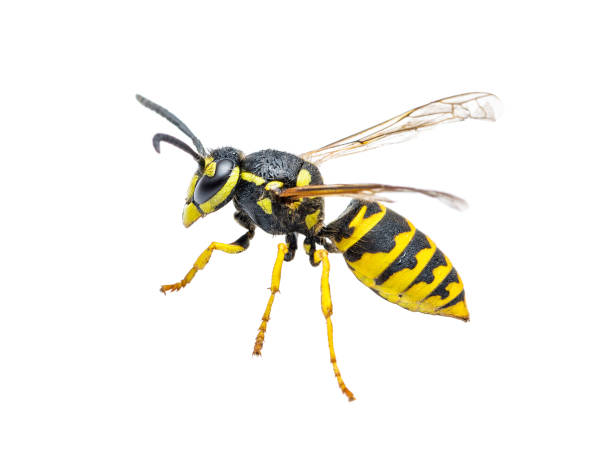
Yellow jackets are social wasps that live in colonies. A colony starts in spring with a single queen and grows through summer, reaching its largest size in late summer and early fall. On large properties, several things make them harder to manage:
- Many colonies nest underground, often in old rodent burrows or under tree roots
- Ground nest entrances are small and easy to miss in tall grass or leaf litter
- Large areas offer room for several colonies at once
- Nests may also be hidden in wall voids, sheds, pavilions, or hollow trees
- More people use shared spaces, which raises the chance someone disturbs a nest
Treating one nest while others remain active leaves people exposed and makes it seem like the problem never went away.
What Should a Good Inspection Include?
A thorough service starts by walking the entire area, not just the spot where someone was stung. A trained technician looks for ground nest entrances, flight paths, and activity around structures.
They also look for conditions that attract yellow jackets, such as uncovered trash cans, outdoor eating areas, fallen fruit, and sugary drinks left outside. Mapping every active nest and noting these attractants gives a clear picture of what needs to be treated and what can be prevented.
What Experience Matters Most?
Ground nests and nests inside structures require different methods than a nest hanging from an eave. When comparing providers, it helps to ask:
- How do you treat underground colonies?
- How do you handle nests inside walls or structures?
- Have you worked on large properties with several active nests?
- How do you treat nests near playgrounds, trails, or entrances?
Improper treatment can agitate a colony without eliminating it, so experience with these situations matters.
How Should Safety Be Handled?
A good provider explains how people and pets will be kept safe during and after treatment. That includes using proper protective equipment, timing treatment for when colonies are less active, and advising how long to keep people away from treated areas.
For HOA common areas, parks, and business properties, communication is just as important. Managers need to know when treatment is scheduled so residents, staff, or visitors can be kept clear.
When Should Treatment Happen?
Yellow jackets return to the nest in the evening and are less active during cooler parts of the day. Many technicians time treatments for these windows so more of the colony is inside the nest and fewer insects are flying.
Urgent situations, such as a nest discovered beside a playground or building entrance, may need faster attention. Asking how a provider handles same-day or priority requests helps set expectations before a problem arises.
Why Is DIY Risky on Large Properties?
Pouring products into a ground hole or spraying a nest with a store-bought can may seem like a quick fix, but it carries real risk on a large property. Disturbing a nest without fully treating it can trigger mass stinging, and yellow jackets can sting repeatedly. Dangerous methods such as pouring gasoline into nests harm the soil and create serious safety hazards. Missing other nests also leaves people exposed.
Anyone with a known allergy to stings should never attempt to treat a nest and should seek medical care right away if stung and showing signs of a reaction.
Planning Ahead for Next Season
In Northern Virginia, yellow jacket colonies die off as winter arrives. Only newly mated queens survive, sheltering in protected spots until spring, when each one starts a new colony. Old nests are not reused.
That makes the cooler months a good time to prepare. Clearing brush, filling old rodent burrows, managing trash and food areas, and scheduling an early-season inspection can reduce how many colonies get established next year. On properties with a history of yellow jackets, inspections in late spring and early summer catch nests while colonies are still small and easier to treat.
Frequently Asked Questions
Q: When are yellow jackets most aggressive?
A: Late summer and early fall, when colonies are at their largest and natural food sources become scarce.
Q: How can I find yellow jacket nests on a large property?
A: Watch from a safe distance for steady traffic in and out of a single spot, such as a small hole in the ground or a gap in a wall. Avoid approaching suspected nests.
Q: Do yellow jackets reuse the same nest each year?
A: No. Colonies die off in winter and old nests are abandoned, though new queens may build in similar spots.
Q: How long does yellow jacket treatment take to work?
A: Activity usually drops quickly after treatment, though some insects returning from foraging may be seen for a short time afterward.
Q: Is it safe to mow over a ground nest?
A: No. Mowing over a nest can trigger a defensive swarm. Mark the area and keep people away until it has been treated.
Q: Should large properties have follow-up inspections?
A: Yes. New colonies can appear through the season, and follow-up visits help catch them before they grow.