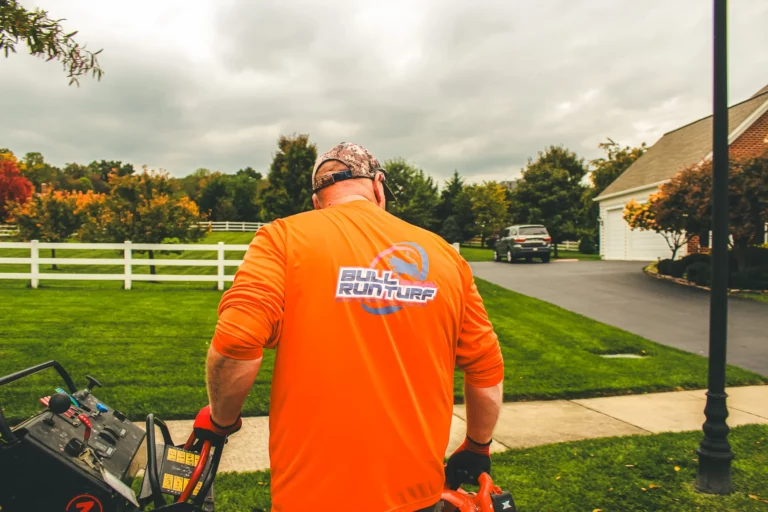
Dunn Loring has changed quickly. Older homes near Tysons and the Dunn Loring Metro station have been replaced with new builds, and infill construction has brought fresh lawns to lots that were torn up only a year or two ago. Many of those lawns look great at closing and then start thinning out by the second summer.
Core aeration and seeding help new-build lawns in Dunn Loring by breaking up soil compacted during construction and filling thin areas with new grass that can root deeper than the original sod or seed. Understanding why construction is so hard on soil helps homeowners see why aeration and seeding services are often the turning point for a struggling new lawn.
Why Do Lawns Around New Construction Struggle?
Building a home changes the soil on a lot. Heavy equipment, delivery trucks, and grading all affect what lies under the new lawn, often in ways that are not visible at first.
Common problems include:
- Soil compacted by bulldozers, excavators, and trucks
- Original topsoil stripped away or buried during grading
- Only an inch or two of new topsoil spread before planting
- Fill soil made mostly of clay or subsoil with little organic matter
- Sod laid directly over hard ground it cannot root into
The result is a lawn that looks healthy on the surface but has very little going on below it.
What Are the Signs of a Compacted New-Build Lawn?
Compaction often shows up gradually. Homeowners may notice that water puddles after rain or runs straight off the yard. The lawn may brown out quickly in summer even with regular watering.
On sodded lawns, pieces may lift easily at the edges, and brown seams can appear where sections meet. These are signs the sod never connected with the soil below and is still relying on the thin layer it arrived with.
How Does Core Aeration Help?
Core aeration removes small plugs of soil from the lawn, leaving holes a few inches deep. These openings relieve compaction, let water soak in instead of running off, and allow air and nutrients to reach the roots.
On new-build lawns, one aeration is a good start, but construction compaction usually takes several seasons to correct. Each year of aeration loosens the soil a bit more and helps roots push deeper.
Why Add Seed After Aeration?
Seeding right after aeration fills in thin spots, brown seams, and areas damaged during or after construction. Seed that lands in the aeration holes has direct contact with loosened soil and stays protected while it germinates.
Tall fescue blends are a strong choice in Dunn Loring because they tolerate local heat and cold and develop deep roots once established. Adding new seed also brings more variety to a lawn that may have started as a single type of sod, which helps it resist disease and stress.
When Should a New Lawn Be Aerated?
Newly sodded lawns should usually go through at least one full growing season before aeration, so the sod has time to anchor. After that, yearly aeration in early fall works well.
The best window for aeration and seeding in Northern Virginia is late August through mid-October. Warm soil helps seed sprout quickly, and cooler air gives young grass time to build roots before winter.
How Can Homeowners Improve New-Build Soil Over Time?
Aeration works best as part of a longer plan for building better soil. A few habits make a real difference:
- Test the soil to check pH and nutrient levels
- Leave aeration plugs on the lawn to break down
- Mow at a higher setting and leave clippings in place
- Water deeply and less often once grass is established
- Feed in fall to support root growth
Irrigation systems on new homes are often set to run the same schedule all season. Adjusting them after seeding, and again as the lawn matures, helps avoid shallow roots from frequent light watering.
Giving a New Lawn a Real Foundation
A new-build lawn in Dunn Loring often needs help that the original installation did not provide. Core aeration breaks through construction compaction, seeding thickens turf, and good habits gradually build healthier soil.
With a few seasons of fall aeration and seeding, many new-build lawns go from struggling every summer to holding up through heat, drought, and everyday use.
Frequently Asked Questions
Q: Why is my new sod turning brown?
A: Sod laid over compacted soil often keeps its roots near the surface, which causes it to dry out quickly in summer.
Q: How soon can a newly sodded lawn be aerated?
A: It is best to wait at least one full growing season so the sod has time to anchor before aeration.
Q: Will one aeration fix a new-build lawn?
A: One aeration helps, but construction compaction usually takes several seasons of yearly aeration to correct.
Q: Should I add topsoil to my new lawn?
A: A thin layer of quality topsoil can help in bare areas, but aeration and organic matter from plugs and clippings improve the existing soil over time.
Q: How should I water after seeding?
A: Keep seeded areas lightly and consistently moist until the grass is established, then switch to deeper, less frequent watering.
Q: Why do brown seams appear between sod pieces?
A: Seams dry out faster when sod has not rooted into the soil below. Aeration and seeding can help fill those gaps.