
Key Takeaways
Takeaway 1: Most lawn weeds in Chantilly are symptom indicators — they colonize areas of the lawn where turf has weakened due to soil compaction, nutrient deficiency, or moisture stress, and treating the weed without addressing the cause produces only temporary results.
Takeaway 2: Effective weed control in Chantilly requires a combination of pre-emergent and post-emergent treatments timed to the specific weed species and seasonal windows — one product or one application almost never produces lasting results.
Takeaway 3: Thick, well-nourished turf is the best long-term defense against weed pressure — professional weed control and lawn care work together to create the conditions where grass outcompetes weeds naturally.
Every Chantilly homeowner has had some version of this frustration: you spend a Saturday pulling weeds, the yard looks clean, and two weeks later they’re back — more of them, in more places, growing faster than the grass around them. You try a spray from the hardware store. It kills what you hit, burns a few spots in the lawn, and the weeds grow back from the roots while new ones germinate from seeds that were already in the soil. Nothing you do seems to make a lasting difference, and the lawn looks worse every summer than it did the year before.
The reason weed control is so difficult for most homeowners isn’t effort — it’s timing and approach. Effective weed control Chantilly homeowners need isn’t just about killing what’s visible. It’s about stopping new weed growth before it starts, addressing the soil and turf conditions that make weed colonization possible in the first place, and maintaining pressure over multiple seasons so the weed seedbank in your soil gradually depletes rather than constantly replenishing itself. This article explains how that process works and why professional weed management produces results that DIY approaches consistently can’t match.
Why Chantilly Lawns Are So Vulnerable to Weed Pressure
Chantilly’s predominant soil type — the clay-heavy, compacted subsoil that underlies most residential properties in Fairfax County — creates conditions that favor weed establishment over turf grass in several ways. Clay soil compacts easily under foot traffic and mowing, reducing the air and water movement that grassroots need to grow deeply. Shallow-rooted turf is more vulnerable to drought stress, which thins the stand and opens gaps that weeds rapidly colonize.
The warm, humid summers in Chantilly also favor the germination and establishment of warm-season weeds like crabgrass, goosegrass, and spurge, which thrive in the heat that stresses cool-season turf grasses like tall fescue and Kentucky bluegrass. These cool-season grasses — the standard for lawns in Northern Virginia — grow best in spring and fall and naturally thin during summer’s peak heat. That summer thinning period is when annual grassy weeds push through most aggressively, and if they’re not controlled with a well-timed pre-emergent applied before soil temperatures trigger germination, the summer weed population can be substantial by the time fall arrives.
Pre-Emergent vs. Post-Emergent: Why the Difference Matters
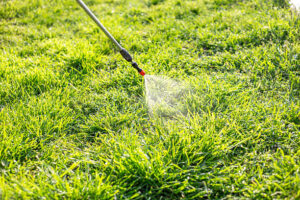
The single most common mistake homeowners make with weed control is applying post-emergent products to a problem that needed pre-emergent treatment weeks or months earlier. Pre-emergent herbicides prevent weed seeds from germinating by creating a barrier in the soil that interrupts the germination process. They do nothing to weeds that are already growing. Post-emergent herbicides kill actively growing weeds but do nothing about the seeds already in the soil waiting for favorable conditions.
Effective weed control requires both. Pre-emergent application for crabgrass in Chantilly needs to happen in late winter to early spring — typically when soil temperatures reach 50 to 55 degrees Fahrenheit at a two-inch depth, which in this area usually falls in late February to mid-March. Miss this window, and crabgrass germinates freely throughout late spring and summer. A second pre-emergent application in late summer targets winter annual weeds like annual bluegrass and hairy bittercress that germinate in fall. Post-emergent weed control treatments address the weeds that established despite pre-emergent coverage and the broadleaf weeds that require a different active ingredient than the pre-emergent provides.
Broadleaf Weeds: The Year-Round Challenge in Chantilly Yards
While crabgrass and annual grassy weeds are the summer headline, broadleaf weeds are a year-round challenge in Chantilly lawns. Dandelion, clover, chickweed, henbit, and oxalis are among the most persistent and common, each with its own seasonal pattern and optimal treatment window. Dandelions, for example, are perennials with deep taproots that survive winter and resume growth each spring. Treating them in summer when they’re visible is less effective than treating in fall when the plant is actively drawing resources downward into the root system, making a foliar herbicide application more effective at killing the whole plant.
Clover is particularly stubborn because it fixes atmospheric nitrogen in the soil — meaning it actually fertilizes itself. It establishes readily in lawns with low nitrogen fertility, which is why it’s so common in lawns that haven’t received adequate fertilization. Treating clover with herbicide without also addressing the fertility deficit that made it competitive in the first place produces only temporary results.
Why Professional Weed Control Produces Better Results
Professional weed control near me services differ from DIY approaches in several critical ways. The first is access to professional-grade herbicide products that are more effective, have longer residual activity, and are more precisely targeted to specific weed species than consumer alternatives. The second is timing — a professional on a scheduled treatment program applies pre-emergent at the correct soil temperature window every year, not when the customer gets around to buying it.
The third difference is diagnosis. A professional weed control service identifies which species are present, understands their lifecycle and optimal treatment timing, and treats accordingly rather than applying a general broadleaf spray to every weed visible on the day of service. A lawn with oxalis and a lawn with clover require different approaches — the same product applied the same way will not produce equally good results on both.
Finally, professional programs build cumulative improvement over multiple seasons. As weed populations are consistently knocked back and the turf is simultaneously supported with proper fertilization and aeration, the lawn becomes progressively more competitive against weed pressure. The weed seedbank in the soil — the reservoir of dormant seeds waiting for an opening — gradually depletes as fewer weeds survive to reproduce.
Bull Run Turf Care & Pest Control: Weed Control Built for Chantilly Lawns
Bull Run Turf Care & Pest Control designs weed control programs for Chantilly homeowners that account for the specific weed species common to this area, the seasonal timing windows that produce the best results in Northern Virginia’s climate, and the soil conditions that influence how effectively treatments penetrate and perform.
Weed control is most effective when integrated with a broader lawn care program that addresses the underlying turf health. A thick, well-fed lawn managed at the right mowing height closes the gaps that weeds exploit. Bull Run’s ability to handle both weed control and general turf management makes them a natural single-source solution for Chantilly homeowners who are tired of fighting weeds on their own.
Frequently Asked Questions
Why do weeds always come back even after I treat them?
Weeds regenerate from roots that weren’t fully killed, from seeds that were already in the soil before treatment, and from new seeds blown in from neighboring properties. Post-emergent treatment kills visible weeds but doesn’t address the seed reservoir in the soil or prevent new germination. Consistent pre-emergent treatment reduces new weed establishment over time, but it takes multiple seasons of treatment to substantially deplete the weed seedbank.
Is it safe to apply herbicides near my vegetable garden?
Most lawn herbicides are formulated for turf use and should be kept away from edible plants and garden beds. There are products appropriate for use in and around edible gardens, and your professional can advise on which areas of your property require adjusted treatment approaches. Drift control and application timing are important considerations when treating lawns adjacent to garden areas.
When is the best time of year to start a professional weed control program?
Late winter to early spring — before the first pre-emergent window — is the ideal entry point for a professional weed control program, as it allows the full seasonal schedule to be applied from the beginning. That said, starting at any point in the season is better than waiting. A professional can assess the current weed pressure and begin the appropriate treatment for whatever point in the seasonal cycle you’re at when you make the call.
Bull Run Turf Care & Pest Control
4229 Lafayette Center Dr STE 1825, Chantilly, VA 20151, United States
Phone: (571) 430-5697
Website: bullrunturf.com
Instagram: @bullruntrf
Facebook: web.facebook.com/bullrunturf