Key Takeaways
Leesburg gives lanternflies a lot to eat. Big shade trees, wooded lots, and the grapevines Loudoun’s wine country is known for are all on their menu.
Fall is egg-laying season. Adults lay eggs from late summer into early winter, so what you do now decides how many hatch on your property next spring.
The best treatment covers the whole life cycle. That means finding host trees, timing treatment right, and removing egg masses most homeowners never notice.
Leesburg has a lot going for it. Historic streets, rolling countryside, and some of the best wineries in Virginia a short drive away. The catch is that all those trees, vines, and green spaces make the area a pretty comfortable home for spotted lanternflies too. If you’ve spotted clusters of gray, spotted bugs on your trees, sticky gunk on your patio, or a sudden crowd of wasps around your maples, it might be time to call a spotted lanternfly exterminator Leesburg homeowners can rely on. We’re Bull Run Turf Care & Pest Control, and we work with homeowners all over Loudoun County. Here’s why lanternflies love it around Leesburg, what to keep an eye out for, and how to stop them before spring.
Why Leesburg Is a Prime Target for Spotted Lanternflies
The spotted lanternfly is an invasive planthopper that feeds on the sap of trees, shrubs, and vines. It came here from Asia and has been spreading across the Mid-Atlantic ever since, moving tree to tree and catching rides on cars, firewood, and outdoor gear.
Leesburg’s mix of older neighborhoods, newer communities, and open countryside gives them a steady food supply. Plenty of homes in Exeter, Potomac Station, River Creek, and Tavistock Farms back up to wooded areas or common grounds full of mature trees. Properties near Ida Lee Park, Ball’s Bluff Battlefield, and along Goose Creek sit right next to exactly the kind of tree cover lanternflies like.
The Wine Country Connection
Grapevines are one of the lanternfly’s favorite foods, which makes Loudoun’s wine country especially sensitive to them. Vineyards around Leesburg, like Stone Tower Winery and Fabbioli Cellars, depend on healthy vines, and heavy lanternfly feeding can wear grapevines down.
For homeowners, the takeaway is simple. If you grow grapes in your backyard or live near farmland, lanternflies have even more reason to stick around. Keeping them in check on residential properties also helps protect the farms and vineyards that give Leesburg so much of its character.
Host Trees in Your Own Backyard
Tree of heaven is the lanternfly’s top pick. It’s a fast-growing invasive tree that shows up along fence lines, roadsides, and the edges of wooded lots all over Loudoun County. Lanternflies will also feed on maples, black walnut, willows, and lots of the ornamental trees you see in Leesburg yards. If you’ve got any of these, start your search there.
How to Tell If You Have a Spotted Lanternfly Problem
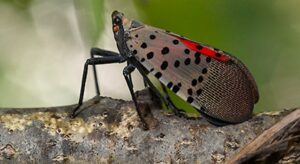
Adults are about an inch long with grayish wings dotted in black. When they jump or fly, they flash bright red hind wings that are hard to miss. In late summer and fall, you’ll often find them bunched up on tree trunks, fences, and the sides of houses.
You’ll also notice what they leave behind. As they feed, lanternflies give off a sticky liquid called honeydew. It drips onto decks, patios, cars, and furniture and leaves everything tacky and shiny. Give it some time, and black sooty mold starts growing on it, staining bark, leaves, and stone.
There’s one more clue people don’t always connect. Wasps, hornets, and bees love honeydew, so a tree that’s suddenly buzzing with stinging insects may be hosting lanternflies too. Put the two together, and your patio can start to feel off-limits.
Why Fall Treatment Matters Most
Lanternflies only live one season, but they leave the next generation behind. From late summer into early winter, adults lay egg masses that look like smears of gray mud. Each one can hold dozens of eggs. The adults die once the cold sets in, but the eggs ride out the winter and hatch into nymphs in spring.
That’s what makes fall such an important window. Every adult you knock down now is one that can’t lay more eggs, and every egg mass you remove is one less wave of nymphs next year. If you wait until spring, you’re starting the fight against a much bigger crowd.
Where Egg Masses Hide
You’ll find egg masses on tree bark, stone walls, fences, sheds, outdoor furniture, grills, play sets, firewood, and cars. They’re often tucked under branches or in cracks you’d never think to check. Since they blend in so well with bark and weathered wood, most people don’t notice them until the nymphs show up.
A Quick Fall Check for Leesburg Homeowners
Before you book an inspection, take a slow walk around your yard. Look at the trunks of your biggest trees, especially maples, black walnut, and any tree of heaven along the fence line. Check under your deck, the legs of your patio furniture, the sides of your shed, and any firewood stacked outside. If your car sits under trees, give it a look too. If you find adults, sticky residue, or gray, mud-like smears anywhere, jot down where they are. That gives our technicians a head start the moment they arrive.
The Limits of Do-It-Yourself Lanternfly Control
Lots of homeowners try to handle lanternflies on their own, and we get it. Sticky bands catch some bugs, but they also catch birds, small animals, and beneficial insects. Store-bought sprays kill the adults they reach and leave the egg masses alone. Swatting helps a bit, but it’s no match for a big population.
What a good spotted lanternfly exterminator brings is knowledge and timing. A trained technician can tell which trees are drawing them in, which life stage to go after at each point in the season, and how to find and destroy egg masses the right way. That’s how you actually bring the numbers down year after year instead of just swatting at them.
How Bull Run Turf Care & Pest Control Handles Spotted Lanternflies
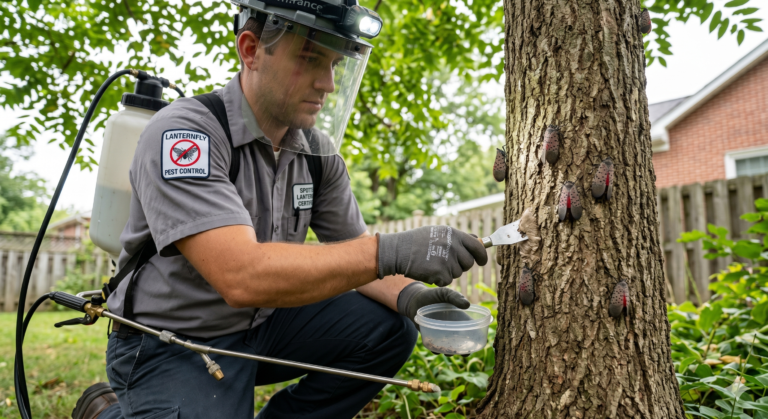
We start with a careful walk around your property. We identify host trees, note where adults are gathering, and check the usual hiding spots for egg masses. That gives us a clear picture of where the trouble is coming from.
Next, we treat, timing it to where the lanternflies are in their life cycle. In the fall, that means going after adults that are still feeding and finding and removing egg masses. We’ll walk you through what we found so you know what to watch for between visits.
We can usually come out the same day you call, and everything we do is backed by our 100% satisfaction guarantee. If the bugs come back between visits, we’ll be back within 48 hours. For year-round coverage, our Perimeter Pest Control plan is $32.99 a month and includes four visits a year.
Experience You Can Count On
Our team is led by owner Paul Eden, a Virginia Certified Horticulturist with more than 35 years of experience. When the pest you’re fighting lives on your trees, it helps to have someone who really understands trees. We know which ones are worth protecting, how lanternfly feeding affects them, and how to treat without hurting the rest of your landscape.
Choosing a Spotted Lanternfly Exterminator Near Me in Loudoun County
When you’re searching for a spotted lanternfly exterminator near me, look for a team that actually knows Northern Virginia. Someone local can get to you faster, understands the trees and seasons that drive lanternfly activity here, and can come right back if the bugs drift over from the neighbor’s yard.
We work all over Loudoun County, including Leesburg, Lansdowne, and Ashburn, and we cover Fairfax, Prince William, and Arlington Counties too. Wherever you are, we’ll build a plan around your property and your trees.
Protect Your Leesburg Property Before Spring
The egg masses on Leesburg trees, fences, and patios this fall are next spring’s lanternflies. Getting an inspection done now is the simplest way to break that cycle. Call us at 571-430-5697 any time between 9:00 AM and 5:00 PM, and we’ll get you on the schedule.
Frequently Asked Questions
Do spotted lanternflies kill trees?
Heavy feeding can weaken trees and leave them more open to other problems, especially young trees and grapevines. Most mature trees pull through, but the honeydew and sooty mold can still damage leaves and stain everything underneath. Getting on top of them early is the best way to protect your yard.
Is spotted lanternfly treatment safe for my yard and pets?
We keep treatment targeted to the trees and areas where lanternflies feed and gather. After each visit, we’ll let you know if there’s anything you need to do, like keeping pets off treated areas until they dry.
Will lanternflies come back after treatment?
They can, since lanternflies wander in from nearby yards and wooded areas. That’s why ongoing visits through our Perimeter Pest Control plan work well, and why we’ll come back within 48 hours if they return between visits.
Bull Run Turf Care & Pest Control 4229 Lafayette Center Dr STE 1825, Chantilly, VA 20151, United States