
Key Takeaways:
- Effective tick control combines yard treatment, landscaping adjustments, and pet protection rather than relying on a single method.
- Ticks thrive in tall grass, leaf litter, and wooded edges, making yard maintenance a critical part of any control strategy.
- Professional flea and tick control treatments target ticks at multiple life stages, offering more reliable protection than DIY sprays alone.
Ticks are more than just an outdoor nuisance. They’re carriers of serious illnesses like Lyme disease, which makes effective tick control a genuine health priority for households with kids, pets, or anyone who spends time outdoors. Unfortunately, many popular tick prevention methods, like a single yard spray or relying solely on pet collars, only address part of the problem, leaving gaps that allow tick populations to persist.
This article breaks down the tick control methods that actually produce results, why a layered approach works better than any single method alone, and what a comprehensive professional treatment plan typically includes.
Understanding Where Ticks Live and Thrive
Before exploring control methods, it helps to understand tick behavior. Unlike mosquitoes, ticks don’t fly or jump. They wait in vegetation, often at the edge of tall grass, leaf litter, or wooded areas, and latch onto passing hosts as they brush by. This means tick populations tend to concentrate in specific zones around a property rather than being evenly distributed across the entire yard.
Common tick hotspots include the perimeter where lawn meets wooded areas, overgrown grass, leaf piles, and areas with dense ground cover or brush. Identifying these zones is often the first step in building an effective control strategy, since treatment focused on these specific areas tends to be far more effective than treating an entire yard uniformly.
Why Lawn Maintenance Alone Isn’t Enough
While keeping grass mowed and trimmed reduces tick habitat, it rarely eliminates a tick problem on its own, especially for properties bordering wooded areas or dense vegetation. Lawn maintenance is an important supporting strategy, but it typically needs to be paired with targeted treatment to meaningfully reduce tick activity.
Tick Control Methods That Actually Work
Several strategies, when combined, offer the most reliable protection against ticks on residential properties.
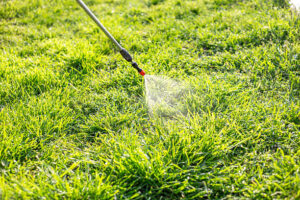
Targeted yard treatment applied to known tick hotspots, like the lawn perimeter, wooded edges, and overgrown vegetation, addresses ticks where they actually live rather than treating the entire property uniformly. This focused approach tends to be more effective and efficient than broad, untargeted spraying.
Landscaping adjustments can significantly reduce tick habitat over time. Creating a buffer zone of wood chips or gravel between lawn and wooded areas, removing leaf litter, and keeping vegetation trimmed all reduce the conditions ticks need to thrive.
Pet protection plays an important supporting role, since pets can carry ticks into the yard and home from other areas. Veterinarian-recommended flea and tick prevention for pets works alongside yard treatment to reduce overall exposure risk for the household.
Why a Single Method Rarely Solves the Problem
Relying on just one approach, like a single yard spray with no landscaping changes, or pet prevention with no yard treatment, tends to leave gaps that allow tick populations to persist. The most effective strategies combine multiple methods, addressing the problem from several angles rather than relying on one product or treatment to do all the work.
Why DIY Tick Treatments Often Underperform
Store-bought tick sprays can offer some short-term reduction in tick activity, but they typically lack the targeted application and product strength of professional treatments. DIY products are also often applied uniformly across a lawn rather than focused on actual tick hotspots, which reduces their overall effectiveness while increasing unnecessary product use across areas where ticks aren’t actually concentrated.
Timing is another common DIY shortfall. Ticks are most active during specific seasonal windows, and treatments applied outside these periods are far less effective than those timed to coincide with peak tick activity.
The Importance of Treating Multiple Life Stages
Ticks go through several life stages, including larvae, nymphs, and adults, each requiring slightly different conditions to thrive. Professional flea and tick control treatments are formulated to address ticks across these different life stages, reducing the population more comprehensively than a single-application DIY product typically can.
What a Professional Flea and Tick Control Plan Includes
A comprehensive professional service typically includes several coordinated steps:
- Property assessment to identify tick hotspots and risk zones
- Targeted treatment of high-risk areas, including lawn perimeters and vegetation
- Recurring applications scheduled around peak tick activity seasons
- Recommendations for landscaping adjustments that reduce long-term tick habitat
This combination of targeted treatment and preventative recommendations tends to produce more lasting results than relying on store-bought products alone.
Tick Control for Chantilly Properties
Local wooded areas, humidity levels, and seasonal patterns all influence tick activity, which is why a flea and tick control Chantilly plan built around regional conditions tends to outperform generic, nationwide tick prevention advice. Properties bordering wooded lots or dense vegetation in this area often see higher tick pressure and may benefit from more frequent or targeted treatment.
Schedule Your Tick Control Treatment
If ticks have become a recurring concern on your property, a professional assessment can identify the specific hotspots driving the problem and build a treatment plan designed to address them directly, rather than relying on guesswork or store-bought sprays.
For homeowners searching for flea and tick control near me, reaching out ahead of peak tick season ensures your property is protected before activity reaches its highest levels.
Frequently Asked Questions
What’s the most effective method for tick control?
A combination approach works best, including targeted yard treatment of known tick hotspots, landscaping adjustments to reduce habitat, and pet protection to limit ticks being carried into the home.
Where do ticks usually live on a property?
Ticks typically concentrate in tall grass, leaf litter, and the edges where lawn meets wooded or heavily vegetated areas, rather than spreading evenly across an entire yard.
How often should professional tick treatment be applied?
Most plans involve recurring treatments throughout peak tick season, timed to address ticks at multiple life stages for more consistent, longer-lasting protection.
Bull Run Turf Care & Pest Control
4229 Lafayette Center Dr STE 1825, Chantilly, VA 20151, United States