Key Takeaways
Takeaway 1: Consumer-grade spotted lanternfly products kill on contact but leave the overall infestation intact — without residual protection and life-stage-appropriate application, reinfestation happens within days.
Takeaway 2: Spotted lanternflies are a regulated pest in Virginia, and homeowners in affected counties have a legal responsibility to report infestations and take steps to prevent spread.
Takeaway 3: A professional exterminator addresses the full infestation picture — active insects, egg masses, and reinfestation sources — rather than just the insects visible at the time of treatment.
The first instinct when you discover spotted lanternflies on your property is usually to handle it yourself. You find something at the hardware store that says it kills insects on contact, you spray the tree, and for a day or two, it looks like it worked. Then they’re back. Maybe more of them than before, spreading to a second tree or moving onto the siding of the house. You spray again. Same result. Eventually the realization sets in that whatever you’re doing isn’t actually controlling the problem — it’s just delaying it long enough to feel like progress before it snaps back.
This pattern is nearly universal for homeowners attempting DIY spotted lanternfly management, and it’s not a failure of effort or persistence. It’s a function of what consumer products can and can’t do against an insect that is mobile, reproductively efficient, and constantly being reinforced by populations on adjacent properties. A professional spotted lanternfly exterminator near me brings a fundamentally different approach — one built around breaking the infestation cycle rather than repeatedly knocking back what’s visible.
What Consumer Products Can’t Do
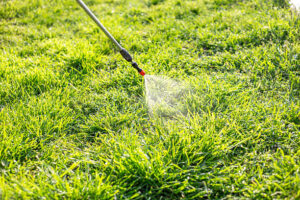
The active ingredients available in consumer spotted lanternfly sprays are primarily contact insecticides — they kill insects they directly touch but leave no meaningful residual activity on treated surfaces. This means the product stops working within hours to days of application, and any lanternflies that arrive from neighboring properties after that window are completely unaffected.
Consumer products also can’t address egg masses effectively. The waxy coating on fresh egg masses and the location of many masses in hard-to-reach spots — high on tree trunks, under deck boards, in bark crevices — means that even a thorough DIY egg mass scraping campaign leaves a significant portion of the reproductive population intact. The insects that hatch from those remaining masses in spring are the foundation of the following season’s infestation.
Finally, consumer treatments don’t account for life stage. Products that are moderately effective against adult lanternflies may be poorly suited to nymph control, and vice versa. Without knowledge of which life stage is currently active and which product class is appropriate for that stage, treatment timing and product selection are essentially guesswork.
The Legal Dimension: Virginia’s Spotted Lanternfly Regulations
Spotted lanternflies are a regulated pest in Virginia, and homeowners in affected counties are expected to take active steps to prevent their spread. The Virginia Department of Agriculture and Consumer Services maintains a quarantine zone that encompasses most of Northern Virginia, and movement of materials that could carry egg masses — firewood, outdoor furniture, vehicles, landscaping equipment — out of quarantine zones is regulated.
This regulatory context matters for homeowners because it frames spotted lanternfly control not just as a personal property decision but as a community responsibility. Working with a professional spotted lanternfly exterminator ensures that treatment is being conducted in compliance with current regulations and using methods that contribute to regional management goals rather than inadvertently spreading the pest.
What Professional Treatment Actually Addresses
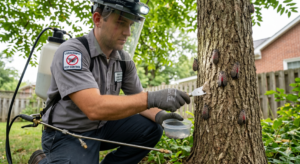
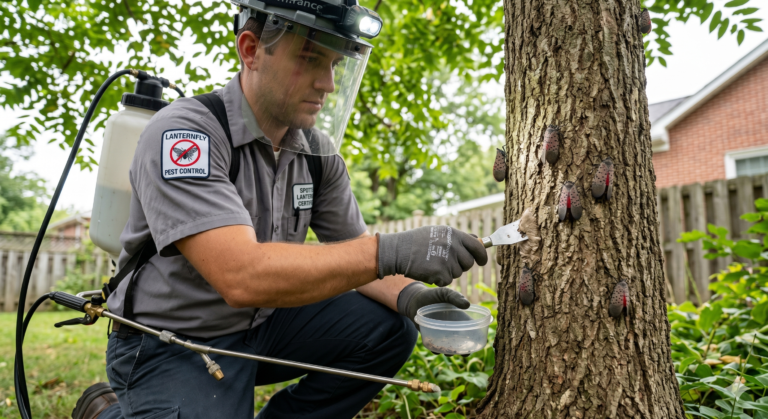
A professional exterminator approaches a spotted lanternfly infestation comprehensively. The starting point is a property assessment that identifies where the insects are currently active, which plants are most heavily affected, where egg masses are present, and what the likely reinfestation pressure looks like from the surrounding environment. This information shapes a treatment plan that addresses the actual infestation rather than the most visible part of it.
Professional-grade insecticides used in spotted lanternfly treatment provide residual activity that extends protection for weeks beyond the application date, compared to the hours provided by consumer contact sprays. Application methods — trunk injections for high-value trees, perimeter barrier treatments for property-level protection, targeted sprays for specific high-density feeding sites — are selected based on the site conditions rather than applied uniformly regardless of context.
Egg mass identification and destruction, where accessible, is incorporated into service visits. For properties with severe infestations, treatment schedules that include both spring nymph visits and late-summer adult visits provide substantially better season-long protection than any single treatment could achieve.
How to Know If Your Infestation Requires Professional Intervention
Some early-season spotted lanternfly activity can be partially managed with diligent physical removal and consumer products if caught very early — a handful of insects on a single plant before populations build. But the threshold at which professional treatment becomes necessary arrives quickly, and most homeowners in Northern Virginia have already passed it before they start seriously looking for help.
If you are seeing spotted lanternflies consistently across multiple trees or plants, if you are finding honeydew accumulation on outdoor surfaces, if you are finding egg masses on structures or multiple trees, or if you had a visible infestation the previous season — you are past the point where DIY management is likely to produce meaningful results. The right response at that stage is to call a professional, describe what you’ve observed, and schedule an assessment before the peak of the current season’s feeding period.
What to Tell a Professional When You Call
When you reach out to a spotted lanternfly exterminator near me for the first time, the information you provide helps the technician prepare for the assessment and treatment visit. Be ready to describe when you first noticed activity, which plants or structures you’ve seen them on most consistently, whether you’ve found egg masses and how many, what treatments you’ve already tried and what results you saw, and whether neighboring properties appear to have active infestations.
This information helps the professional build an accurate picture of where the infestation is in its seasonal cycle, how severe the current population is, and what treatment approach is most likely to produce results quickly and sustain protection through the remainder of the season.
Bull Run Turf Care & Pest Control: A Professional Approach to a Regional Problem
Bull Run Turf Care & Pest Control serves homeowners across Northern Virginia with spotted lanternfly extermination services that are built around the realities of managing this pest in a region where it is well established and seasonally active. The team does not apply generic pest control protocols to a species-specific problem — the assessment, product selection, application methods, and follow-up scheduling are all developed around spotted lanternfly biology and the specific conditions of Northern Virginia’s residential properties.
For homeowners who have been fighting this pest on their own and not getting ahead of it, professional treatment offers what DIY approaches cannot: the right products, the right timing, and the right follow-through to actually break the cycle.
Frequently Asked Questions
How long does professional spotted lanternfly treatment take?
A typical treatment visit for a residential property takes one to two hours depending on property size, the number of host trees, and the severity of the infestation. The initial assessment visit may take longer as the technician thoroughly inspects the property and documents infestation sites. Follow-up visits are generally shorter as they focus on areas identified during the initial assessment.
Will treatment kill beneficial insects in my yard?
Professional applicators use targeted application methods designed to minimize impact on non-target species. Treatments are applied to specific host trees, perimeter areas, and active feeding sites rather than broadcast across the entire property. Pollinators are best protected by avoiding treatment during bloom periods on flowering plants — a professional will account for this during the assessment and adjust the plan accordingly.
What is the difference between a contact insecticide and a systemic treatment for spotted lanternflies?
A contact insecticide kills insects that directly touch the treated surface at the time of application or shortly after. A systemic insecticide is absorbed by the plant and moves through its vascular tissue, making the plant itself toxic to insects feeding on its sap. Systemic treatments — typically applied as trunk injections or soil drenches — are particularly effective for high-value trees because they provide protection from the inside out and remain active throughout the growing season. Your technician will recommend the approach most appropriate for the trees on your specific property.
Bull Run Turf Care & Pest Control
4229 Lafayette Center Dr STE 1825, Chantilly, VA 20151, United States
Phone: (571) 430-5697
Website: bullrunturf.com
Instagram: @bullruntrf
Facebook: web.facebook.com/bullrunturf