Before You Dive In — 3 Key Takeaways:
- Spotted lanternflies are an invasive species spreading rapidly across Northern Virginia and pose a serious threat to trees, crops, and landscaping.
- DIY treatments are rarely effective — professional spotted lanternfly extermination offers targeted, lasting results.
- Early intervention is critical; waiting allows infestations to grow and spread to neighboring properties.
If you’ve noticed clusters of colorful, winged insects on your trees, fences, or outdoor furniture in recent months, you’re not alone. Spotted lanternflies have swept through Northern Virginia at an alarming rate, and Chantilly homeowners are increasingly finding themselves on the front lines of this invasive pest crisis. Whether you’ve spotted a single insect or discovered egg masses on the side of your home, the time to act is now — before the problem multiplies beyond control.
Finding a reliable spotted lanternfly exterminator chantilly residents can count on is no longer a luxury — it’s a necessity. These insects don’t just cause minor cosmetic damage. They threaten the trees, gardens, and outdoor spaces that define the character of Northern Virginia properties. This guide will walk you through everything you need to know: what spotted lanternflies are, why they’re such a serious problem, and what effective professional treatment looks like.
What Is the Spotted Lanternfly and Why Is It a Problem in Chantilly?
The spotted lanternfly (Lycorma delicatula) is an invasive planthopper originally native to China, India, and Vietnam. It was first detected in the United States in Pennsylvania in 2014 and has since marched steadily southward, establishing populations throughout Virginia, including Fairfax County and the Chantilly area.
What makes this pest so destructive is its feeding behavior. Spotted lanternflies feed on the sap of more than 70 different plant species, using piercing mouthparts to extract nutrients directly from stems, trunks, and branches. As they feed, they excrete a sticky, sugary substance called honeydew that coats leaves and surfaces beneath infested trees. This honeydew promotes the growth of sooty mold — a black fungal coating that blocks sunlight from reaching leaves and further weakens the plant.
Left unchecked, spotted lanternfly infestations can kill young trees, severely weaken established hardwoods, and destroy ornamental plantings. In commercial agricultural settings, they devastate vineyards and orchards. In residential Chantilly yards, they can strip the life from beloved shade trees, garden plants, and landscape shrubs within a single season.
Signs of a Spotted Lanternfly Infestation on Your Property
Catching an infestation early dramatically improves treatment outcomes. Here are the most important warning signs to look for on your property:
- Egg masses: Gray, putty-like patches roughly one inch long on tree trunks, fences, outdoor furniture, and even vehicles. They often look like smeared mud.
- Nymph clusters: Black insects with white spots (early nymphs) or red and black insects with white spots (later nymphs) massed on plant stems and trunks.
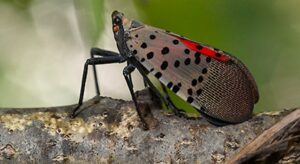
- Adult insects: Distinctive wings — gray outer wings with black spots, bright red hindwings — most visible from late summer through fall.
- Honeydew and sooty mold: Sticky residue coating leaves, sidewalks, and garden furniture, accompanied by black mold growth.
- Wilting or dying branches: Unexplained dieback on otherwise healthy trees, particularly on tree of heaven, maple, walnut, and willow.
Why DIY Spotted Lanternfly Treatments Often Fall Short
It’s tempting to reach for a bottle of insecticide spray at the hardware store when you first notice spotted lanternflies on your property. Unfortunately, the biology of this pest makes consumer-grade treatments largely ineffective for anything beyond temporary knockdown.
Spotted lanternflies are highly mobile insects. Even if you eliminate the adults visible on your property today, new populations can migrate from neighboring lots, woodlines, or public green spaces within days. Without a coordinated, multi-treatment strategy, you’re essentially playing an endless game of catch-up against a pest that reproduces rapidly and travels freely.
Additionally, consumer sprays rarely penetrate the areas where lanternflies feed most actively — high in the tree canopy — and they offer very little residual protection. A single application provides, at best, a few days of surface-level control.
This is why searching for a qualified spotted lanternfly exterminator near me is the smarter, more cost-effective move for Chantilly homeowners who want real, lasting results. Local professionals understand the pest’s movement patterns, life cycle timing, and the specific conditions that make Northern Virginia properties especially vulnerable.
What to Expect During a Professional Treatment Visit
When a professional spotted lanternfly exterminator arrives at your Chantilly property, the process typically unfolds in several structured steps:
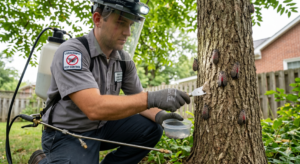
- Property inspection: The technician will assess every area of your yard and structures for signs of infestation, including egg masses, nymph clusters, and adult activity.
- Treatment plan discussion: You’ll receive a clear explanation of what will be treated, which products will be used, and why.
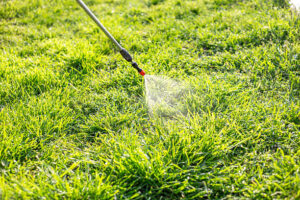
- Application: Treatment methods may include trunk injections, targeted foliar sprays on infested plants, egg mass scraping and destruction, and tree banding.
- Post-treatment instructions: You’ll be advised to keep children and pets off treated areas for the appropriate dry time, typically 30 to 60 minutes, and to avoid irrigating treated surfaces for 24 hours.
- Follow-up scheduling: Given the mobility of spotted lanternflies, follow-up treatments are almost always necessary and will be scheduled at the appropriate interval.
How a Professional Spotted Lanternfly Exterminator Eliminates the Problem
Professional spotted lanternfly exterminator services go far beyond what a store-bought spray can accomplish. Licensed exterminators have access to professional-grade residual insecticides, systemic trunk injection products, and targeted application equipment that reaches infested areas that consumer applicators simply cannot.
A well-designed professional treatment program typically includes multiple intervention points:
- Trunk band traps to intercept nymphs as they climb trees
- Systemic insecticide injections that are absorbed by the tree and transferred to feeding insects
- Foliar residual sprays applied to resting and feeding zones
- Egg mass removal and destruction in early spring
- Perimeter barrier applications to reduce migration from adjacent properties
A local expert who services the Chantilly and Fairfax County area understands exactly when these methods are most effective based on the regional pest calendar — knowledge that a national pest control franchise often lacks.
The Best Time of Year to Treat for Spotted Lanternflies in Northern Virginia
Effective spotted lanternfly management depends heavily on timing. The pest goes through four distinct life stages in a single year, and each stage calls for different treatment strategies.
- Eggs (October–May): Egg masses are present on hard surfaces from fall through spring. Scraping and destroying masses in late winter and early spring is a critical first intervention.
- Early nymphs (May–June): Small, black-and-white nymphs emerge and begin feeding. This is an excellent window for banding and residual spray treatments.
- Late nymphs (July–August): Red-and-black nymphs are more mobile and begin moving higher into trees. Systemic treatments and foliar sprays are most valuable here.
- Adults (August–November): Fully developed adults feed aggressively and lay egg masses before the first frost. Perimeter sprays and systemic treatments address this stage.
Acting early in the season, before adult populations peak, is the single most effective strategy for reducing the overall infestation on your property.
Seasonal Spotted Lanternfly Control Tips for Chantilly Homeowners
- Winter/Early Spring: Walk your property and scrape every egg mass you find into a bag with hand sanitizer or rubbing alcohol. Seal and discard.
- Spring: Install sticky band traps on high-value trees before nymphs emerge in May. Check and replace bands regularly.
- Late Spring: At first nymph sighting, contact a professional exterminator. Don’t wait for the population to grow.
- Summer: Remove tree of heaven (Ailanthus altissima) from your property if present — it’s the spotted lanternfly’s preferred host and a population magnet.
- Fall: Schedule perimeter barrier treatments in August and September to minimize adult populations before egg-laying season peaks.
How Bull Run Turf Care & Pest Control Protects Chantilly Properties From Spotted Lanternflies
Bull Run Turf Care & Pest Control has built a trusted reputation throughout Northern Virginia for identifying and eliminating the pest pressures that matter most to local homeowners — and spotted lanternflies are now squarely at the top of that list. With deep roots in the Chantilly and Fairfax County community, Bull Run brings locally informed expertise to every property assessment.
Bull Run’s spotted lanternfly program is built around the specific seasonal pest calendar for Northern Virginia, using a combination of inspection, targeted treatment, and follow-up to ensure that infestations don’t simply return after the first visit. Their licensed technicians are trained to identify all life stages of the spotted lanternfly and to apply the most appropriate treatment method for each situation — whether that means tree banding, systemic injection, residual spray, or a combination approach.
For homeowners concerned about the environmental impact of treatments, Bull Run prioritizes responsible application practices that target pest activity zones without unnecessary broad-spectrum spraying.
Frequently Asked Questions About Spotted Lanternfly Extermination
How quickly can a spotted lanternfly infestation spread?
Spotted lanternflies can spread extremely rapidly, particularly during the late summer adult stage when they are fully mobile and actively flying between properties. A yard that has several egg masses in early spring can have a substantial adult population by August. Because adults travel freely and migrate from neighboring properties, early professional intervention is far more effective than waiting until populations are visible throughout your yard.
Is spotted lanternfly treatment safe for my family and pets?
Professional spotted lanternfly exterminators use EPA-registered products that are applied by licensed, trained technicians following established safety protocols. When applied correctly and allowed the appropriate dry time — typically 30 to 60 minutes for exterior applications — these treatments are considered safe for families and pets. Before your treatment visit, ask your technician about the specific products being used and any precautions specific to your property, particularly if you have water features, vegetable gardens, or pets with sensitivities.
How many treatments will I need to control spotted lanternflies?
The number of treatments needed depends on the severity of the infestation and your property’s proximity to wooded areas, tree of heaven populations, and neighboring infested properties. Most Chantilly homeowners require two to three treatments per active season to maintain effective control. Properties near heavy woodlines or with significant host tree populations may benefit from a more frequent schedule. Your exterminator will assess your property and recommend a customized treatment plan after the initial inspection.
Spotted lanternflies are not a pest you can afford to ignore or address halfway. If you’ve noticed any signs of infestation on your Chantilly property, the smartest move you can make is reaching out to a licensed local professional before the population grows and spreads. Bull Run Turf Care & Pest Control is ready to inspect your property, identify the scope of the problem, and implement a targeted treatment program designed specifically for Northern Virginia’s pest environment. Don’t let this invasive pest take over your yard — take action while the window for early-season control is still open.
Bull Run Turf Care & Pest Control 4229 Lafayette Center Dr STE 1825, Chantilly, VA 20151, United States