Key Takeaways
- Spotted lanternfly populations move through distinct life stages across the year, and each stage calls for a different control approach.
- Egg mass removal during the dormant season is one of the most effective ways to reduce next year’s population before it starts.
- A season-by-season spotted lanternfly control plan is far more effective than reacting only when adults become visible.
Understanding the Spotted Lanternfly Life Cycle
Effective spotted lanternfly control depends on understanding that this pest looks and behaves completely differently depending on the time of year. A treatment approach that works well against adults in late summer does nothing against egg masses in winter, which is why a single-season mindset tends to fall short against an infestation that’s building year over year.
Egg Masses and Early Spring
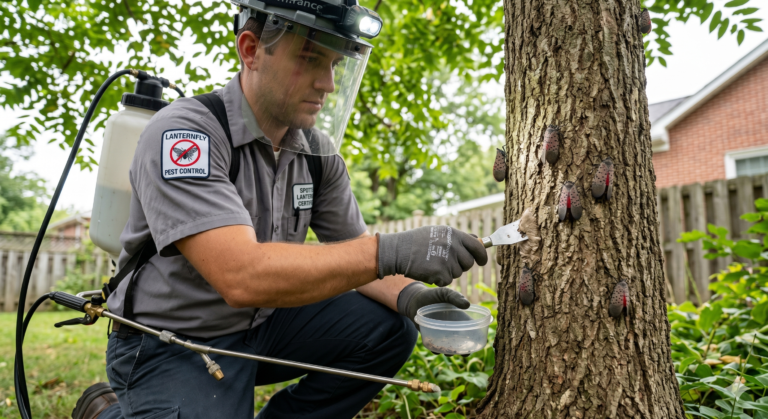
Spotted lanternflies lay their eggs in fall, and these egg masses overwinter on tree bark, fences, outdoor furniture, and other flat surfaces through the coldest months. Each egg mass can contain dozens of eggs, which means a small number of masses left untreated can translate into a substantially larger population once they hatch in spring.
Nymph Stage Through Late Summer
Once eggs hatch in spring, nymphs emerge and begin feeding on a wide range of plants, going through several stages as they grow and change color from black with white spots to red with black markings. This nymph stage, which extends into summer, is when populations are actively feeding and causing plant stress, making it a critical window for targeted treatment.
Adult Swarms in Fall
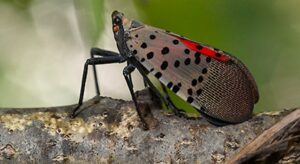
By late summer into fall, nymphs mature into the recognizable adult spotted lanternfly with its distinctive spotted wings. Adults are the most visible stage and the one most people associate with an infestation, but by the time large adult swarms appear, the population has often already been building for months.
Seasonal Treatment Strategy for Chantilly Properties
A season-by-season plan starts in late fall and winter with a focus on locating and removing egg masses before they have a chance to hatch. As spring arrives, monitoring shifts toward catching nymphs early, since treating this stage helps prevent the population from reaching full adult numbers. Summer and early fall treatment then targets any remaining nymphs and adult lanternflies, particularly around high-value or heavily infested trees. This layered approach interrupts the population at multiple points rather than relying on a single treatment to solve the entire problem.
Protecting High-Risk Trees and Plants
Not every tree on a property faces the same level of risk. Tree-of-heaven is a preferred host and often serves as a magnet for lanternfly populations, while maples, black walnut, and grapevines are also frequently targeted. Identifying which trees and plants on your property are most attractive to spotted lanternflies allows treatment to be prioritized where it will have the greatest impact, rather than spreading resources evenly across a property where risk isn’t evenly distributed.
Why Year-Round Monitoring Matters
Because spotted lanternflies move through such distinct stages, a property that looks pest-free in April can still be harboring egg masses that will hatch into a full population by midsummer. Regular monitoring throughout the year, not just during the months when adults are visible, gives a much clearer picture of where an infestation actually stands and whether treatment is keeping pace with the population.
Building a Long-Term Control Plan With a Professional
Because spotted lanternfly populations can rebound quickly if even a portion of the egg masses go untreated, a long-term plan tends to produce far better results than isolated, reactive treatments. Many Chantilly homeowners searching for spotted lanternfly control near me are looking for exactly this kind of ongoing approach rather than a single visit. A tailored spotted lanternfly control Chantilly plan accounts for your property’s specific trees, exposure, and the seasonal timing that gives treatment the best chance of success.
FAQs
When is the best time to start spotted lanternfly control? Late fall and winter are ideal for egg mass removal, since this stage is the easiest to control before the population has a chance to hatch and spread in spring.
Do I need treatment every year, or just once? Because spotted lanternflies can migrate in from neighboring properties, most Chantilly properties benefit from an annual, season-by-season plan rather than a single one-time treatment.
Can I treat spotted lanternflies myself without professional help? Homeowners can scrape visible egg masses on their own, but nymph and adult treatment, along with prioritizing which trees need attention, is typically more effective when handled by a professional familiar with the pest’s full life cycle.
Bull Run Turf Care & Pest Control 4229 Lafayette Center Dr STE 1825, Chantilly, VA 20151, United States