Before You Dive In — 3 Key Takeaways:
- Chantilly’s proximity to wooded areas and older neighborhoods creates year-round pest pressure that requires proactive — not reactive — management.
- The most effective pest control programs combine exterior barrier treatments, interior crack/crevice applications, and seasonal follow-ups.
- Northern Virginia homeowners face a unique mix of pests including stink bugs, spotted lanternflies, and overwintering rodents that generic national programs often miss.
Ask any Chantilly homeowner what they find most frustrating about pest control, and the answer is almost always the same: I’ve had it treated, and they keep coming back. Whether it’s ants reappearing in the kitchen every spring, stink bugs coating the sunny side of the house every fall, or mice finding their way into the garage when temperatures drop, pest pressure in Chantilly is persistent, varied, and season-driven in ways that catch even experienced homeowners off guard.
Understanding the true nature of pest control chantilly homeowners actually need begins with understanding why Northern Virginia’s specific combination of geography, climate, and housing stock creates such consistent, year-round pest challenges — and why the solutions have to be equally consistent to be effective.
The Most Common Pests Affecting Chantilly Homes
Chantilly’s position at the edge of Fairfax County’s suburban-wooded interface creates a uniquely diverse pest environment. Unlike urban properties that face a narrower range of pest threats, Chantilly homes deal with pests migrating from nearby woodlines, traveling along established neighborhood corridors, and exploiting the structural characteristics of established residential construction.
Pest control in Chantilly must address this full spectrum to be effective:
Ants are the most universally reported pest problem in Chantilly homes, with odorous house ants, pavement ants, and carpenter ants all active throughout the spring and summer seasons. Each species requires a different treatment approach, which is why generic ant spray rarely solves the problem long-term.
Spiders — including wolf spiders, cellar spiders, and the occasional brown recluse — are persistent in Chantilly’s older homes and properties adjacent to wooded lots. They’re largely beneficial predators but their presence inside homes is unwelcome for most families.
Stink bugs are the signature fall pest of Northern Virginia, aggregating by the hundreds on the south and west-facing walls of Chantilly homes each September as they seek overwintering sites. No other pest generates more frustrated pest control calls in Fairfax County between August and November.
Rodents — mice and occasionally rats — are a year-round concern in Chantilly, with pressure peaking in fall and winter as outdoor populations seek the warmth of heated structures. Chantilly’s established neighborhoods with mature landscaping, wood piles, and aging utility penetrations provide abundant entry and harborage opportunities.
Mosquitoes make outdoor living difficult in Chantilly from late April through October, with Asian tiger mosquitoes particularly aggressive in the shaded, humid conditions common throughout the county.
Cockroaches — primarily American cockroaches entering from exterior sources and, in some cases, German cockroaches introduced through deliveries or secondhand goods — are a persistent concern in Chantilly homes, particularly in kitchens with moisture issues.
Wasps and hornets build nests on building exteriors, in attic spaces, and in the ground of Chantilly yards every spring, with colonies reaching peak activity and aggression by late summer.
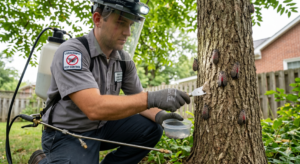
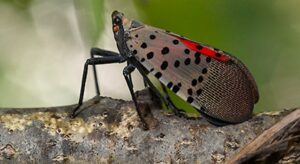
Spotted lanternflies have become an increasingly serious pest pressure in Chantilly and throughout Fairfax County, threatening trees and outdoor spaces while creating enormous nuisance pressure during their late summer and fall adult stage.
Seasonal Pest Activity in Chantilly, VA
Understanding the seasonal rhythm of pest activity in Chantilly is the foundation of a proactive — rather than reactive — pest management strategy:
Spring (March–May): Ant colonies wake from semi-dormancy and begin foraging aggressively. Stinging insect queens emerge and begin building new nests. Spotted lanternfly nymphs hatch in May. Termite swarmers may emerge on warm days after rain.
Summer (June–August): Mosquitoes reach peak activity. Spiders disperse from overwintering sites and become visible throughout homes. Stinging insect colonies reach maximum size by August and become significantly more aggressive when disturbed. Grubs feed on grass roots below the surface.
Fall (September–November): Stink bug aggregation peaks in September and October. Rodents begin moving indoors as temperatures drop. Cockroaches seek the warmth of heated structures. Spotted lanternfly adults feed aggressively and lay egg masses.
Winter (December–February): Mice and rats remain active inside heated structures throughout winter. Cockroaches continue reproducing in temperature-controlled environments. Overwintering insects — stink bugs, box elder bugs, cluster flies — may become active on warm days inside walls and attic spaces.
Why Chantilly Homeowners Struggle With DIY Pest Control
The consumer pest control products available at hardware stores and home improvement centers are designed for broad application across a generic average pest population. They’re not calibrated for the specific pest species, the regional timing factors, or the application targets that make the difference in Chantilly’s pest environment.
A consumer aerosol spray can kill the ants it contacts but does nothing to address the colony that’s sending them. A perimeter granule designed for use on sandy, well-draining soil drains away from Chantilly’s clay surface long before it reaches the insects it’s meant to target. A rodent trap placed without knowledge of travel patterns and entry point location catches individual rodents while the rest of the population continues to use the same access points.
When Chantilly homeowners search for pest control near me with genuinely local expertise, they’re looking for a provider who understands these regional nuances — not a national franchise applying the same program that’s deployed in every market from Maine to Florida.
The Hidden Entry Points Pests Use to Get Into Chantilly Homes
Most Chantilly pest infestations enter through structural vulnerabilities that homeowners walk past daily without noticing. The most commonly exploited entry points include:
Foundation cracks and gaps: Even hairline cracks in a Chantilly home’s foundation provide sufficient access for ants, cockroaches, and small rodents. Clay soil’s expansion and contraction cycles create these gaps gradually over time in most established homes.
Utility and pipe penetrations: Every point where plumbing, electrical conduit, gas lines, or HVAC components enter the building through the foundation or walls is a potential pest entry point if not properly sealed with appropriate caulk or foam.
Garage door gaps: The bottom seal of a garage door deteriorates over time, creating gaps that are easily large enough for mice — which require only a quarter-inch opening to enter.
Roofline and soffit gaps: Wasps, carpenter bees, and overwintering insects commonly access attic spaces through gaps at roof-wall intersections, damaged soffit panels, and under-sealed ridge vents.
Window and door frames: Age, moisture, and seasonal wood movement create gaps around frames that insects exploit readily.
What a Professional Pest Control Program in Chantilly Looks Like
A genuinely effective professional pest control program for a Chantilly home is built around a multi-layered, seasonally adjusted approach:
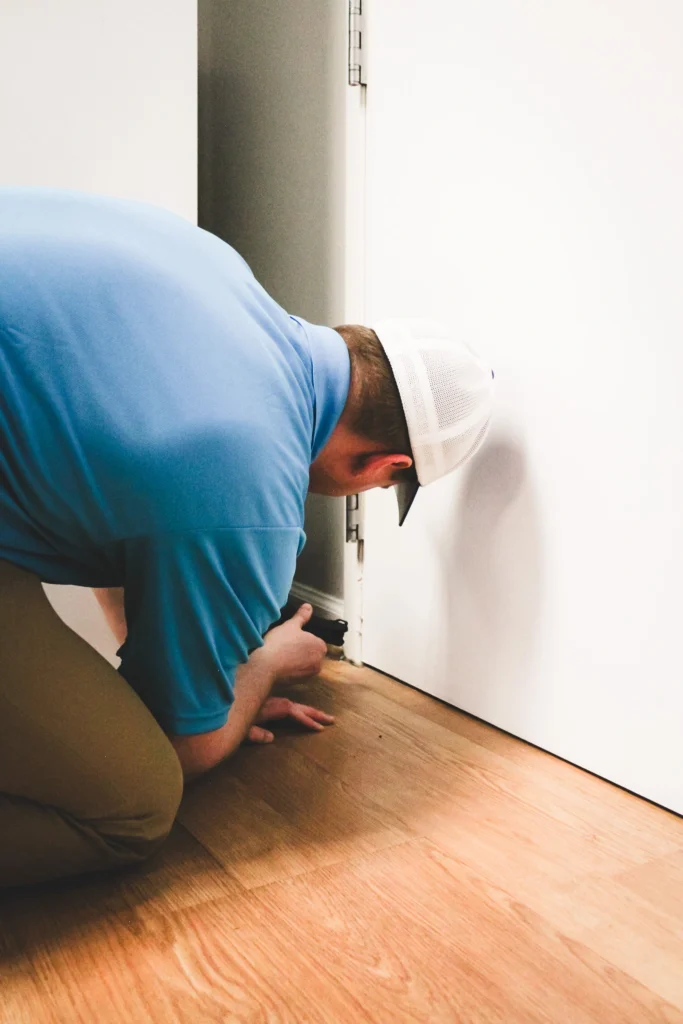
Initial inspection: Before any treatment, a licensed technician assesses the full property — interior and exterior — to identify active pest activity, entry points, conducive conditions, and pest species present. This inspection informs every subsequent service decision.
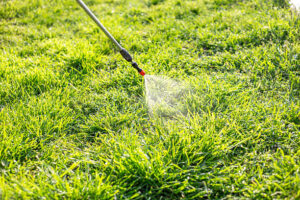
Exterior perimeter treatment: A residual liquid insecticide is applied around the foundation, entry points, eaves, and landscaping borders to create a chemical barrier that intercepts pests before they reach your home’s interior.
Interior crack and crevice treatment: In areas of documented interior activity, targeted applications inside wall voids, under appliances, and along baseboards address existing interior pest populations without broad-spectrum interior spraying.
Seasonal adjustments: A quality Chantilly pest control program adjusts its product selection and application focus with each service visit to address the specific pest threats active in each season — not the same spray applied identically four times a year.
Follow-up visits and monitoring: Between scheduled quarterly visits, a good provider is reachable for follow-up service when pest activity is reported.
One-Time Treatment vs. Quarterly Pest Control Plans — Which Do You Need?
For truly isolated, minor pest incidents — a single wasp nest, a small ant trail from a single identifiable entry point — a one-time targeted treatment can be effective. For the vast majority of Chantilly homeowners dealing with recurring pest pressure across multiple species and seasons, quarterly pest control plans provide the only reliable path to consistent, year-round protection. The seasonal diversity of pest threats in Chantilly means that a single treatment will always leave coverage gaps that a quarterly program closes.
The Smartest Home Pest Prevention Steps You Can Take Right Now
While professional treatment handles the chemical and monitoring components of pest management, homeowners play an important role in maintaining the conditions that make professional treatment more effective:
Seal entry points proactively: Inspect the foundation perimeter annually for new cracks, gaps around utility penetrations, and deteriorating door and window seals. Caulk or foam-seal any opening larger than the tip of your finger.
Reduce moisture sources: Fix leaking faucets, improve drainage away from the foundation, and address any condensation issues around pipes or HVAC equipment. Moisture is the single environmental factor most consistently associated with pest activity.
Manage landscaping: Keep mulch at least six inches from the foundation. Trim vegetation that contacts the building exterior. Remove wood debris, leaf piles, and unused equipment from the yard perimeter that provides pest harborage.
Store firewood away from the house: Firewood stacked against a Chantilly home’s foundation is one of the most reliable ways to introduce carpenter ants, spiders, and overwintering insects directly into the structure.
Maintain a quarterly perimeter treatment schedule: Physical exclusion measures significantly increase the effectiveness of professional pest treatment, but they don’t replace it. Quarterly perimeter applications provide the chemical reinforcement that completes a comprehensive prevention strategy.
Why Bull Run Turf Care & Pest Control Is Chantilly's Most Trusted Pest Solution
Bull Run Turf Care & Pest Control brings local expertise, licensed technicians, and a seasonally intelligent approach to pest management throughout Chantilly and Fairfax County. Their integrated service model addresses the full range of Northern Virginia pest threats — not just the most commonly advertised ones — with programs designed around the actual pest calendar that Chantilly homeowners experience.
From the first ant trail of March to the last stink bug of November, Bull Run provides the consistent, locally informed protection that keeps Chantilly homes pest-free year-round.
Frequently Asked Questions
How quickly can Bull Run respond to a pest emergency in Chantilly?
Being locally based in Chantilly allows Bull Run Turf Care & Pest Control to respond to urgent pest situations significantly faster than national franchise operations whose nearest available technician may be located well outside Fairfax County. For established clients, same-day or next-day emergency response is typically available. For new clients with urgent needs, Bull Run prioritizes rapid assessment and scheduling.
Do I need pest control if I’ve only seen one or two bugs?
One visible pest inside your home almost always indicates significantly more activity nearby. A single cockroach in the kitchen suggests a developing colony; a single mouse in the garage suggests an established entry point being used by multiple individuals. Early intervention — before a visible pest problem becomes an established infestation — is consistently less expensive, less disruptive, and more effective than waiting until the problem is undeniable.
What’s included in a quarterly pest control plan?
A standard quarterly pest control plan from Bull Run typically includes exterior perimeter treatment at the foundation and entry points, removal of accessible spider webs and wasp nest starts from the exterior, interior spot treatment in active areas as needed, monitoring and identification of any new pest activity, and seasonal product adjustments to address the specific pest threats current at the time of each visit. Re-service between scheduled visits is available when customers report pest activity between their regular quarterly appointments.
Pest pressure in Chantilly is a year-round reality — but it doesn’t have to be a year-round problem. Bull Run Turf Care & Pest Control provides the proactive, locally informed protection that keeps Northern Virginia homeowners one step ahead of every season’s pest threats. Schedule your first consultation today and stop reacting to pests and start preventing them.
Bull Run Turf Care & Pest Control 4229 Lafayette Center Dr STE 1825, Chantilly, VA 20151, United States