
Before You Dive In — 3 Key Takeaways:
- Perimeter pest control stops insects before they enter your home — it’s a preventive strategy, not a reactive one.
- Most Fairfax homeowners need at least 3–4 perimeter treatments per year to maintain an effective pest barrier.
- Perimeter treatments are low-disruption, safe for families and pets when dry, and far more cost-effective than interior extermination.
Most homeowners don’t think about pest control until they spot something inside their home — a line of ants crossing the kitchen counter, a spider in the bathroom, a stink bug crawling up the living room wall. By that point, pests have already breached your home’s defenses, and the question has shifted from prevention to elimination.
There’s a smarter approach, and it starts outside your front door. Perimeter pest control fairfax homeowners have come to rely on is a preventive strategy that creates a chemical barrier around the exterior of your home, stopping insects and crawling pests before they ever reach your threshold. It’s the pest control equivalent of locking your doors instead of chasing intruders through the house — and it works far better at a fraction of the cost.
What Is Perimeter Pest Control and How Does It Work?
Perimeter pest control involves the targeted application of a residual insecticide around the exterior of your home, focusing on the foundation, entry points, eaves, window frames, door thresholds, and adjacent landscaping borders. The goal is to create a treated zone that pests must cross to enter your home — and when they do, they encounter a product that eliminates them before they get inside.
Residual insecticides used in perimeter applications are formulated to remain active on treated surfaces for an extended period — typically 60 to 90 days, depending on the product and environmental conditions like rain and heat. Unlike aerosol sprays that dissipate within hours, residual treatments continue working between visits, intercepting new pest activity as it occurs.
The genius of the perimeter approach is that it addresses the root of the problem. Most of the pests that end up inside Fairfax homes didn’t originate inside — they came from the yard, from mulch beds, from the woodline, or from neighboring properties. Treating the exterior intercepts them in their natural migration path before they can establish themselves inside.
What Pests Does Perimeter Treatment Target in Fairfax County?
A well-applied perimeter treatment addresses a broad range of common Fairfax County household pests:
- Ants — including odorous house ants, pavement ants, and carpenter ants attempting to enter through foundation cracks
- Spiders — particularly cellar spiders and wolf spiders that move inside in fall and spring
- Centipedes and millipedes — common in Fairfax County’s moist, wooded lots
- Stink bugs — a Northern Virginia-specific seasonal crisis each fall
- Silverfish — paper-eating pests that infiltrate through gaps near utility penetrations
- Earwigs — moisture-loving insects that cluster in mulch beds adjacent to foundations
Cockroaches — particularly American cockroaches entering through drains, vents, and exterior cracks
The Best Time of Year to Schedule Perimeter Pest Control in Fairfax
Understanding Fairfax County’s seasonal pest activity calendar is the key to knowing when perimeter treatments deliver the most value.
Spring is the season when ant colonies wake up and begin foraging, stinging insects start building nests, and overwintering pests that found their way inside during fall begin moving back out — only to potentially turn around and re-enter. A spring perimeter application intercepts this early-season migration before it escalates.
Summer brings spiders, flies, and stinging insect populations to their peak. Perimeter treatments during this season protect entryways and foundation-level access points from the high insect activity driven by warm temperatures and long days.
Fall is the most critical treatment window for Fairfax County homeowners, and it’s when perimeter pest control near me searches spike every year for good reason. Stink bugs, rodents, boxelder bugs, and late-season spiders all attempt to move into heated structures as outdoor temperatures drop. A perimeter application in late August or September creates a barrier that dramatically reduces these fall invasions.
Winter perimeter treatments focus primarily on cockroaches and rodents seeking warmth, as most insect populations are dormant. Year-round quarterly scheduling ensures that the transition from one season to the next never leaves your home unprotected.
Why Stink Bug Season Makes Fall Perimeter Treatment Essential in Northern Virginia
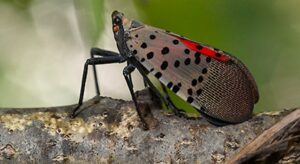
Few pest phenomena are as universally frustrating to Northern Virginia homeowners as the annual fall stink bug invasion. Brown marmorated stink bugs are a non-native invasive species that aggregate by the hundreds on the sunny sides of homes in September and October, looking for entry points to overwinter inside.
Fairfax County homeowners who schedule their perimeter treatment in late August — before stink bug aggregation peaks — consistently report dramatically fewer indoor stink bugs than neighbors who skip treatment or treat too late. Timing, in this case, is everything. A perimeter application in October, after stink bugs have already entered, provides minimal benefit for that season.
What Happens During a Professional Perimeter Pest Treatment?
A professional perimeter treatment is minimally invasive, typically completed in 30 to 60 minutes for an average Fairfax County single-family home. Here’s what the process looks like:
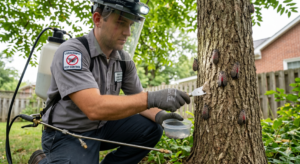
The technician will inspect the exterior of your home, identifying active pest entry points, conditions conducive to pest activity (like mulch piled against the foundation or vegetation touching the siding), and areas that require special attention.
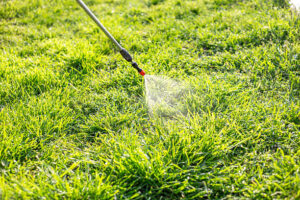
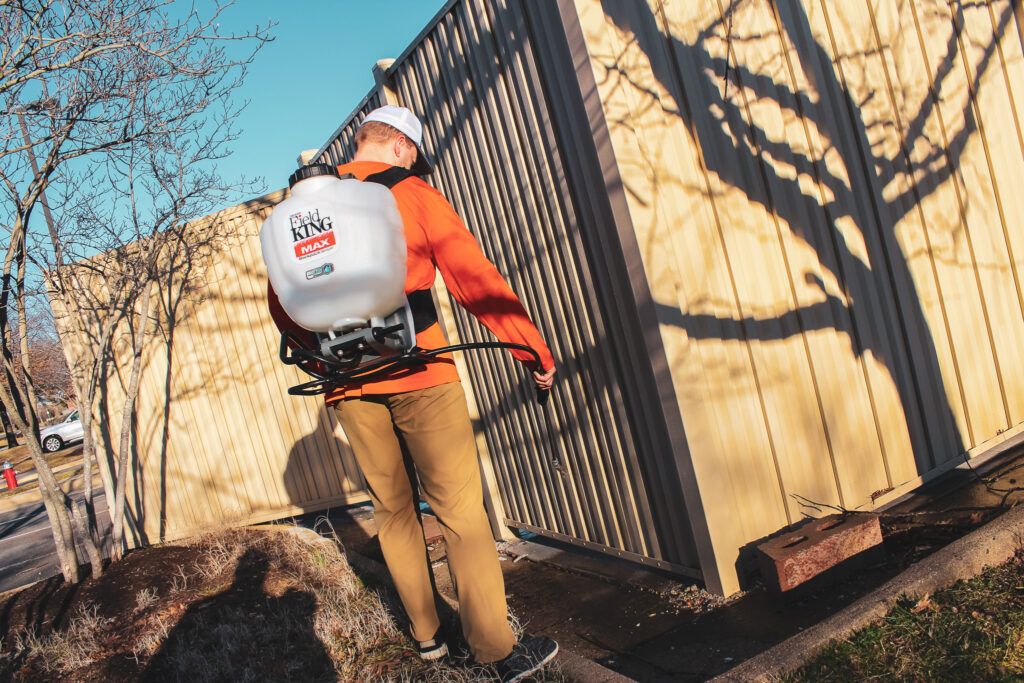
Liquid residual insecticide is then applied using a hand-pump or backpack sprayer, targeting:
- The foundation perimeter (typically 3 feet up the wall and 3 feet out from the base)
- Window frames and sills
- Door thresholds and garage door perimeters
- Eaves and soffits where applicable
- Utility and pipe penetrations
- Adjacent mulch beds and landscape borders
How Long Does a Perimeter Treatment Last?
Most professional-grade residual products remain active for 60 to 90 days under normal conditions. Heat, UV exposure, and rainfall can shorten residual life — which is why quarterly scheduling (every 60 to 90 days) is the standard recommendation for year-round perimeter protection in Fairfax County. Skipping seasons leaves gaps in coverage that pests will exploit.
Perimeter Pest Control vs. Interior Treatments: Which Do You Need?
For homeowners with no active indoor infestation, a perimeter-first approach is both sufficient and preferable. Treating the outside of your home prevents interior pest problems from developing in the first place, eliminating the need for disruptive indoor applications.
For homeowners who already have pests inside, a combination approach is typically necessary: interior crack and crevice treatment to eliminate the existing population, followed by exterior perimeter treatment to prevent re-infestation. Once the interior population is resolved, transitioning to perimeter-only maintenance is the cost-effective long-term strategy.
Why Fairfax Homeowners Choose Bull Run Turf Care & Pest Control
Bull Run Turf Care & Pest Control provides perimeter pest control throughout Fairfax County, bringing locally informed pest knowledge and reliable scheduling to homeowners who want year-round protection without the disruption of interior applications. Their licensed technicians understand the specific pest pressures — from stink bug season to summer spider activity — that Fairfax County homeowners face, and they time treatments accordingly.
Frequently Asked Questions
Is perimeter pest control safe for children and pets?
Professional perimeter treatments are applied using EPA-registered products that are safe for families and pets once the treated surfaces are fully dry — typically within 30 to 60 minutes under normal conditions. During application, it’s a good practice to keep children and pets indoors and away from treated exterior surfaces. Your technician will provide specific guidance based on the products used.
Do I need to be home during perimeter pest treatment?
For exterior-only perimeter applications, you generally do not need to be home. The technician works entirely outside and does not need access to your interior. Many Fairfax County homeowners set up perimeter treatment schedules that are completed while they’re at work, with service confirmation sent by text or email. If your treatment also includes interior components, access will be required.
Will perimeter treatment eliminate an existing infestation inside my home?
Perimeter treatment is a preventive barrier — it stops pests from entering, but it is not designed to eliminate an existing indoor infestation. If pests are already established inside your home, interior treatment will be needed to address the existing population. Once that interior infestation is eliminated, ongoing perimeter treatment prevents recurrence and maintains the results of the interior treatment over time.
Don’t wait until you’re dealing with ants in the kitchen or stink bugs on the curtains. Quarterly perimeter pest control from Bull Run Turf Care & Pest Control gives Fairfax County homeowners a proactive, cost-effective line of defense that works year-round. Schedule your first perimeter treatment before peak season and keep your home on the right side of the barrier.
Bull Run Turf Care & Pest Control 4229 Lafayette Center Dr STE 1825, Chantilly, VA 20151, United States