Key Takeaways
Fall is the big feeding season in Chantilly. Most lawns here are cool-season grasses like tall fescue, and they do their best root building once the weather cools off.
Timing beats volume. Feeding at the right moment with the right mix does a lot more than piling on extra fertilizer.
A real plan beats guesswork. Professional lawn fertilization is built around your grass, your soil, and the weather, so every application has a purpose.
Take a walk through any Chantilly neighborhood in April and you’ll notice something. Some lawns come in thick and even, and others stay thin and patchy no matter how much they get watered. A lot of that difference was decided the fall before. Feeding your lawn as the weather cools helps the roots grow, helps the grass bounce back from summer, and stores up energy for a strong start next year. If you’ve been looking into lawn fertilization Chantilly homeowners can count on, right now is honestly the best time to start. We’re Bull Run Turf Care & Pest Control, and we take care of lawns right here in our own community. Here’s why fall feeding matters, how fertilizer actually works, and what a good program looks like.
Why Chantilly Lawns Need Fall Fertilization
Most lawns in Chantilly, and across Northern Virginia, are cool-season grasses. Tall fescue is the most common, sometimes mixed with Kentucky bluegrass or perennial ryegrass. These grasses love spring and fall and slow way down in the heat of summer.
And summer here is rough on them. Heat, humidity, and dry spells leave a lot of lawns looking tired and thin by late August. Fall is their chance to recover. The air cools off, the soil stays warm, and that’s when roots really start growing. It’s also when your lawn gets the most out of what you feed it.
What Happens Below the Surface
When you feed a lawn in the fall, most of the good stuff happens where you can’t see it. The grass uses those nutrients to grow deeper, thicker roots and to store energy for winter. A lawn with strong roots greens up faster in spring, handles summer heat better, and crowds out weeds on its own. So fall feeding isn’t really about how your lawn looks in October. It’s about how it looks all next year.
Chantilly Soils and Local Conditions
Soil around Chantilly changes a lot from one neighborhood to the next. Many newer communities sit on compacted clay left over from construction, while older areas near Rocky Run and Big Rocky Run tend to have more shade from big, mature trees. Clay can hold onto nutrients but makes it hard for roots to spread, and a shady lawn needs a different approach than one baking in full sun. A good fertilization plan accounts for all of that instead of treating every lawn the same.
How Lawn Fertilization Works
Fertilizer gives your grass three main nutrients, which are the three numbers you see on the bag. Nitrogen is what makes grass green and helps leaves grow. Phosphorus helps roots develop, especially in new grass. Potassium helps grass handle stress like heat, drought, cold, and foot traffic.
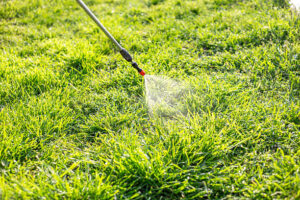
The right mix depends on your lawn and the time of year. Too much nitrogen at the wrong time pushes soft, leafy growth that’s more likely to get diseased. Too little, and your lawn ends up pale and thin. Slow-release fertilizers feed the lawn a little at a time, which lowers the chance of burning the grass and keeps nutrients around longer.
Why More Isn’t Always Better
It’s tempting to think a heavier dose means a greener lawn, faster. It doesn’t work that way. Overfeeding can actually hurt your grass, invite disease, and send extra nutrients into storm drains and local streams. Chantilly drains into Cub Run and Bull Run, so feeding responsibly is good for your lawn and good for the water around us.
The Best Times to Fertilize in Chantilly
For cool-season lawns, fall is the main event. An early fall feeding helps grass recover from summer and gives a boost to any new seed from aeration and overseeding. A late fall feeding, sometimes called a winterizer, gives the roots one last push before the ground cools and helps your lawn green up sooner in spring.
Spring feeding is more of a supporting act. A light application helps the lawn wake up, but heavy nitrogen in spring can cause a burst of growth that struggles once July hits. In summer, feeding is usually kept light or skipped, since the grass isn’t really growing much in the heat.
Pairing Fertilization With Other Lawn Care
Feeding works best when it’s part of a bigger plan. Aeration loosens up compacted soil so nutrients and water can reach the roots. Overseeding fills in thin spots. Weed control keeps weeds from stealing the nutrients you’re putting down. When all of these work together, each one makes the others more effective.
Signs Your Lawn Needs Fertilization
A hungry lawn usually lets you know. Pale or yellowish grass can mean it’s short on nitrogen. Thin spots where you can see soil, slow growth in spring and fall, and more weeds than usual are all signs it’s not getting what it needs. If your lawn struggles to recover from foot traffic or summer stress, it may be underfed too.
That said, some of those same signs can come from compacted soil, too much shade, poor drainage, or pests. Someone with a trained eye can tell the difference and point you to the right fix, instead of throwing fertilizer at a problem it can’t solve.
Common Fertilization Mistakes to Avoid
Even homeowners who care a lot about their lawns can make choices that hold it back. One of the most common is feeding heavily in late spring, which pushes fast growth right before the summer heat shows up. That tender new grass has a hard time in July and August and is more likely to get diseased. Another is spreading fertilizer unevenly, which leaves stripes or patchy color across the yard.
It’s also easy to forget about the granules that land on sidewalks and driveways. When it rains, those wash right into storm drains. Sweeping them back onto the grass keeps the nutrients where they belong. And skipping fall feeding altogether is the biggest missed opportunity of all, since that’s when cool-season grass builds the roots it depends on for the rest of the year.
Lastly, a lot of people fertilize without thinking about the rest of the lawn’s needs. If the soil is packed tight or the grass is thin, feeding alone won’t fix it. Pairing fertilization with aeration, overseeding, and weed control is what turns a few applications into a lawn that actually looks better year after year.
How Bull Run Turf Care & Pest Control Approaches Lawn Fertilization
Our lawn programs are built around how cool-season grass actually grows in Northern Virginia. Before we put anything down, we look at your grass type, how much sun and shade you get, your soil, and any trouble spots. Then we time each application so your lawn gets nutrients when it can really use them.
Our Gold Care lawn plan is $29.99 a month and includes 5 visits with 10 applications over the year, covering fertilization and weed control. If you’d like pest protection too, our Best of Both plan bundles lawn care and pest control for $60.99 a month.
Our owner, Paul Eden, is a Virginia Certified Horticulturist with more than 35 years of experience. Every visit is backed by our 100% satisfaction guarantee, and if you find a comparable quote, we’ll match it and take 10% off.
Serving Chantilly Neighborhoods
We take care of lawns all over Chantilly, including Sully Station, Brookfield, Poplar Tree, Greenbriar, Armfield Farm, and Chantilly Highlands, plus the rest of Fairfax and Loudoun Counties.
Finding Lawn Fertilization Near Me
If you’re searching for lawn fertilization near me, going local really does help. We know Chantilly’s soil, weather, and the lawn problems that pop up here every year, and we can shift the timing when the season runs early or late. Being close by also means we can keep a better eye on your lawn and catch problems before they spread.
Good lawn fertilization means you’re not standing in a store aisle reading bag labels and hoping for the best. You get a plan built for your yard and applied when it’ll do the most good.
Give Your Lawn a Strong Start for Next Year
What you do this fall shows up in your lawn next spring. If you’re ready for thicker, greener grass, give us a call at 571-430-5697. We’re in the office from 9:00 AM to 5:00 PM and happy to get you started.
Frequently Asked Questions
How often should I fertilize my lawn in Chantilly?
Most cool-season lawns do best with several feedings spread across the year, with the most emphasis in fall. A professional program spaces them out so your lawn gets steady nutrition without being overfed.
Is it safe for kids and pets to be on the lawn after fertilization?
Usually, it’s best to keep kids and pets off the grass until a liquid application dries or granular fertilizer gets watered in. Our technicians will tell you exactly when it’s okay to use the lawn again after each visit.
Should I fertilize before or after aeration and overseeding?
Fertilizing at the same time as aeration and overseeding, or shortly after, works well. Aeration opens up the soil so nutrients can reach the roots, and the new seed gets the food it needs to establish before winter.
Bull Run Turf Care & Pest Control 4229 Lafayette Center Dr STE 1825, Chantilly, VA 20151, United States