Key Takeaways:
- Spongy, discolored patches of lawn that lift easily like loose carpet are one of the clearest signs of grub damage.
- Increased animal activity, like digging from birds, raccoons, or skunks, often signals grubs feeding just beneath the surface.
- Early grub control treatment prevents widespread root damage and helps the lawn recover faster than waiting until damage is severe.
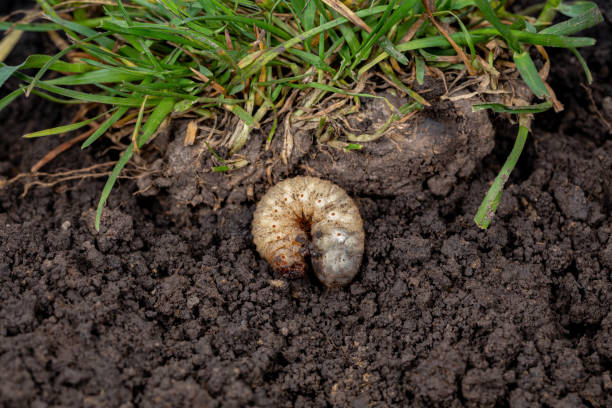
A lawn that suddenly starts looking patchy, spongy, or discolored isn’t always a sign of drought stress or poor mowing habits. In many cases, the real culprit is hiding just beneath the surface: grubs. These small, white, C-shaped larvae feed on grass roots, and because the damage starts underground, many homeowners don’t notice a problem until significant harm has already been done.
Knowing the early warning signs of grub damage can help you catch the issue before it spreads across your entire lawn. This article covers what grub damage looks like, why it happens, and what to do if you suspect grubs are affecting your yard.
What Are Grubs and Why Do They Damage Lawns?
Grubs are the larval stage of certain beetles, most commonly Japanese beetles and June bugs in this region. After eggs are laid in the soil during summer, the larvae hatch and begin feeding on grass roots throughout late summer and into fall, which is when most visible lawn damage starts to appear.
Because grubs feed directly on the root system, affected grass loses its ability to absorb water and nutrients properly. This is what causes the telltale dying, spongy patches that spread across a lawn if grub populations go untreated.
Why Grub Damage Often Goes Unnoticed at First
Since grubs feed below the surface, early-stage damage can be subtle and easily mistaken for normal seasonal stress, drought, or nutrient deficiency. By the time visible patches appear, grub populations have often had weeks to feed and multiply, which is why catching the early signs matters so much for limiting the extent of damage.
Common Signs of Grub Damage
Recognizing grub damage early can mean the difference between a quick treatment and a full lawn renovation. A few key signs typically point to an active grub problem.
Spongy, soft patches of lawn are one of the most reliable indicators. Because grubs sever roots as they feed, the grass loses its anchor to the soil, and affected areas often feel soft or spongy underfoot compared to healthy turf.
Grass that lifts easily, like loose carpet is another strong sign. If you can pull up a section of dying grass with little resistance, it’s often because the root system has been damaged or destroyed by feeding grubs beneath the surface.
Irregular, browning patches that don’t follow a clear pattern (unlike disease or drought stress, which often spreads in more uniform patterns) can also point to grub activity, especially when they appear during late summer or early fall.
Increased Animal Activity in Your Yard
One of the most telling signs of a grub infestation isn’t damage to the lawn itself, but increased digging activity from animals like birds, raccoons, skunks, and moles. These animals feed on grubs and will tear up sections of lawn searching for them, which often causes additional damage on top of what the grubs themselves have already done. If you’re noticing unusual digging patterns, especially around already-damaged patches, it’s worth investigating further for an underlying grub problem.
How to Confirm a Grub Infestation
If you suspect grubs based on visual signs, a simple way to confirm is to cut a small section of turf, roughly a square foot, in an affected area and peel it back to inspect the soil underneath. Finding several grubs, typically more than 5 to 10 per square foot, generally indicates a population large enough to be causing visible lawn damage.
When Grub Damage Is Most Likely to Appear
Grub damage tends to become most visible in late summer through fall, as larvae reach a size where their feeding causes noticeable root damage. This timing also coincides with when treatment is most effective, making early-to-mid fall a critical window for addressing an active infestation.
Why Professional Grub Control Matters
Once grub damage becomes visible, the underlying root system has often already sustained meaningful harm, which means treatment needs to address both the current grub population and support the lawn’s recovery. Professional grub control treatments are formulated and timed to target grubs at their most vulnerable life stage, maximizing effectiveness compared to over-the-counter products applied without precise timing.
Professional treatment also typically includes an assessment of the extent of damage, helping determine whether overseeding or additional lawn repair is needed alongside grub treatment to restore the affected areas.
Preventative vs. Curative Grub Treatments
Grub control can be applied preventatively, before eggs hatch, or curatively, after an active infestation has been identified. Preventative treatments are generally more effective and require less product, while curative treatments need to be timed carefully to target grubs while they’re still actively feeding near the surface. A professional assessment can help determine which approach is right based on your lawn’s current condition and history of grub activity.
Addressing Grub Damage in Chantilly Lawns
Local soil conditions and beetle populations affect how significant grub pressure tends to be each season, which is why a grub control Chantilly plan built around regional conditions tends to produce more reliable results than a generic, one-size-fits-all approach. A provider familiar with local beetle activity and seasonal timing can help determine the right treatment window for your specific property.
Schedule a Grub Inspection
If you’re noticing spongy patches, increased animal digging, or grass that lifts easily from the soil, it’s worth scheduling a professional inspection before the damage spreads further. Early identification and treatment typically lead to faster lawn recovery and less overall damage.
For homeowners searching for grub control near me, reaching out for an assessment is the most reliable way to confirm whether grubs are the cause and determine the right treatment plan for your yard.
Frequently Asked Questions
How do I know if my lawn has grub damage?
Common signs include spongy or soft patches, grass that lifts easily from the soil, irregular browning patches, and increased digging activity from birds or animals searching for grubs to eat.
When is grub damage most likely to appear?
Grub damage typically becomes most visible in late summer through fall, as larvae grow large enough for their root feeding to cause noticeable lawn damage.
Can a lawn recover after grub damage?
Yes, in most cases. Once the grub population is treated, the lawn can often recover with proper care, though severely damaged areas may require overseeding or additional repair to fully restore.
Bull Run Turf Care & Pest Control
4229 Lafayette Center Dr STE 1825, Chantilly, VA 20151, United States