Key Takeaways
- Grub damage often looks like drought stress at first, which leads many homeowners to water more instead of treating the actual cause.
- Increased digging activity from birds, skunks, or raccoons is frequently an early warning sign of a grub problem underneath the surface.
- Timing treatment to the grub life cycle makes a significant difference in how effective grub control actually is.
What Are Lawn Grubs and Why Are They a Problem?
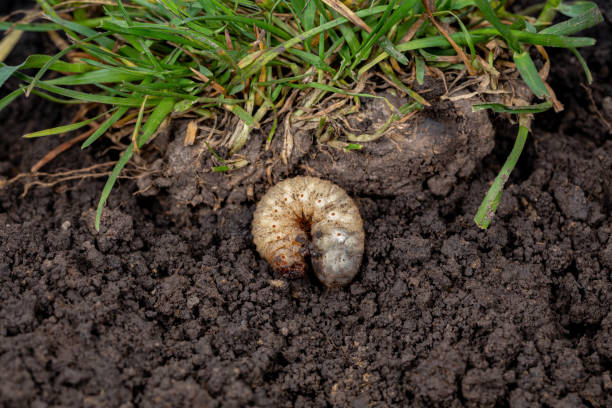
Grubs are the larval stage of beetles, most commonly Japanese beetles here in Northern Virginia, and they live just beneath the surface of your lawn feeding on grass roots. Because they attack the root system rather than the visible blades, grub damage can go unnoticed until it’s fairly advanced. A lawn with an active grub infestation loses its ability to draw up water and nutrients, which leaves the turf weak and vulnerable even during otherwise favorable weather.
Signs of a Grub Infestation in Your Chantilly Lawn
The tricky part about grubs is that early damage looks a lot like ordinary summer stress. Homeowners often assume their lawn simply needs more water, when the real issue is happening underground where watering can’t fix it.
Brown or Spongy Patches
Sections of lawn that turn brown despite regular watering, or that feel spongy and lift easily when tugged, are a classic sign that grubs have severed the root system in that area. Unlike drought stress, which tends to affect the entire lawn evenly, grub damage often shows up in irregular patches.
Increased Animal Activity (Birds, Skunks, Raccoons)
If you’ve noticed birds pecking at your lawn more than usual, or skunks and raccoons digging up patches of turf overnight, they may be after the grubs living just below the surface. This kind of animal activity is one of the more reliable early indicators that a grub population is building, often before visible turf damage appears.
The Grub Life Cycle and Best Treatment Timing
Grubs go through several life stages across the year, and treatment effectiveness depends heavily on catching them at the right point. Eggs are laid in the soil during summer, and young grubs begin feeding on roots shortly after hatching. As temperatures cool in fall, grubs move deeper into the soil to overwinter, then return closer to the surface in spring to resume feeding before pupating into adult beetles. Preventive treatments applied in early to mid-summer target young grubs when they’re most vulnerable, while curative treatments in early fall address populations that have already established.
Preventive vs. Curative Grub Treatments
Preventive treatments are applied before grub populations become visible, targeting the eggs and early larval stage to stop damage before it starts. This approach tends to be more effective overall, since it addresses the problem before root damage has occurred. Curative treatments are applied after grubs are already active and causing visible turf damage. These can still reduce the population and limit further harm, but they’re working against damage that’s already underway, which means recovery of the lawn takes longer even after the grubs themselves are controlled.
Restoring a Lawn After Grub Damage
Treating the grubs is only part of the process if damage has already occurred. Areas with significant root loss often need reseeding or overseeding to fill back in, along with fertilization to support new root development. Aeration can also help by relieving soil compaction and giving new grass roots room to establish more quickly. Addressing the underlying grub population without following up on turf recovery often leaves homeowners with a lawn that’s technically pest-free but still visibly damaged.
If you’re seeing patchy brown areas or increased digging activity in your yard, searching for grub control near me can connect you with a local provider who can confirm whether grubs are the cause and recommend the right treatment window. For a lasting solution tailored to your specific lawn, grub control Chantilly programs typically combine treatment timing with a turf recovery plan.
FAQs
How can I confirm I actually have a grub problem before treating? A simple way to check is to cut a small square of turf in an affected area and peel it back. If you count more than a handful of grubs per square foot, treatment is likely warranted.
Is it too late to treat grubs once I see lawn damage? No, though treatment at that stage is considered curative rather than preventive. It will still reduce the population and prevent further damage, but the lawn itself may need additional recovery steps like overseeding.
Do grub treatments affect pets or children who use the lawn? Professional treatments are applied according to label guidelines that specify safe re-entry times, so it’s important to follow the specific instructions provided at the time of treatment.
Bull Run Turf Care & Pest Control 4229 Lafayette Center Dr STE 1825, Chantilly, VA 20151, United States