Before You Dive In — 3 Key Takeaways:
- A small pest sighting in Manassas rarely means a small problem — most infestations are well-established before homeowners notice the first signs.
- The right exterminator will identify the root cause of the infestation, not just treat visible symptoms.
- Choosing a local Manassas-area exterminator means faster response times and knowledge of the specific pest pressures in Prince William County.
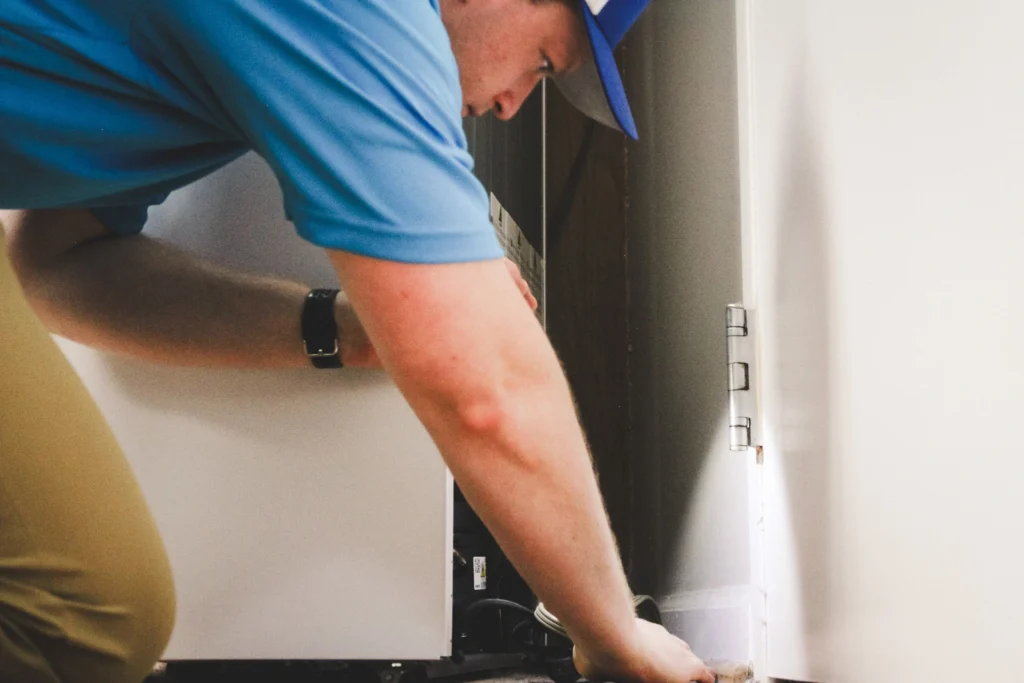
Most pest infestations in Manassas homes don’t announce themselves dramatically. There’s no single moment when the problem becomes undeniable. Instead, there are small signals that are easy to dismiss: a few ants near the sink that disappear after you wipe the counter, a faint scratching sound in the wall that you only notice at night, a mouse dropping behind the refrigerator that you sweep up and don’t think about again.
By the time those signals become impossible to ignore — dozens of ants, consistent nocturnal sounds, multiple droppings — the infestation is almost always far more established than the visible evidence suggests. This is the fundamental reality of pest control that makes early action so important, and it’s why finding a reliable exterminator manassas homeowners can trust before a small problem becomes a large one is a decision that pays for itself many times over.
Signs You Need to Call an Exterminator in Manassas Right Away
The challenge with pest infestations is that the evidence they leave is often ambiguous until you know what to look for. Here are the warning signs that warrant an immediate call to a licensed exterminator:
Droppings or smear marks: Rodent droppings are small, dark, and pellet-shaped — mouse droppings are roughly the size of a grain of rice, while rat droppings are significantly larger. Cockroach frass appears as tiny dark specks resembling ground pepper, often concentrated in corners, along baseboards, and inside cabinet hinges. Rodents also leave greasy smear marks along walls and baseboards where their fur repeatedly contacts surfaces during their nightly travel routes.
Gnaw marks: Fresh gnaw marks on food packaging, wooden structures, or utility wiring have a pale, light color compared to older, darkened gnaw marks. Finding gnaw marks on electrical wiring is a particularly serious fire hazard that warrants immediate professional response.
Nests: Rodent nests are constructed from shredded material — insulation, paper, fabric — in hidden locations like behind wall insulation, inside appliances, in attic spaces, and in seldom-opened storage areas. Finding a nest indicates an established, breeding population.
Ant trails: A clearly defined line of ants moving between a food source and an exit point indicates a well-established pheromone trail used by hundreds or thousands of workers from an organized colony. Individual ants exploring randomly are scouts; ants in trails are a colony at work.
Unusual odors: An oily, musty smell in a confined area often indicates cockroach activity. A strong ammonia smell suggests a substantial rodent population, as rodent urine accumulates in nesting and travel areas. A sweet, somewhat pungent odor in wall voids or attic spaces has been associated with bed bug populations, though this sign requires other confirmation.
Pest Warning Signs Manassas Homeowners Often Ignore
Some of the most diagnostic pest warning signs are among the most commonly overlooked:
Flying ants indoors in winter or early spring are almost always carpenter ants emerging from an indoor colony — not outdoor foragers that wandered in. Finding winged ants inside during cold months indicates an established carpenter ant nest somewhere in the structure.
Shed insect skins or egg casings near baseboards, in cabinet corners, or behind appliances indicate cockroach populations in an active reproductive phase.
Pencil-width mud tubes running along foundation walls, floor joists, or interior wall surfaces are the most reliable indicator of subterranean termite activity — an emergency that requires immediate professional assessment.
Grease marks along baseboards and walls at roughly floor level indicate regular rodent travel along established routes — a sign of a population that has been present long enough to wear pathways.
Moth larvae or webbing in pantry items indicates an infestation of stored product pests — Indian meal moths, grain beetles, or similar — that can rapidly spread through an entire pantry if not addressed.
How to Choose the Right Exterminator in Manassas, VA
Finding reliable pest removal in Manassas requires knowing what to look for beyond the first Google result. Here are the most important criteria for evaluating pest control providers:
Virginia state licensing: All pest control companies operating in Virginia must be licensed by the Virginia Department of Agriculture and Consumer Services (VDACS). Licensed companies employ Certified Pesticide Applicators who have passed state examinations and maintain continuing education requirements. Always verify licensing before hiring.
Local experience in Prince William County: A company that has been servicing Manassas and Prince William County properties for multiple seasons will have direct familiarity with the specific pest species, building types, and seasonal patterns in your area. This local knowledge is not replicated by national franchise operators following a generic national protocol.
Thorough pre-treatment inspection: Any reputable exterminator near me should conduct a comprehensive property inspection before recommending or beginning treatment. An exterminator who quotes you over the phone without seeing the property, or who begins spraying immediately without an inspection, is not applying best-practice pest management.
Written treatment plan: Following the inspection, you should receive a clear written explanation of what pest species have been identified, what treatment will be applied, where it will be applied, and what results you should expect and on what timeline.
Documented re-service policy: Professional pest control companies stand behind their work with a policy covering additional visits if pest activity persists after treatment. Ask specifically about this policy before signing any service agreement.
Verifiable online reputation: Look for reviews that mention specific pest resolution — not just general satisfaction — and pay attention to how the company responds to negative reviews. A company that engages professionally and constructively with complaints demonstrates accountability.
Red Flags When Hiring a Pest Control Company in Northern Virginia
Certain behaviors during the sales and initial service process should disqualify a pest control company from consideration:
Door-to-door high-pressure sales tactics are a reliable indicator of a company whose business model depends on aggressive upselling rather than genuine service quality. Reputable local companies rely on referrals and reviews, not door-to-door campaigns.
Inability to produce license documentation on request is an immediate disqualifier. In Virginia, pest control without proper licensing is illegal, and unlicensed applications carry safety and liability risks.
Vague or verbal-only treatment descriptions suggest a company that doesn’t want its promises documented. Always require a written service agreement that specifies what pests are covered, what products will be used, and what the follow-up policy entails.
Unusually low pricing compared to the local market may indicate substandard products, undertrained applicators, inadequate insurance coverage, or a company that compensates for low per-visit fees with aggressive contract lock-in terms.
What to Expect During a Professional Exterminator Visit in Manassas
Knowing what a professional exterminator visit should look like helps you evaluate the quality of service you’re receiving:
Pre-treatment inspection: The technician should walk the full interior and exterior of the property with you, identifying pest evidence, entry points, conducive conditions, and areas of primary concern. This is not a formality — it’s the most important step in the process.
Treatment discussion: Before applying any product, the technician should clearly explain what will be applied, where, and why. You should feel comfortable asking questions, and the answers should be specific and comprehensible.
Application: Treatment is applied to targeted areas based on inspection findings — not uniformly sprayed throughout the home. Targeted application is both more effective and more responsible than broadcast spraying.
Post-treatment instructions: You’ll receive specific guidance about re-entry timing, areas to avoid, whether to run fans or open windows, and any food or pet safety precautions relevant to the products used.
Follow-up scheduling: A clear follow-up visit date is established before the technician leaves, particularly for infestations that require multiple treatments for full resolution.
Questions to Ask Your Exterminator Before Treatment Begins
Before any product is applied to your Manassas home, the following questions help ensure you’re making an informed decision:
What pest species have you identified, and what specifically indicates that species? What pesticide products will you be using, and what are their active ingredients? Are these products safe for children and pets, and what precautions do I need to take? How many treatments will I likely need, and what’s your re-service policy if the problem persists? Are you licensed with the Virginia Department of Agriculture and Consumer Services?
The Most Common Pests Exterminators Treat in Manassas, VA
Prince William County’s mix of suburban neighborhoods, older housing stock, and proximity to wooded areas and agricultural land creates consistent pressure from a broad range of pest species:
Rodents — mice and rats — are year-round concerns in Manassas, with significant pressure increases in fall when outdoor populations seek indoor harborage. Manassas’s older neighborhoods feature the aging utility penetrations and foundation cracks that give rodents easy access.
Ants — particularly carpenter ants in properties with mature trees or moisture-damaged wood, and odorous house ants and pavement ants in kitchen and bathroom areas — are among the most frequently treated pests in Prince William County.
Cockroaches — primarily American cockroaches entering from exterior sources in Manassas’s older residential areas, and German cockroaches in properties with food handling activity.
Wasps and hornets — yellowjackets, European hornets, and paper wasps build nests on and around Manassas homes every spring and summer, with late-summer colonies reaching peak size and aggression.
Stink bugs — Northern Virginia’s fall stink bug aggregation affects Manassas properties as reliably as any other part of Fairfax County.
Bed bugs — increasingly common in Manassas due to travel and secondhand furniture introduction, requiring specialized treatment protocols distinct from general pest control.
Why Bull Run Turf Care & Pest Control Serves Manassas and Northern Virginia
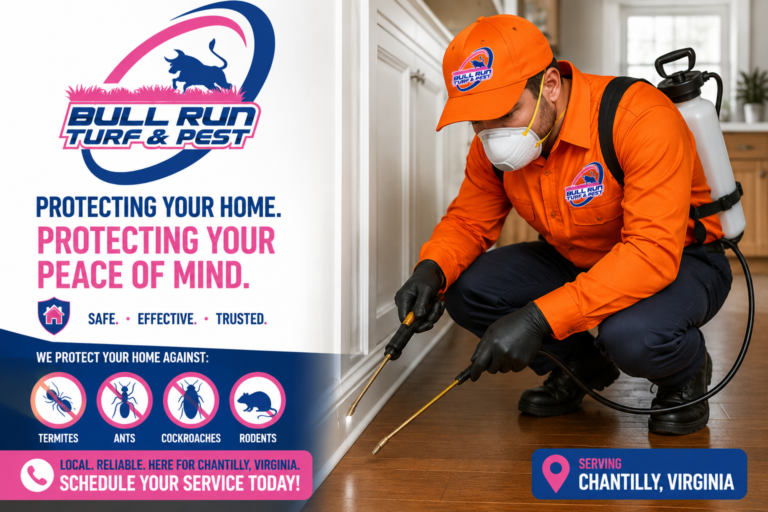
Bull Run Turf Care & Pest Control extends its locally trusted pest management services throughout Northern Virginia, including Manassas and Prince William County. Their locally based operations in the Chantilly area allow them to provide the rapid response times and regionally calibrated expertise that Manassas homeowners deserve from a pest control partner.
Their licensed technicians understand the specific pest pressures that Prince William County properties face across every season, and they apply that knowledge to every inspection, every treatment plan, and every follow-up visit.
Frequently Asked Questions
How long does exterminator treatment take to work?
The timeline for results depends significantly on the pest species and treatment method. Perimeter barrier spray applications for ants and crawling insects produce visible results within two to five days as new pest activity contacts the treated barrier. Bait-based treatments for ant or cockroach colony elimination typically require seven to fourteen days to fully collapse the population. Full resolution of established rodent infestations may require two to four weeks across multiple visits, depending on population size and the structural vulnerabilities being addressed.
Do I need to leave my home during exterminator treatment?
Interior chemical treatments typically require occupants to vacate for two to four hours following application. Exterior-only perimeter treatments generally don’t require any time away from the home — occupants should simply stay away from treated exterior surfaces until they’re fully dry, which takes 30 to 60 minutes under normal conditions. Fumigation treatments for specific pest species require extended vacancy periods measured in days, but these are specialized procedures that most Manassas pest situations don’t require. Your technician will provide specific guidance based on the treatment being applied.
How often do I need an exterminator?
For most Manassas homeowners, a quarterly pest control program provides year-round protection against the full spectrum of Northern Virginia pest threats. Monthly service is recommended for high-pressure situations — active infestations, properties with known structural vulnerabilities, or homes with a documented history of recurring pest problems. One-time treatments are appropriate for isolated, specific pest incidents where a single application fully resolves the issue and the structural and environmental conditions that enabled entry have been corrected.
Don’t wait for the small signs to become undeniable evidence of a serious infestation. Bull Run Turf Care & Pest Control provides the locally trusted, professionally executed pest removal that Manassas homeowners deserve — with the rapid response times and Prince William County expertise that national pest control companies can’t match. Schedule your inspection today.
Bull Run Turf Care & Pest Control 4229 Lafayette Center Dr STE 1825, Chantilly, VA 20151, United States