
Before You Dive In — 3 Key Takeaways:
- Most pest infestations in Chantilly homes are well-established before homeowners notice the first visible sign — early identification is critical.
- DIY pest control often masks symptoms without eliminating the source, which allows infestations to grow larger and more expensive to treat.
- A licensed Chantilly exterminator can identify pest species, entry points, and conducive conditions that homeowners routinely miss.
There’s a particular kind of denial that pest problems invite. A few ants in the bathroom are easy to dismiss as stragglers. A scratching noise in the wall at 2 a.m. is easy to attribute to the house settling. A mouse dropping behind the stove is easy to sweep up and forget. The problem with this kind of incremental dismissal is that pest infestations don’t pause while you’re deciding how seriously to take them. They grow.
By the time most Chantilly homeowners call an exterminator chantilly professionals recommend, the infestation is well past the point where it was cheapest and easiest to treat. This guide describes the seven clearest signs that professional pest removal is needed now — not after the next spray from the hardware store, and not when the evidence becomes undeniable.
Sign #1 — You're Seeing Droppings or Smear Marks
Pest droppings are among the most reliable indicators of infestation, and different pest species leave characteristic evidence that a trained exterminator will recognize immediately.
Rodent droppings are dark, shiny, and pellet-shaped. Mouse droppings are roughly the size of a grain of rice and are most commonly found along baseboards, behind appliances, inside cabinet corners, and in any area where food is stored. Rat droppings are significantly larger — comparable in size to a raisin — and are often concentrated near water sources and along travel routes.
Cockroach frass appears as tiny, dark specks similar in appearance to ground black pepper or coffee grounds. It accumulates in corners, along the edges of cabinet shelves, behind refrigerators and dishwashers, and inside the hinges of cabinet doors where cockroaches prefer to hide.
Greasy smear marks along baseboards and lower walls at floor level are left by rodents whose fur repeatedly contacts the same surfaces along their established travel routes. These marks appear dark and oily and follow a consistent path between entry points and food or water sources. Finding smear marks indicates a population that has been active long enough to develop regular travel habits — a sign of established infestation rather than occasional intrusion.
Sign #2 — You Hear Noises in the Walls or Attic at Night
Nighttime sounds emanating from walls, ceilings, or attic spaces are among the most alarming and most commonly dismissed pest warning signs in Chantilly homes. The most frequent causes are:
Scratching and scurrying: The sound of small claws on wood framing or drywall surfaces is characteristic of mice moving through wall voids between their nesting areas and food sources. Mice are most active between dusk and dawn, which is why these sounds are typically first noticed late at night.
Gnawing: A rhythmic, intermittent grinding sound in walls or under flooring is characteristic of rodents actively chewing through structural materials or utility wiring. Gnawing on electrical wiring is a fire hazard that elevates this from a pest problem to a safety emergency.
Heavier movement in the attic: Sounds suggesting larger, heavier movement in the attic space may indicate rats, squirrels, or raccoons rather than mice. The appropriate response — and the appropriate treatment — differs significantly by species.
Rodents reproduce rapidly. A pair of mice can produce fifty or more offspring in a single season. Every night of delay represents continued population growth in the walls of your Chantilly home.
Sign #3 — You've Found Damaged Wood or Gnaw Marks
Damaged wood in a Chantilly home can indicate several different pest species, each with different implications and treatment requirements:
Fresh gnaw marks with light-colored, exposed wood indicate recent, active rodent chewing. The pale color indicates the damage is new; older gnaw marks darken as the exposed wood oxidizes. Finding fresh gnaw marks on structural lumber, cabinet bases, or utility penetrations signals an active rodent population.
Smooth, hollowed galleries in wood with no visible sawdust are characteristic of carpenter ant activity. Carpenter ants don’t eat wood — they excavate it, pushing fine frass out of small holes. Finding carpenter ant galleries in Chantilly’s older homes is a serious concern that warrants immediate professional assessment because the structural damage progresses invisibly until wood members are significantly compromised.
Blistered, hollow-sounding wood surfaces with mud tubes are the diagnostic signs of subterranean termite activity — an emergency requiring professional response on the same day it’s identified.
Sign #4 — You're Noticing Unusual Odors
Pests leave chemical signatures that experienced homeowners and exterminator near me professionals can identify before visual evidence becomes obvious:
A musty, oily odor in areas behind appliances, under sinks, or in basement spaces is a characteristic cockroach smell, produced by the aggregation pheromones and body oils that cockroach populations deposit on surfaces they regularly inhabit.
A strong ammonia smell in an enclosed area — particularly in an attic, basement, or crawlspace — indicates a substantial rodent population. Rodent urine accumulates in nesting and travel areas and becomes increasingly pungent with population size and duration.
A sweet, faintly musty odor with no apparent source is associated by some pest professionals with larger bed bug populations in wall voids or furniture cavities, though this sign requires confirmation with physical evidence.
A musty smell from water-damaged wood with no obvious water source may indicate moisture damage sufficient to attract carpenter ants, which preferentially colonize damp, degraded wood.
Sign #5 — You See Mud Tubes, Sawdust, or Frass
These three types of evidence each indicate a specific and serious pest infestation that requires immediate professional assessment:
Mud tubes are the definitive indicator of subterranean termite activity. Termites build these pencil-width tubes of soil and cellulose along foundation walls, floor joists, and interior wall surfaces to travel between their underground colonies and the wood they’re consuming. Finding a mud tube anywhere in your Chantilly home is a same-day emergency that requires immediate professional termite inspection. Every day of delay allows the colony to continue feeding.
Frass piles — small mounds of coarse, granular material that resembles wood shavings mixed with dark pellets — are pushed out of carpenter ant galleries through tiny ejection holes. Finding frass consistently in the same location beneath or near a wood structural member is a clear indicator of active carpenter ant colonization.
Unexplained sawdust near wooden structural components — window frames, door frames, porch posts, deck framing — may indicate carpenter bee boring, carpenter ant activity, or in some cases, early-stage wood-boring beetle activity. Each of these warrants professional identification and treatment.
Sign #6 — You Keep Seeing Live Insects Despite DIY Treatment
Recurring insect activity despite repeated over-the-counter spray applications is one of the most reliable indicators that the infestation has reached a scale that consumer products cannot address. There are two primary reasons why this happens:
Colony scale: Consumer sprays kill the foragers they contact but have no effect on the colony producing them. A mature ant or cockroach colony contains thousands to hundreds of thousands of individuals. Killing surface-active workers represents a fraction of a percent of the total population and has no meaningful impact on colony survival or reproduction.
Colony scatter: As described earlier, many ant species respond to chemical exposure by budding — splitting into multiple daughter colonies that distribute across the property. Repeated spraying can thus transform a single infestation into multiple simultaneous infestations, each harder to find and treat than the original.
When store-bought products produce temporary reduction followed by full return within days or weeks, the problem has outgrown DIY solutions.
Sign #7 — You've Found a Nest or Large Cluster of Pests
Discovering a nest or large cluster of pests is the clearest possible indication that professional intervention is needed immediately — and that attempting to address it yourself carries real risks:
A stinging insect nest — whether a paper wasp nest under the eaves, a yellowjacket colony in the ground or wall void, or a European hornet nest in the attic — should never be disturbed without professional equipment and protective gear. Late-summer colonies of yellowjackets and hornets contain hundreds of workers capable of delivering multiple stings, and wall-void nests can deposit honey and attract secondary infestations if not completely removed.
A rodent nest discovered in an insulation cavity, attic space, or behind appliances indicates an established, breeding population. Disturbing a rodent nest without appropriate respiratory protection and sanitation protocols can expose occupants to hantavirus and other rodent-associated pathogens present in nesting material.
A large cluster of cockroaches seen when a light is turned on unexpectedly — particularly in a kitchen or bathroom — indicates a population far larger than the visible cluster suggests. Cockroaches are thigmotactic, meaning they prefer tight, enclosed spaces, and the individuals visible represent only a fraction of the colony hiding within the structure.
What Happens If You Ignore These Warning Signs?
Every week of delay in addressing an identified pest infestation allows the population to grow, the structural damage to deepen, and the treatment cost to increase. Specific consequences by pest type:
Rodent populations left unaddressed can cause thousands of dollars in wiring damage, insulation contamination, and structural gnawing. Carpenter ant colonies that go untreated for multiple seasons can compromise structural integrity in moist wood framing. Cockroach infestations that reach full establishment require multiple professional treatments over weeks to fully eliminate, versus the single treatment that often resolves newly established populations.
Beyond the financial consequences, established pest populations create health risks — rodent-associated pathogens, cockroach allergens linked to asthma in children, and stinging insect hazards — that grow with the population.
Why Chantilly Homeowners Trust Bull Run Turf Care & Pest Control
Bull Run Turf Care & Pest Control brings the local expertise, licensed professionalism, and responsive service that Chantilly homeowners need when these warning signs appear. Their technicians are trained to identify every pest species common to Fairfax County properties, locate the entry points and conducive conditions sustaining the infestation, and apply the most appropriate treatment strategy for fast, lasting results.
Frequently Asked Questions
How fast can an infestation grow if I don’t call an exterminator?
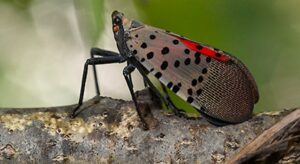
The growth rate depends on species, but the numbers are uniformly alarming. A single pair of mice can theoretically produce fifty or more offspring in a single season, with those offspring reaching reproductive maturity in approximately six weeks. A single female German cockroach can generate thirty to forty eggs per case and produce five to six cases in her lifetime. Spotted lanternfly egg masses hatch into dozens of mobile nymphs each. In every case, the population present when visible signs first appear is a fraction of what will be present after two or three months of uninterrupted reproduction.
Is it safe to stay home during exterminator treatment?
For exterior perimeter treatments, occupants can typically remain at home but should stay away from treated exterior surfaces until dry — usually 30 to 60 minutes. Interior chemical treatments generally require occupants to vacate for two to four hours following application. For more extensive interior treatments, the technician will provide specific guidance based on the products and application methods used. Pets should be moved away from treated areas during application and kept away until surfaces are fully dry.
How do I prepare my home before the exterminator arrives?
Effective preparation significantly improves treatment results. Before your technician arrives, clear the areas under sinks and behind appliances to provide access for inspection and treatment. Move furniture away from baseboards in rooms with identified pest activity. Seal and store exposed food items in cabinets or the refrigerator. Remove pet food bowls and secure pet bedding. Secure pets in a room not scheduled for treatment. The more thoroughly you prepare, the more efficiently your technician can complete a thorough inspection and treatment.
If you’ve recognized any of these seven signs in your Chantilly home, the time to act is now — not after one more round of hardware store spray. Bull Run Turf Care & Pest Control is ready to inspect your property, identify exactly what you’re dealing with, and eliminate it at the source. Call today and stop the infestation before it grows further.
Bull Run Turf Care & Pest Control 4229 Lafayette Center Dr STE 1825, Chantilly, VA 20151, United States