
Key Takeaways:
- Commercial pest control requires different scheduling, documentation, and treatment methods than residential service, especially for client-facing properties.
- Property managers should prioritize providers with experience specific to their industry, whether retail, office, multifamily, or food service.
- A reliable commercial pest control plan includes recurring treatment, detailed service records, and discreet application methods suited to occupied spaces.
Managing pest control across a commercial property in Prince William County comes with a different set of priorities than a typical residential service call. Between tenant communication, compliance documentation, and the need to avoid disrupting business operations, property managers need a provider who understands the specific demands of commercial pest management, not just a company that happens to also service businesses.
This guide breaks down what property managers should expect from a commercial pest control provider, the questions worth asking before signing a service agreement, and how to evaluate whether a company is genuinely equipped for commercial work.
Why Commercial Pest Control Requires a Different Approach
Residential and commercial pest control share some basic similarities, but the practical demands of managing pest issues across a multi-tenant property, retail center, or office complex are considerably more involved. Property managers are often responsible for coordinating treatment across shared spaces, individual tenant units, and common areas, all while minimizing disruption to daily operations.
Commercial pest control also frequently involves stricter documentation requirements, particularly for properties with food service tenants or healthcare-adjacent businesses subject to regular health inspections. A provider unfamiliar with these compliance needs may not document treatments in a way that satisfies regulatory or lease-related requirements.
Why Tenant Coordination Adds Complexity
Unlike a single-family home, commercial properties often involve coordinating pest treatment schedules across multiple tenants, each with their own operating hours, access requirements, and sensitivities around treatment timing. A property manager needs a provider capable of communicating clearly with both the management company and individual tenants to avoid scheduling conflicts or service disruptions.
What Property Managers Should Look for in a Provider
A few specific factors separate experienced commercial pest control providers from companies primarily focused on residential service.
Industry-specific experience matters significantly, since a provider familiar with retail centers, office buildings, or multifamily properties will understand the particular pest pressures and compliance needs relevant to each property type, rather than applying a generic, one-size-fits-all approach.
Flexible, coordinated scheduling is essential for properties with multiple tenants, allowing treatment to be scheduled around business hours and tenant-specific needs without requiring excessive back-and-forth coordination on the property manager’s part.
Detailed service documentation should be standard practice, providing property managers with clear records of treatment dates, products used, and pest activity for both internal tracking and tenant lease compliance purposes.
Why Discreet Treatment Methods Matter for Commercial Properties
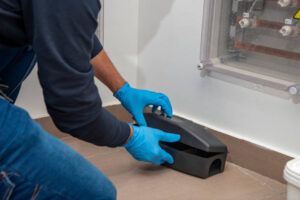
Many commercial properties, particularly retail and office spaces, need pest treatment performed in ways that are minimally visible or disruptive to occupants and visitors. A reputable provider should be experienced in applying treatment discreetly, without creating unnecessary disruption or drawing attention from tenants, employees, or customers on-site.
Questions Property Managers Should Ask Before Hiring
A few direct questions help clarify whether a provider is genuinely equipped to handle commercial properties:
- How many commercial properties do you currently service, and what types?
- Can you provide documentation for compliance and lease-related purposes?
- How do you coordinate scheduling across multiple tenants or units?
- What’s your process for handling urgent pest issues outside of scheduled visits?
- Are your technicians trained specifically in commercial property treatment?
Getting clear, confident answers to these questions upfront helps property managers avoid hiring a provider that’s only equipped for occasional commercial work rather than consistent, professional service.
Why Recurring Service Outperforms Reactive Treatment
Commercial properties, particularly those with food storage, frequent deliveries, or high foot traffic, tend to face more consistent pest pressure than typical residential properties. A reliable provider should recommend a recurring treatment schedule rather than a reactive, call-when-needed approach, since consistent prevention is significantly more effective at managing pest activity across larger, more complex properties.
How Recurring Plans Support Long-Term Property Management
For property managers overseeing multiple buildings or a large multi-tenant property, a recurring commercial pest control plan provides predictable scheduling and consistent documentation, both of which simplify long-term property management compared to addressing pest issues only as they arise.
Commercial Pest Control Across the Broader Region
For property managers responsible for multiple locations, working with a provider experienced in commercial pest control northern virginia properties more broadly helps ensure consistent service standards and documentation across every site, rather than coordinating separate providers with varying levels of commercial experience at each location.
Schedule a Commercial Pest Control Consultation
Choosing the right commercial pest control provider starts with prioritizing industry-specific experience, clear documentation, and flexible scheduling over the lowest available price. A reputable provider should be confident discussing their commercial-specific process and able to support your property’s operational and compliance needs.
For property managers searching for commercial pest control near me in Prince William County, scheduling a consultation is the best way to evaluate whether a provider is genuinely equipped for your property’s specific needs.
Frequently Asked Questions
How is commercial pest control different from residential service?
Commercial pest control typically involves more complex scheduling across multiple tenants, detailed documentation for compliance purposes, and discreet treatment methods suited to occupied, client-facing spaces.
What documentation should a commercial pest control provider offer?
Property managers should expect clear records of treatment dates, products used, and pest activity, particularly important for properties with food service tenants or lease-related compliance requirements.
How often should a commercial property receive pest control treatment?
Most commercial properties benefit from a recurring treatment schedule rather than reactive, as-needed service, since consistent prevention is generally more effective for managing pest pressure across larger properties.
Bull Run Turf Care & Pest Control
4229 Lafayette Center Dr STE 1825, Chantilly, VA 20151, United States