Key Takeaways
Takeaway 1: A single pest sighting reported by a customer or captured in a photo can cause reputational damage that far exceeds the cost of any professional commercial pest control program.
Takeaway 2: Commercial properties in Northern Virginia face different and more complex pest pressures than residential ones — the higher foot traffic, food handling, and moisture sources create conditions that accelerate pest establishment.
Takeaway 3: Consistent, scheduled commercial pest control is always less expensive than reactive treatment after a pest problem becomes visible — both in direct treatment costs and in the business disruption that accompanies a serious infestation.
In a commercial setting, the stakes of a pest problem are completely different from a residential one. When a homeowner has an ant problem, it’s a nuisance. When a restaurant, medical office, retail location, or professional services business has one, it’s a potential health code violation, a customer relations crisis, a review that shows up on Google and stays there, and a liability issue that can cost far more to address after the fact than any prevention program would have. Northern Virginia businesses operate in one of the most competitive and reputation-sensitive markets in the country, and pest pressure — managed poorly or ignored — has real consequences.
The Northern Virginia commercial market also creates specific pest control challenges. High traffic of customers, employees, and vendors creates consistent pathways for pest introduction. Dense commercial development adjacent to natural areas — the kind of mixed environment that defines much of Fairfax, Loudoun, and Prince William County — puts commercial properties in direct contact with the pest populations that thrive in those transitions. Professional commercial pest control Northern Virginia businesses rely on is not a luxury — it’s a baseline operational requirement.
The Reputational Math That Makes Pest Control Non-Negotiable
Consider what a single incident costs a Northern Virginia business in reputational terms. A customer sees a rodent in a restaurant dining room and posts a photo to social media. A client spots cockroaches in the bathroom of a professional office. A hotel guest finds evidence of bed bugs. Each of these incidents can generate online reviews and social media posts that appear in search results for months or years after the event. In a market where consumers routinely research businesses before visiting, a handful of pest-related reviews can meaningfully affect traffic and revenue.
The cost of professional pest control for a commercial property is measured in hundreds to low thousands of dollars annually, depending on property type and service frequency. The cost of a serious pest incident — in lost customers, emergency remediation, potential regulatory action, and reputational damage — is measured in multiples of that. The math is not complicated. The challenge is that pest control costs are visible and predictable while pest incident costs are unpredictable and easy to underestimate until they happen.
Pest Pressures Unique to Northern Virginia Commercial Properties
Northern Virginia’s commercial pest environment is shaped by a combination of factors that differ meaningfully from both more urban markets and more rural ones. The region’s rapid development over the past several decades has placed commercial corridors in close proximity to natural areas, stream buffers, and forested land that support substantial populations of rodents, insects, and other pests that readily move into commercial buildings.
The region’s climate — hot, humid summers and mild winters that don’t provide the sustained cold needed to kill off pest populations the way winters do in northern states — means that pest pressure is essentially year-round. Cockroaches, rodents, ants, and stored product pests don’t have a true off-season in this climate. A commercial property without an active prevention program is a property where pest populations build continuously rather than being naturally suppressed in winter.
What Effective Commercial Pest Control Actually Includes
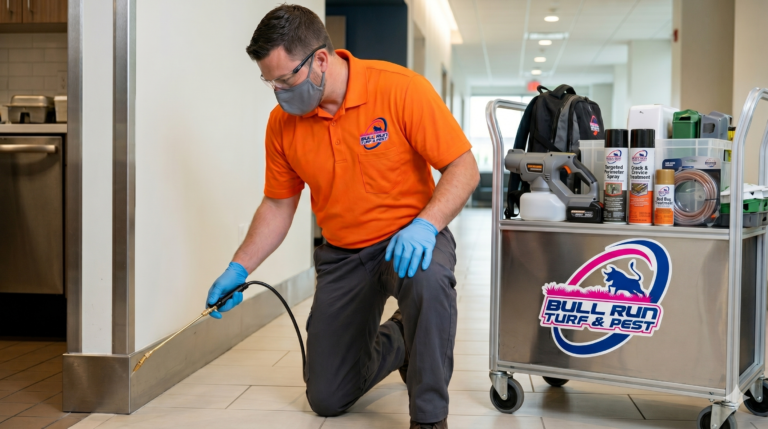
Residential pest control and commercial pest control share some of the same underlying principles, but the execution is substantially different. A commercial pest control program for a Northern Virginia business starts with a facility assessment that maps the building’s entry points, interior conditions, food and moisture sources, and current pest activity. This assessment is the foundation for a prevention-focused treatment plan rather than a reactive one.
Scheduled service visits — monthly, quarterly, or at other intervals depending on facility type and pest pressure — maintain consistent protection without the gaps that allow populations to establish. Service documentation and reports give facility managers the records they need for health inspections and regulatory compliance. Communication between the pest control provider and facility staff about conditions that affect pest pressure — deliveries that introduce pests, maintenance issues that create entry points, sanitation practices that attract or discourage pest activity — is part of an ongoing prevention relationship, not just a chemical application service.
Industries With Elevated Pest Risk in Northern Virginia
While all commercial properties face pest pressure, certain industries in Northern Virginia operate under conditions that create significantly elevated risk. Food service businesses — restaurants, cafeterias, catering facilities, and food retail — face the highest regulatory scrutiny and the greatest exposure to pests attracted by food, moisture, and warmth. Healthcare facilities deal with complex requirements around treatment methods and notification timelines. Property management companies overseeing multi-tenant residential or commercial buildings need coordinated programs that prevent pest spread between units.
Office buildings, retail spaces, and professional services firms face lower inherent pest pressure but are not immune — particularly in buildings with shared HVAC systems, common food areas, and loading docks that bring outside materials inside regularly. For any of these facility types, the question is not whether to have a commercial pest control program but which program is appropriately scaled and designed for the specific facility.
Bull Run Turf Care & Pest Control for Northern Virginia Businesses
Bull Run Turf Care & Pest Control serves commercial clients across Northern Virginia with pest control programs designed for the specific needs of business environments. The team understands the regulatory landscape, the operational constraints of treating occupied commercial facilities, and the documentation requirements that commercial clients need from their pest control provider.
For businesses in Chantilly, Fairfax, Herndon, Ashburn, Sterling, Leesburg, and surrounding communities, Bull Run offers the local responsiveness and commercial expertise that national chains often can’t match. When a pest issue develops at your facility, you reach someone who knows your building, your service history, and your priorities — not a call center routing your concern to whoever is available.
Frequently Asked Questions
How often should a commercial property receive pest control service?
Service frequency depends on facility type, pest pressure level, and regulatory requirements. Food service businesses typically benefit from monthly or more frequent service. Office buildings and retail spaces may be adequately protected on a quarterly schedule with additional visits as needed. Your commercial pest control provider should recommend a schedule based on a facility assessment rather than a standard package.
Can pest control treatments be applied during business hours?
Many professional-grade treatments can be applied in occupied spaces with appropriate precautions. Some treatments require building evacuation for a specified period. A commercial pest control provider experienced in facility work will schedule treatments to minimize operational disruption — early morning before opening, during off-hours, or over the weekend — and will communicate re-entry requirements clearly in advance.
What should I do if a customer reports seeing a pest in my facility?
Address the report seriously and promptly. Document what was reported, where, and when. Contact your pest control provider immediately, even if a scheduled service visit is upcoming — an unexpected sighting may indicate a new infestation developing between visits that warrants an inspection ahead of schedule. How you respond to a customer pest report internally is as important as how you address it publicly, so train staff on the appropriate response protocol before an incident occurs.
Bull Run Turf Care & Pest Control
4229 Lafayette Center Dr STE 1825, Chantilly, VA 20151, United States
Phone: (571) 430-5697
Website: bullrunturf.com
Instagram: @bullruntrf
Facebook: web.facebook.com/bullrunturf