
Office parks in Ashburn, retail centers in Leesburg, and HOA common areas in South Riding all have one thing in common: the lawn is the first thing people see. When turf thins out by the front entrance or turns brown along parking lot islands, tenants, customers, and residents notice.
Commercial lawn care in Loudoun County focuses on keeping turf healthy enough to handle heavy foot traffic, compacted soil, and Northern Virginia’s hot summers, through a year-round program of fertilization, weed control, aeration, overseeding, and grub prevention. Understanding what that program should include helps property managers compare providers and choose commercial lawn care services that fit the property instead of a one-size-fits-all mowing contract.
Why Is Commercial Lawn Care Different From Residential?
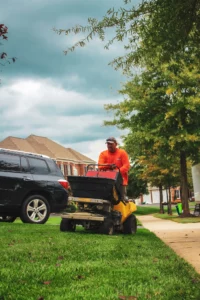
The science behind healthy grass is the same on a business campus as it is in a backyard. What changes is the setting. Commercial properties usually have larger turf areas, more people walking across them, and more stakeholders who expect consistent results.
Scheduling is also different. Parking lots fill during business hours, shoppers cross entrances all day, and HOA common areas see the most use on evenings and weekends. Work has to be planned around those patterns, and managers need advance notice so they can keep tenants and residents informed.
Commercial turf also faces conditions that home lawns rarely do, such as:
- Heavy daily foot traffic along walkways and entrances
- Heat reflected from large parking lots
- Road salt along curbs and sidewalks in winter
- Turf islands with shallow, compacted soil
- Stormwater areas that stay wet after heavy rain
What Makes Loudoun County Turf Challenging?
Much of Loudoun County was built within the last few decades. Farmland around Ashburn, Brambleton, and South Riding became office parks, data center campuses, and planned communities, and the soil under many of those lawns was graded and compacted during construction.
Topsoil on newer commercial sites is often thin, with dense clay just below. Grass planted on this kind of ground tends to stay shallow-rooted, which makes it more sensitive to drought, heat, and traffic. That is why aeration and soil improvement play a larger role on Loudoun commercial properties than many managers expect.
What Should a Commercial Lawn Maintenance Program Include?
A strong program follows the growing cycle of cool-season grasses such as tall fescue, which cover most commercial lawns in the county. The core services usually include:
- Fertilization timed to spring and fall, with fall feedings carrying the most weight
- Pre-emergent weed control in early spring to stop crabgrass
- Post-emergent spot treatments for broadleaf weeds
- Core aeration to relieve compaction
- Fall overseeding to thicken thin areas
- Grub prevention to protect roots in late summer
Mowing, edging, and bed maintenance are often handled separately, either by a grounds crew or a landscape contractor. Knowing which provider is responsible for each piece makes it easier to hold everyone to the same standard.
When Should Each Service Happen?
Timing matters as much as the services themselves. Spring focuses on pre-emergent weed control and light feeding to support green-up. Summer is about managing heat stress, watching for lawn disease, and spot-treating weeds in high-visibility areas.
Fall is the most important season for cool-season turf. Aeration, overseeding, and fall fertilization work together to repair summer damage and build roots before winter. Winter is the time to review results, clear leaves from turf, and plan the next year’s schedule.
Should Pest Control Be Part of the Plan?
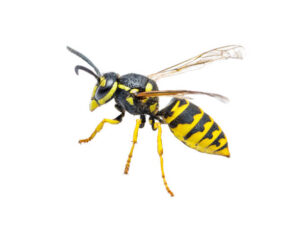
Many turf problems are really pest problems. Grubs feed on roots and cause brown patches that peel back like carpet. Ticks gather along wooded edges that border many Loudoun campuses and communities. Mosquitoes breed in retention ponds, and yellow jackets nest in the ground near walkways and play areas.
Combining lawn care and pest control under one provider means fewer vendors to manage and one team that understands the whole property. For HOA boards and property managers with limited time, that can simplify a lot.
Choosing the Right Commercial Lawn Care Provider
Commercial lawn care works best when it is planned around the property, not just the calendar. The right provider understands Loudoun’s soil, schedules work around how the property is used, and communicates clearly with managers and boards.
When comparing options, look at what services are included, who performs them, how visits are scheduled, and whether the provider can address pests along with turf. Getting those answers up front helps avoid surprises once the season starts.
Frequently Asked Questions
Q: What is the difference between commercial lawn care and commercial lawn maintenance?
A: The terms are often used interchangeably. Lawn care usually refers to turf health services such as fertilization and weed control, while lawn maintenance can also include mowing, edging, and general upkeep.
Q: When is the best time to start a commercial lawn care program in Loudoun County?
A: Any time of year works, but fall is a strong starting point because aeration, overseeding, and fall fertilization set the lawn up for spring.
Q: How often should commercial lawns be fertilized?
A: Most cool-season commercial lawns benefit from several applications spread across spring and fall, with fall feeding being the most important.
Q: Why does turf on new commercial sites struggle?
A: Construction often leaves compacted soil with thin topsoil. Grass roots stay shallow, which makes the lawn more vulnerable to heat, drought, and foot traffic.
Q: Can lawn care and pest control be handled by the same company?
A: Yes. Some providers offer both, which allows grubs, ticks, mosquitoes, and stinging insects to be addressed alongside turf care.A: Yes. Some providers offer both, which allows grubs, ticks, mosquitoes, and stinging insects to be addressed alongside turf care.
Q: Do commercial lawns need aeration every year?
A: High-traffic and compacted areas usually benefit from yearly core aeration. Lightly used areas may need it less often.Office parks in Ashburn, retail centers in Leesburg, and HOA common areas in South Riding all have one thing in common: the lawn is the first thing people see. When turf thins out by the front entrance or turns brown along parking lot islands, tenants, customers, and residents notice.