Key Takeaways
Carpenter bees target unpainted or weathered wood. Decks, fascia boards, and untreated siding are especially vulnerable to the tunnels these bees drill for nesting. Damage often goes unnoticed until it’s significant. Because carpenter bee holes are small, homeowners frequently don’t realize the extent of the damage until wood begins to weaken or split. Carpenter bees return to the same nesting sites year after year. Without treatment, previously drilled tunnels are often reused and expanded by new generations, compounding the damage over time.
Carpenter bees may look similar to bumblebees at first glance, but the damage they cause to wood structures sets them apart as a real concern for homeowners. Decks, eaves, fascia boards, and wooden siding are all common targets, and left unaddressed, carpenter bee activity tends to worsen year after year as tunnels are reused and expanded.
Because the damage starts small and grows slowly, many homeowners don’t take the problem seriously until they notice a cluster of holes in the same board or start hearing woodpeckers pecking at a specific section of the house, both signs that activity has been building for longer than it might first appear.
Why Carpenter Bee Control Matters for Wood Structures
Carpenter bee control is often overlooked until a homeowner notices small, perfectly round holes in a deck railing or fascia board, along with sawdust piles beneath them. These holes are the entry points to tunnels the bees drill to lay their eggs, and while a single female bee might not cause dramatic damage in one season, the same tunnels are frequently reused and expanded by subsequent generations.
Over several years, repeated nesting activity can weaken structural wood, particularly in areas that are already exposed to moisture or sun damage, making early intervention important for protecting the long-term integrity of decks, siding, and outdoor structures. Properties with a lot of exposed, unpainted wood trim tend to see the highest concentration of activity, since carpenter bees strongly prefer bare wood over sealed or painted surfaces.
How to Tell Carpenter Bees Apart From Bumblebees
Because carpenter bees closely resemble bumblebees, many homeowners don’t realize they have a wood-boring pest problem until they notice the damage itself.
Nesting Holes and Sawdust Piles
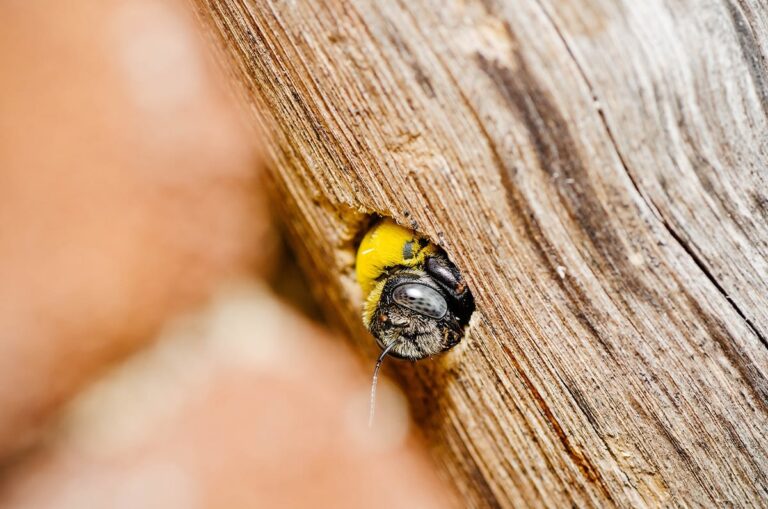
Carpenter bees drill nearly perfectly round, half-inch holes into wood surfaces, often leaving small piles of fine sawdust directly below the entry point. This is one of the clearest indicators of an active infestation, since bumblebees don’t create this kind of damage. The sawdust itself, sometimes called frass, is a reliable sign that can help homeowners distinguish an active carpenter bee tunnel from an older, abandoned one.
Behavior Differences Between the Two Species
Carpenter bees tend to hover near wood surfaces and can often be seen entering and exiting small holes, while bumblebees are typically found around flowers and ground-level nests. Male carpenter bees are also territorial and may approach people who get close to a nesting site, though they don’t have the ability to sting, which often makes their aggressive-seeming behavior more startling than actually dangerous.
The Damage Carpenter Bees Cause Over Time
A single season of carpenter bee activity might leave a few visible holes, but the real concern is what happens over multiple years without treatment. Woodpeckers are often drawn to the larvae inside carpenter bee tunnels, and their pecking can significantly widen the damage beyond what the bees created on their own. Combined with moisture intrusion into exposed tunnels, this can lead to rot and structural weakening in decks, railings, and trim over time.
In more severe, long-neglected cases, repeated tunneling in the same board can weaken it enough that the wood becomes soft or even crumbles under pressure, particularly in areas that see regular sun and rain exposure without a protective coating.
Finding Carpenter Bee Control Near Me
Homeowners searching for carpenter bee control near me are often dealing with recurring activity in the same area of their home each year, which is a strong sign that existing tunnels are being reused. A professional inspection can identify active and previously used tunnels, assess the extent of any wood damage, and determine the right treatment approach based on the specific areas affected.
Because carpenter bees are most active in spring when they’re establishing new nests, timing treatment around this period tends to produce better results than waiting until damage has already progressed further into the season. A provider familiar with the typical nesting timeline in this region can help homeowners plan treatment before the most active egg-laying period begins.
What Professional Carpenter Bee Control Looks Like in Chantilly
A thorough carpenter bee control Chantilly service typically starts with identifying every active and inactive tunnel on the property, since bees will often have multiple nesting sites across a home’s exterior. Treatment usually involves applying products directly into and around tunnel openings, followed by recommendations for sealing or filling holes once activity has been addressed to prevent reuse in future seasons.
Homeowners should also expect guidance on any exposed or untreated wood surfaces that may be attracting bees in the first place, since painted or sealed wood is generally far less appealing to carpenter bees than bare or weathered surfaces. This kind of preventive guidance is often just as valuable as the treatment itself, since it addresses the underlying reason a property became attractive to nesting bees in the first place.
Why Spring Timing Is Critical for Carpenter Bee Treatment
Carpenter bees emerge from winter dormancy in early spring and immediately begin searching for suitable nesting sites, often returning to the same general area of a structure where they or previous generations nested before. Treating tunnels and surrounding wood before this active nesting period begins tends to be far more effective than waiting until new holes have already appeared, since it disrupts the cycle before eggs are laid for the season.
Homeowners who notice carpenter bee activity late in the season, after eggs have already been laid, should still treat the affected areas, but they should also expect that the current season’s larvae will need to complete their development before the tunnels are fully vacated, which is worth understanding when setting expectations for how quickly the problem will fully resolve.
Frequently Asked Questions
Do carpenter bees sting? Female carpenter bees can sting but rarely do unless provoked, while male carpenter bees, despite their territorial behavior, don’t have stingers at all. Most encounters are more startling than dangerous.
How can homeowners tell if carpenter bee damage is serious? Multiple holes in the same area, expanding sawdust piles, or soft or hollow-sounding wood when tapped are all signs that damage may be more extensive than it initially appears and warrant a closer inspection.
Will painting or sealing wood prevent carpenter bees from returning? Painted and sealed wood surfaces are significantly less attractive to carpenter bees than bare or weathered wood, making this an effective preventive step once existing tunnels have been treated and addressed.
Long-Term Prevention After Treatment
Once active tunnels have been treated, the most effective way to prevent future activity is addressing the exposed wood that attracted bees in the first place. Filling old holes with wood putty and following up with paint or a quality exterior sealant removes both the entry point and the visual and textural cues carpenter bees use to identify good nesting wood. Homeowners who complete this step after treatment tend to see far less repeat activity in following seasons compared to those who leave old holes unsealed.
Choosing Between Treatment and Full Removal
For homeowners dealing with heavily damaged wood, particularly older trim or railings that have accumulated years of tunneling, treatment alone may not fully restore structural integrity. In these cases, addressing the pest problem is only part of the solution, and replacing significantly compromised boards may be necessary alongside treatment to fully resolve both the pest issue and the underlying damage it caused.
Bull Run Turf Care & Pest Control 4229 Lafayette Center Dr STE 1825, Chantilly, VA 20151, United States