Key Takeaways
Early detection makes treatment significantly easier. Spotting egg masses or early nymphs before a population multiplies gives homeowners far more effective and affordable treatment options. Leesburg’s mix of vineyards, orchards, and residential landscaping increases exposure. Spotted lanternflies feed on grapevines and fruit trees in addition to ornamental landscaping, giving the pest multiple food sources across the area. Treatment options vary depending on infestation severity. From targeted trunk applications to broader perimeter treatments, the right approach depends on how established the population already is.
Leesburg’s combination of residential neighborhoods, vineyards, and wooded properties has made it one of the areas in Northern Virginia most affected by the spotted lanternfly’s spread. Homeowners here are often dealing with a pest that moves easily between yards, making early identification and a clear treatment plan especially important.
Because Leesburg sits close to some of the region’s agricultural land, the pest pressure homeowners experience is often tied to what’s happening on a much larger scale nearby, which is part of why individual treatment plans frequently need to account for reinfestation risk from beyond the immediate property line.
Spotted Lanternflies Are Spreading Across Leesburg Properties
A spotted lanternfly exterminator Leesburg homeowners can rely on has become a common search as the insect’s population continues to grow throughout the region. What makes Leesburg particularly vulnerable is the density of preferred host plants in the area, from ornamental trees in residential neighborhoods to grapevines on nearby properties, both of which are among the pest’s favorite feeding sites.
Because the insect travels well, both by flight and by hitching rides on vehicles and outdoor equipment, infestations can appear seemingly out of nowhere on properties that showed no signs the previous season. This unpredictability is one of the main reasons homeowners are encouraged to monitor their property regularly rather than only checking when they suspect a problem.
Early Warning Signs Homeowners Should Watch For
Catching an infestation early gives homeowners far more options for controlling it before it spreads to multiple trees or structures on the property.
Egg Masses on Hard Surfaces
Beyond tree bark, spotted lanternflies frequently lay egg masses on fences, outdoor furniture, grills, and even vehicles. These masses look like a smear of gray putty and can easily be mistaken for mud or lichen, which is part of why they often go unnoticed until hatching begins in spring. Checking these less obvious surfaces during a fall inspection can catch egg masses that would otherwise be missed entirely.
Nymphs vs. Adult Lanternflies
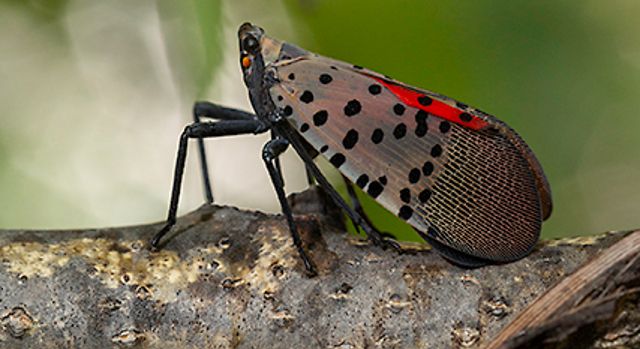
Young nymphs are small, black, and covered in white spots, gradually developing red coloring as they mature before becoming full adults with distinctive spotted wings. Recognizing nymphs early is valuable because treatments applied at this stage tend to be more effective than waiting until the population reaches adulthood, when the insects become more mobile and harder to reach with contact treatments.
Treatment Options a Spotted Lanternfly Exterminator Offers
A professional spotted lanternfly exterminator typically has several treatment approaches available depending on how established the infestation already is. For properties caught early, targeted trunk treatments and manual egg mass removal may be enough to prevent a larger population from developing. For more established infestations, broader perimeter spraying and systemic tree treatments are often layered together to address both visible insects and the eggs that will hatch the following spring.
Because Leesburg properties often sit near vineyards, orchards, or wooded buffers, treatment plans frequently account for the likelihood of reinfestation from adjacent, untreated areas, which can mean a longer-term monitoring schedule even after the initial population has been significantly reduced.
Why Leesburg Homeowners Search for a Spotted Lanternfly Exterminator Near Me
When homeowners search for a spotted lanternfly exterminator near me, they’re often looking for someone who can respond quickly once an infestation is spotted, since populations can grow substantially within just a few weeks during peak season. Local experience matters here too, since a provider familiar with Leesburg’s specific mix of host plants can better anticipate where reinfestation is likely to come from and plan treatment accordingly.
Asking about a provider’s track record with lanternfly-specific treatment, rather than general pest control, is one of the best ways to gauge whether they’re equipped to handle the problem effectively, particularly given how different lanternfly treatment is from more familiar residential pest issues.
Protecting Vehicles and Outdoor Equipment
Because adult spotted lanternflies are strong jumpers and frequent hitchhikers, vehicles and outdoor equipment parked near infested trees can unintentionally carry insects or egg masses to new locations. Homeowners who travel between properties, or who store equipment near heavily infested areas, are often encouraged to do a quick visual check before moving anything, particularly during peak egg-laying season in the fall.
This kind of accidental transport is one of the reasons the pest has spread as quickly as it has across the region, and it’s worth keeping in mind even after a property’s own infestation has been brought under control, since new introductions from vehicles or equipment coming from elsewhere remain a realistic possibility.
Why Leesburg’s Agricultural Proximity Matters
Leesburg’s location near working vineyards and orchards adds a layer of complexity that homeowners in more purely residential areas don’t always have to consider. Agricultural operations nearby often have their own pest management practices in place, but a spotted lanternfly population moving through a vineyard during peak season can still spill over into adjacent residential yards, particularly during the insect’s most mobile adult stage in late summer.
Homeowners in these areas sometimes notice that their own yard’s activity seems to spike around the same time each year, which frequently lines up with feeding or migration patterns on nearby agricultural land. Understanding this connection doesn’t necessarily change the treatment approach on an individual property, but it does help explain why some homeowners see recurring activity even after a thorough treatment season, and why ongoing monitoring tends to be a more realistic expectation than a single, permanent fix.
Frequently Asked Questions
How fast can a spotted lanternfly infestation spread? Populations can grow quickly once established, particularly during the summer feeding season, which is why homeowners are encouraged to act as soon as egg masses or nymphs are spotted rather than waiting until adults are visible in large numbers.
Do grapevines and fruit trees need special treatment for spotted lanternflies? Grapevines and fruit trees are especially attractive to spotted lanternflies and may require more frequent monitoring and treatment compared to other landscaping, particularly during peak summer feeding months.
Can homeowners remove egg masses themselves? Egg masses can be scraped off accessible surfaces and destroyed, but many are laid in hard-to-reach areas or on multiple trees across a property, which is why a professional inspection often catches masses that would otherwise be missed.
Watering Guidelines During the Establishment Period
New seed needs consistent moisture during the first few weeks after aeration and overseeding, though the specific watering schedule depends on weather conditions and soil type. Light, frequent watering that keeps the top layer of soil consistently moist without oversaturating tends to support better germination than infrequent, heavy watering. As seedlings establish and begin to mature, watering frequency can gradually decrease while depth increases, encouraging deeper root growth that supports the lawn through the following summer.
Bull Run Turf Care & Pest Control 4229 Lafayette Center Dr STE 1825, Chantilly, VA 20151, United States