Key Takeaways
Compacted soil is one of the biggest barriers to a thick lawn. Aeration relieves compaction so water, air, and nutrients can actually reach the root zone instead of running off the surface. Fall is the ideal window for aeration and overseeding in this region. Cooler temperatures and consistent moisture give new grass seed the best chance to establish before winter dormancy. The two services work better together than separately. Aerating without overseeding leaves bare or thin areas unaddressed, while overseeding without aeration often results in poor seed-to-soil contact and lower germination.
Many Chantilly homeowners notice their lawn thinning out each year despite regular mowing and watering, and the underlying cause is often soil compaction combined with a lack of fresh seed to fill in bare spots. Aeration and overseeding, done together, address both problems at once and are widely considered one of the most effective treatments for building a thicker, healthier lawn.
Understanding why compaction happens in the first place, and why fall is such a specific window for correcting it, helps explain why this combination of services tends to produce results that other single treatments simply can’t match.
Why Chantilly Homeowners Look Up Aeration and Overseeding Near Me
A search for aeration and overseeding near me usually starts after a homeowner notices their lawn looking thin, patchy, or slow to green up compared to neighboring yards. In many cases, the grass itself isn’t the problem, the soil underneath is compacted to the point where water and nutrients can’t penetrate deeply enough to support strong root growth.
Chantilly’s clay-heavy soil compounds this issue, since clay compacts more easily than sandier soils and drains more slowly, creating conditions where roots stay shallow and lawns become more vulnerable to heat stress, drought, and disease. Over time, this shallow-root cycle tends to get worse rather than better without intervention, since a stressed lawn has less capacity to recover on its own each season.
What Causes Compacted, Thinning Lawns
Understanding what leads to compaction helps explain why aeration alone often isn’t enough without overseeding to follow.
Heavy Clay Soil in Northern Virginia
Much of Northern Virginia sits on dense clay soil, which naturally compacts more than loamy or sandy soil types. Over time, this compaction restricts root growth, reduces oxygen exchange in the soil, and makes it harder for water to soak in rather than run off during heavy rain. This is one of the reasons annual aeration is recommended more consistently in this region than in areas with naturally looser soil.
Foot Traffic and Lawn Equipment
Regular foot traffic, children playing, pets running the same paths, and repeated mowing all contribute to soil compaction over time. Areas near driveways, walkways, and play spaces tend to show the most noticeable thinning as a result, since these zones experience concentrated pressure that spreads compaction deeper into the soil profile than lighter, less frequent use elsewhere in the yard.
How Aeration and Overseeding Work Together
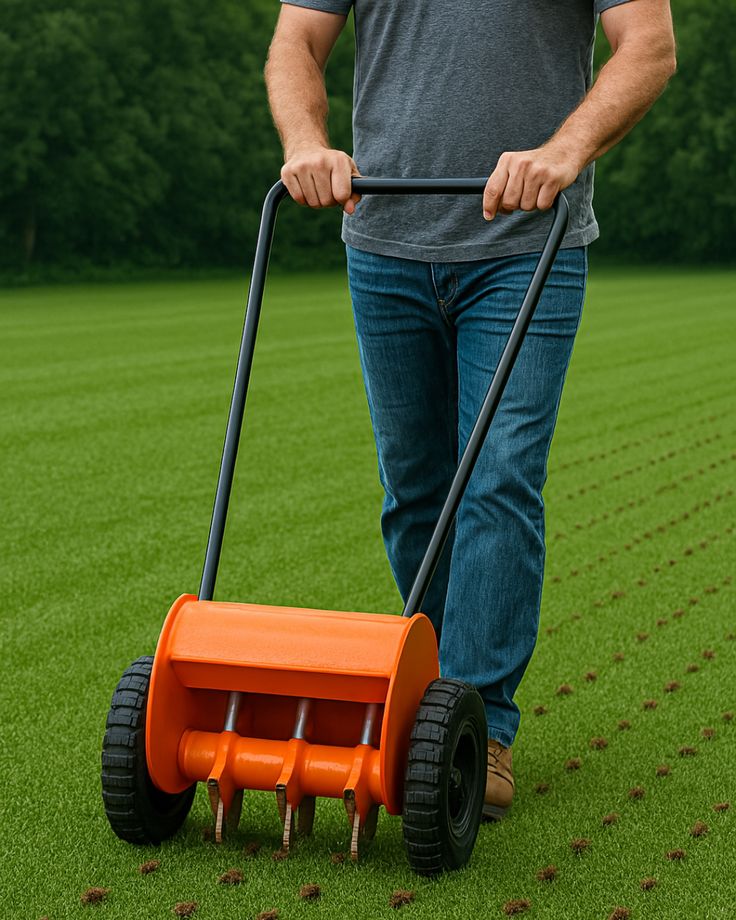
Core aeration removes small plugs of soil from the lawn, relieving compaction and creating channels for air, water, and nutrients to reach the root zone more effectively. On its own, aeration improves the growing conditions for existing grass, but it doesn’t fill in bare or thin areas.
That’s where aeration and overseeding work as a pair. New seed applied immediately after aerating benefits from direct contact with loosened soil, which significantly improves germination rates compared to seeding alone. The combination addresses both the underlying soil problem and the visible thinning at the same time, rather than treating one issue without the other, giving the lawn a much stronger foundation heading into the following growing season.
The Best Time of Year to Aerate and Overseed
Fall is widely regarded as the best season for aeration and overseeding in this region, since cooling temperatures reduce stress on new seedlings while soil moisture from seasonal rainfall supports germination. New grass also has time to establish a root system before winter dormancy, giving it a head start heading into the following spring rather than competing with summer heat and weed pressure right out of the gate.
Applying the same treatment in spring or summer is possible but generally produces weaker results, since new seedlings have to contend with heat stress and increased weed competition during their most vulnerable early growth stage.
What to Expect From Aeration and Overseeding in Chantilly
A typical aeration and overseeding Chantilly service begins with a walk-through to assess soil compaction and identify thin or bare areas that need the most attention. Aeration is performed across the lawn, followed by an application of seed matched to the existing grass type and the amount of sun or shade different areas of the yard receive.
Homeowners should expect some visible soil plugs on the surface after aeration, which break down naturally over the following weeks, along with instructions on watering the new seed properly during the germination period. Following these watering instructions closely during the first few weeks tends to make a meaningful difference in how well the new seed ultimately establishes.
Matching Seed Type to Existing Turf
Choosing the right seed for overseeding is just as important as the aeration process itself. Blending seed that closely matches the lawn’s existing grass type helps create a more uniform appearance as the new growth fills in, while mismatched seed can lead to visible patches of differing color or texture once established. Sun and shade patterns across the yard also factor in, since a seed blend suited for full sun may struggle in areas with heavier tree cover, and vice versa.
A provider assessing the lawn before service typically looks at these zone-by-zone differences rather than applying a single seed blend across the entire property, which helps ensure that thin areas under trees receive a mix suited to lower light conditions while sunnier sections get a blend built to handle more direct exposure and foot traffic.
Preparing Your Lawn Before an Aeration and Overseeding Visit
A little preparation before the scheduled visit can help the treatment go more smoothly and produce better results. Mowing the lawn a bit shorter than usual a day or two before service makes it easier for the aeration equipment to pull consistent soil plugs and gives new seed better access to sunlight once it’s down. Clearing toys, hoses, and other yard items from the lawn area also helps technicians cover the full property without gaps.
Homeowners should also plan around the service date itself, since heavy foot traffic or pet activity immediately after aeration and overseeding can disturb loosened soil and newly applied seed before it has a chance to settle. Setting expectations with family members and pets for a few days after the visit is a small step that can meaningfully improve how well the new seed takes hold.
Frequently Asked Questions
How long does it take to see results after aeration and overseeding? Germination typically begins within one to three weeks, though it can take a full growing season to see the lawn reach its thickest, most established state, especially in areas that were significantly thinned beforehand.
Should the lawn be mowed differently after overseeding? New seedlings need time to establish before regular mowing resumes at a normal height, and mowing too soon or too short can damage young grass before its root system is developed enough to handle it.
Is aeration necessary every year? Most lawns benefit from annual aeration, particularly those with heavy clay soil or high foot traffic, though the right frequency can vary depending on how compacted the soil becomes between treatments.
Why Consistency Beats Occasional Heavy Feeding
A lawn fed consistently through smaller, well-timed applications almost always outperforms one fed occasionally with larger, less frequent doses. Consistent feeding supports steady root and blade development without the stress spikes that come from sudden nutrient surges followed by extended gaps. This is part of why a structured, season-long fertilization program tends to produce a noticeably different result than reactive, as-needed applications whenever a lawn starts to look tired.
Bull Run Turf Care & Pest Control 4229 Lafayette Center Dr STE 1825, Chantilly, VA 20151, United States